Armenia in the Crosshairs: Russian Disinformation and the Armenian Elections
Recent Articles
Author: Jack Halsey, Kurtis Yan
06/02/2026
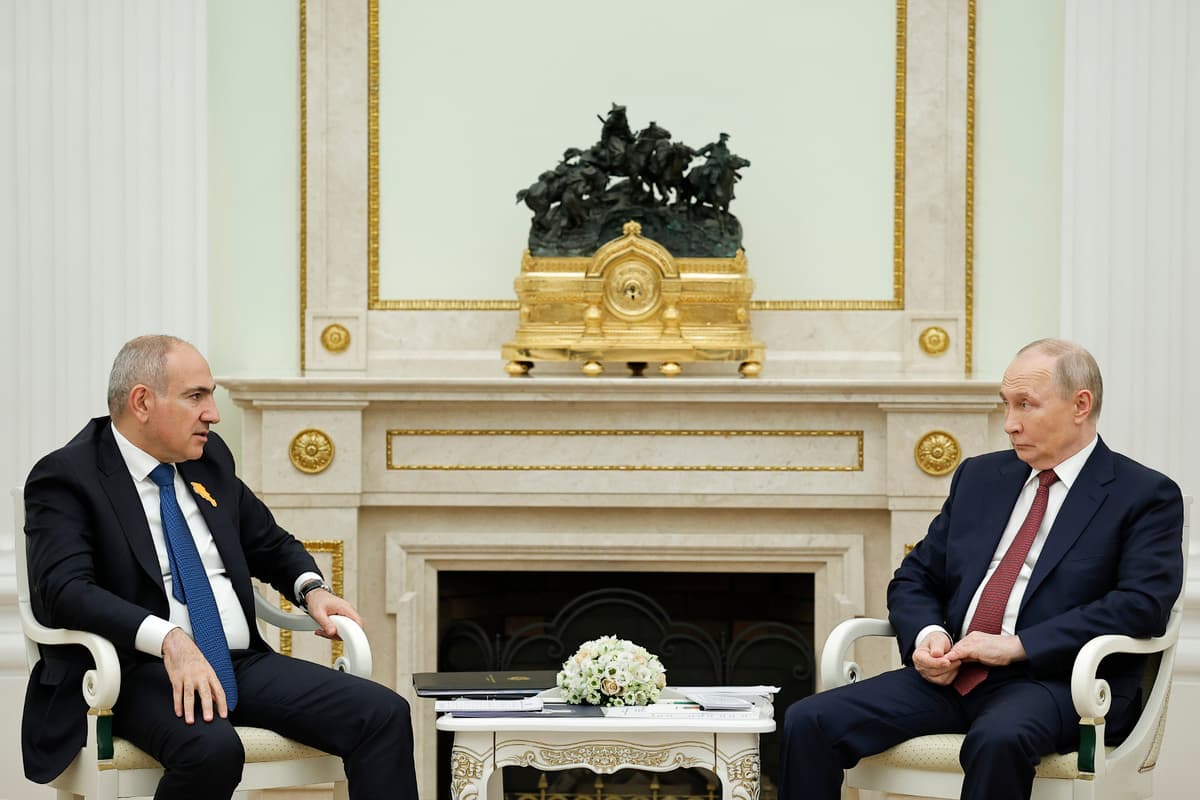 Prime Minister of the Republic of Armenia
Russian disinformation in the past capitalized on traditional media outlets, from radio to state-controlled websites. Over time, social media has evolved into a primary tool of dissemination for news outlets, amplifying pro-Kremlin voices across borders. But with the rise of artificial intelligence (AI) and its convergence with social media platforms, disinformation campaigns are now more discrete, yet equally destructive. Armenia presents a clear example of how this story unfolds and can further compound across the Greater Caspian Region.
Investigative reports uncovered a highly calculated campaign by pro-Kremlin individuals and state operators to influence the outcome of Armenia’s parliamentary elections, which are set for June 7. Known as “Matryoshka,” this operation, which consists of fake social media content and false narratives, has seen an uptick in recent months, targeting Armenia’s Prime Minister Nikol Pashinyan. Pro-Kremlin disinformation in Armenia illustrates Russian interest in disrupting pro-Western ideas in the South Caucasus, and it represents a recent pattern of Russia becoming more aggressive in achieving this goal.
“Matryoshka” and the Pre-Election Strategy in Armenia
The core tools of Matryoshka are deepfakes and social media content that mislead users. The operation relies on AI and bots to fabricate scenarios and quotes and then assign them to important officials, in some cases even presenting AI-produced videos of seemingly real conversations. Matryoshka had already been deployed in Moldova and Germany to influence elections. In the case of Armenia, Pashinyan has become the primary target of misattribution and audience manipulation. The Kremlin has not hidden its dissatisfaction with Armenia’s strong interest in cooperation with the European Union (EU) and the United States. Many of Moscow’s disinformation themes seek to undermine these efforts by swaying Armenian citizens into voting against Pashinyan.
The social media content primarily suggests that Pashinyan’s pro-EU direction will present a security threat to Armenia. Many videos argue that a victory for Pashinyan would lead to Armenia’s military integration with Europe. A deepfake video was published of Pashinyan’s press secretary claiming that NATO military advisors and instructors were active in the country. Another fabricated video of Pashinyan and French President Emmanuel Macron alleged that France would support Pashinyan in the elections in exchange for Armenia declaring war on Russia. Meanwhile, Matryoshka has continued to promote these false narratives by publishing articles on websites that impersonate reputable sources. By painting Pashinyan’s platform as pro-war and in favor of military confrontation with Russia, the Kremlin seems to hope that voters will turn toward a more pro-Russia candidate.
Much of the Russian-language content inherently targets Russian-speakers within Armenia. However, the disinformation campaign not only targets voters that are physically in the country. The Organized Crime and Corruption Reporting Project (OCCRP) released a report based on leaked documents stating that a primary target of manipulation is the Armenian diaspora in Russia who hold dual citizenship. Peddling narratives that call for mending Russia-Armenia relations could be inherently easier when targeting those with ties to both nations.
How Disinformation Fits with Russia’s Broader Aims for the Region
Although Russia’s disinformation campaign has the singular strategic goal of keeping Prime Minister Nikol Pashinyan and the Civil Contract political party from retaining parliamentary control, the outcome couldl have an immense impact on Russia’s future role in the region. Over the past few years, Russia’s influence in the South Caucasus has been waning. In particular, Armenia has been shifting its focus away from Russia since 2023, in part because of the inaction of Russian peacekeepers during the resurgence of the Nagorno-Karabakh conflict. Armenia has instead been turning westward, looking to join the EU and enticing American businesses with good deals. Although Russia’s response to Armenia’s shift was initially muted, the Kremlin has been explicitly clear in the lead-up to elections that any further shift to the West is unacceptable.
With less than two weeks till parliamentary elections, Moscow released a letter which states, should Yerevan continue work towards a bid to join the EU, that Russia would suspend or terminate the export of cheap oil, gas, and rough diamonds. Though not directly referencing the election, the insinuation is that the re-election of Pashinyan (a pro-EU leader), will be met with consequences. The detail and bluntness of its threat highlight the essential importance that Moscow believes this election will hold. Should Pashinyan stay in power, the likelihood that Armenia continues to work towards EU accession remains high. The re-election of Pashinyan would also see the continuation of building stronger economic ties with the United States, most recently exemplified by the recent signing of a framework agreement on critical minerals and on the cooperation on the Trump Route for International Peace and Prosperity.
Should Moscow’s threats or the disinformation campaign fail to dissuade the Armenian public to vote for parties other than Civil Contract, Russia could witness a critical blow to its regional influence. For example, with the backing European or American partners, Yerevan could feel emboldened to demand the removal of Russian military bases that remain on its territory and elsewhere in the region. Losing a forward operating position like the 102nd military base’s location in Armenia on the NATO member Türkiye’s border would be a blow to Russia’s strategic planning.
What it Means for Future U.S. Initiatives in the Region and Trans-Caspian Connectivity
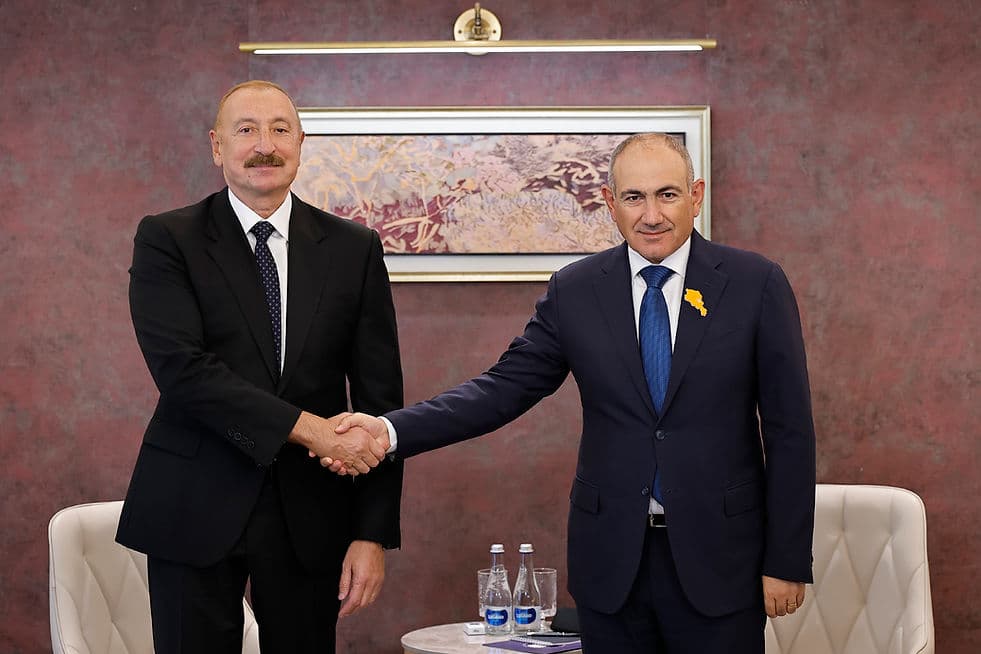
The success of U.S. engagement in the region hinges on the officials in power and their specific attitudes towards the West. Both Pashinyan and Azerbaijan’s President Ilham Aliyev have supported peace between the two states and increased cooperation with the United States and the European Union. Because both states play a vital role in improving the Middle Corridor’s efficiency and capabilities, the United States will rely on continued regional top-down support to successfully implement East-West connectivity projects.
However, the United States will also need to remain vigilant on the impact of Russian hybrid threats in the broader Caspian Region. U.S. policymakers have sought to solidify critical minerals deals with Central Asia and hosted the C5+1 Heads of State Summit in Washington in November 2025, but the Kremlin is now taking a more vocal role against this new level of engagement. Russian Deputy Foreign Minister Mikhail Galuzin publicly relayed the Kremlin’s growing concern over U.S. and EU minerals diplomacy with Central Asia, claiming that these efforts only seek to weaken Russian influence. This scale of public discontent could become more normal and disruptive as the United States steps up engagement in the region.
Russian disinformation campaigns will undoubtedly continue to levy malign influence in the South Caucasus and Central Asia. Moscow’s Interference in Armenia’s elections demonstrates the importance of local elections on the calculus of the region’s geopolitics for any foreign powers. Moscow might still prefer the discrete nature of disinformation to wield its power, but the growth of mutual favor for enhanced cooperation between Washington, Brussels, and the Greater Caspian region has clearly pushed Moscow to vocally express its dissent.