Armenia’s Defining Choice: Why This Election Matters Beyond the South Caucasus
Recent Articles
Author: Dr. Eric Rudenshiold
06/05/2026
 @EPCArmenia via X
Armenia is poised on the banks of an electoral Rubicon. The country’s June 7 election is not so much a contest between political parties as it is a referendum on the country's very identity. At stake is whether Armenia will continue along a relatively new and difficult path of regional reintegration, reorienting its economic connectivity, and pushing for greater sovereignty, or whether it will it return to a political model rooted in legacies of the post-Soviet era and relative sequestration.
Prime Minister Nikol Pashinyan is the country’s most visible politician, closely connected to Armenia's military defeat in the 2020 war, the retrocession of the Nagorno-Karabakh region, and the 2023 exodus of Karabakh Armenians. He has entered the 2026 campaign with significant and potentially toxic liabilities yet seems to be pulling ahead in voter polling data.
Having presided over a period of profound national trauma, Pashinyan has managed to maintain his position at the forefront of Armenia’s heavily fractured and malaised political system for two reasons: He seems to many as capable of bringing needed change to a country that has for years languished in a closed political loop with few options. For others Pashinyan is seen as the least-worst candidate--one that voters fear less than some who are running again for office.
“Least Worst” No More?
Pashinyan’s relatively low polling numbers during the long electoral runup, while more favorable than the less-than-three percent support his political opponents secured, are emblematic of a stark and listless reality for Armenia’s disaffected society. Over the last two years, however, recent polling indicates 61% of Armenians believe the country is “moving in the right direction,” with 95% of respondents supporting Pashinyan’s Civil Contract party.
During his tenure, the Prime Minister’s support has largely tended to be less endorsement than acknowledgment among voters who have decided that adapting to geopolitical reality is preferable to promises of restoring a status quo that no longer exists. As the election nears, it seems more voters are climbing down off their fences onto Pashinyan’s side. Fears over national security and border security have declined sharply in the last year, as engagement between Yerevan and Baku has become more normal and positive. The Prime Minister’s government also receives positive reviews over the economy and unemployment.
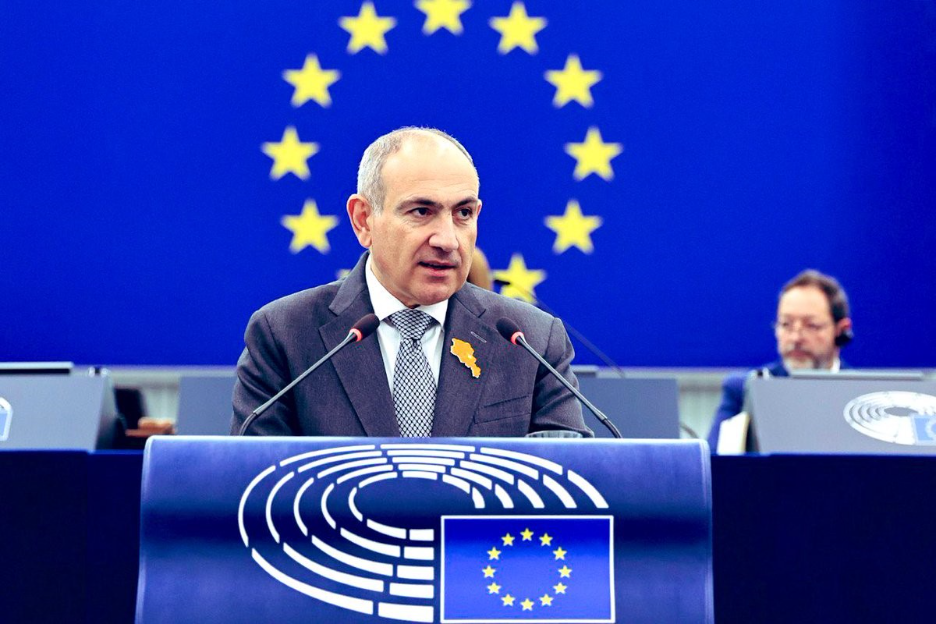
EU Integration remains a popular concept for voters, but Russian ties also concern Armenians. (x.com)
This distinction matters as the election isn’t about Pashinyan himself, but whether Armenia will continue to move toward an uncertain reorientation of its foreign and economic relations or return to the political groups aligned with the country's previous course. The stakes are visible in the language now emerging from Armenia’s leadership. One of the most striking recent statements came from Speaker of Armenian Parliament Alen Simonyan, who suggested that “Azerbaijan is the guarantor of Armenia’s security, and Armenia is the biggest guarantor of Azerbaijan.” This thinking is increasingly a part of the country’s mainstream discourse, as the election has become a debate on whether Armenia should adapt to a new reality or preserve a past many see as overtaken by events.
The Real Armenia
Pashinyan has gone further still. In one of the most controversial statements of his political career, he argued that, “The Government and personally [I] have come to the conviction that the historical Armenia and the real Armenia are not only incompatible but are often antipodes to each other and they even create the most serious threats to each other.” Few remarks better reflect the philosophical shift underway in Armenian politics. For generations, Armenian political debate generally erased any discrepancies between historical memory, national aspiration, and state policy.
Such thinking from a political leader was anathema to traditional Armenian security doctrine. For most of the post-Soviet era, Armenian security policy rested on the assumption that Russia would serve as Armenia’s ultimate guarantor. Today, however, senior Armenian officials increasingly argue that long-term security can emerge through mutual recognition, normalization, and regional integration. The election is therefore not simply a choice between political parties, but between fundamentally different visions of Armenia’s place in the South Caucasus and the wider post-Soviet space.
The parallels to other post-Soviet turning points are difficult to ignore. Echoes of Russia's 1996 presidential election between Boris Yeltsin and Gennady Zyuganov, Ukraine’s 2004 presidential election between Viktor Yushchenko and Viktor Yanukovych, and Moldova’s 2021 parliamentary elections are evident in Armenia today. Then, as now, the central political question was not whether voters were satisfied with incumbents, since many were not. Rather, the choice was whether one alternative represented a system many voters believed had already failed and the other was based on a rejection of that historic governing model.
Embracing the Unknown
Armenia's electorate appears to have confronted a similar dilemma: dissatisfaction with the present weighed against concerns that elements of the former political order could pull the country backward into deeper dependence, isolation, and stagnation. Pashinyan's formulation argues that the survival and prosperity of the modern Republic of Armenia requires prioritizing the interests of the existing state over broader historical narratives. To his supporters, the statement reflects a revitalized strategic realism coming after the fall of the Nagorno-Karabakh government. To his critics, this thinking represents an abandonment of Armenia’s founding national principles and historic territorial claims. In either case, this is a profound departure from language traditionally employed by Armenian leaders.
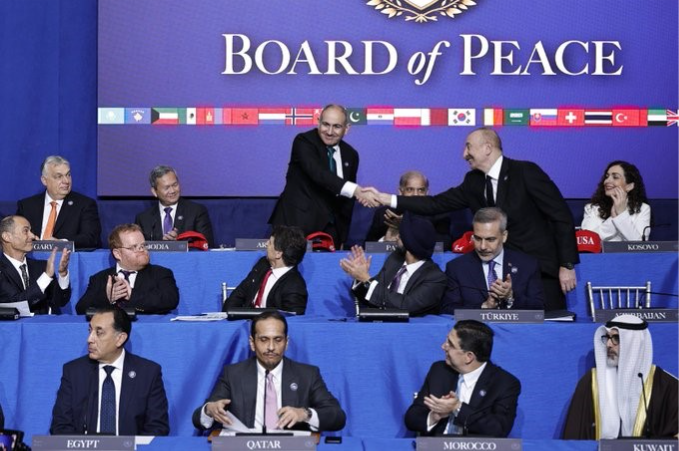
Closer relations with Azerbaijan have significantly reduced security fears. (x.com)
Pashinyan has openly questioned long-standing assumptions regarding Armenia's security relationship with Russia, spoken publicly about the need to normalize relations with Türkiye, and pursued direct negotiations with Azerbaijan. He increasingly frames Armenia's future around sovereignty within internationally recognized borders, rather than those that defined Armenian politics for decades.
He has gone further by publicly embracing forms of regional connectivity that previous Armenian governments would have considered politically untenable. During parliamentary discussions in 2025, he stated, “Starting from today, we are ready to ensure the transit of cargo trucks from Turkey to Azerbaijan and from Azerbaijan to Turkey...”. The significance of the statement extends well beyond transportation policy. For decades, Armenian strategy generally viewed Turkish-Azerbaijani integration as a geopolitical threat to be impeded. Pashinyan, instead, sees ending blockaded borders as a benefit and a chance to facilitate regional trade.
This shift also reflects a deeper transformation in public opinion. While anger over Karabakh remains widespread, a growing segment of Armenian society increasingly appears to recognize that the geopolitical assumptions which guided post-Soviet Armenian policy over most of the last 20 years have fundamentally changed. The military balance in the South Caucasus has changed. Russia's role as Armenia's security guarantor proved ineffectual. Yerevan’s economic realities are increasingly more urgent. For many voters, the question is whether the country can adapt to this new reality.
Diaspora Dissonance?
The debate over the country’s future goes far beyond the republic’s borders. Its security and identity have long been the focus of the global Armenian community, with its extraordinary political and cultural influence. This expatriate community has traditionally exercised an outsized influence over the country’s national identity, foreign-policy priorities, and political discourse. Numbering several times the population of Armenia itself, diaspora communities in the United States, France, Russia, the Middle East, and elsewhere have helped preserve Armenian identity during periods in history when the Armenian state did not exist, was politically constrained, and when the country was reestablished after Soviet dissolution. Through advocacy organizations, charitable foundations, churches, media networks, and lobbying efforts, the diaspora has played a key role in obtaining international recognition of the Armenian Genocide and in providing support for the republic after independence.
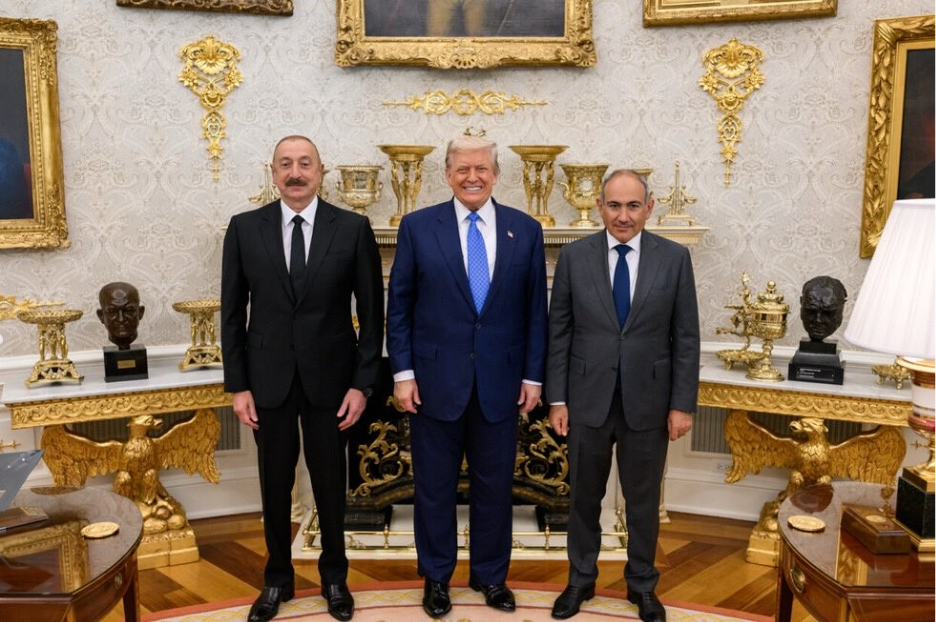
Yerevan’s current efforts at normalization of relations with Azerbaijan has at times been at odds with its large diaspora. (x.com)
Yet Pashinyan's reform agenda exacerbates a division between the outlooks of many diaspora community members versus the government in Armenia. Diaspora organizations have tended to prioritize issues such as relations with Türkiye, the disposition of Nagorno-Karabakh, and the broader questions of historical justice. The current leadership in Yerevan, however, is increasingly forced to address the changing realities of the South Caucasus particularly in economics, security, and demography. Pashinyan's emphasis on normalization with Türkiye, peace with Azerbaijan, and what he has termed the interests of the “real Armenia” reframes the country’s strategic trajectory away from global Armenian communities which helped sustain the nation through its most difficult periods.
Armenia’s elections are generally considered competitive and respectful of fundamental freedoms, despite political polarization and an inflammatory campaign environment. Political competition remains genuine, and electoral outcomes remain consequential, unlike the symbolic plebiscites held in some other post-Soviet states. However, the significance of this election encompasses far more than simple domestic politics, as the country is undertaking a strategic and brave realignment.
Russia’s Cold Wind
Since its independence in 1991, Armenia's security, energy sector, and most of its economy were and remain deeply aligned with Russia. Moscow dominates Armenia's energy systems (gas, fuel, infrastructure) and is one of the country’s major trading partners, resulting in the Kremlin traditionally enjoying significant leverage over Yerevan’s ability to diversify its external relationships. Yet relations between Armenia and Russia have deteriorated sharply in the last several years.
Since Azerbaijan's restoration of control over Nagorno-Karabakh, Yerevan has increasingly criticized Moscow's role as security guarantor and frozen its participation in the Collective Security Treaty Organization. Instead, Pashinyan has expanded engagement with Europe and the United States, welcomed European monitoring missions, and pressed for closer integration with Western institutions.
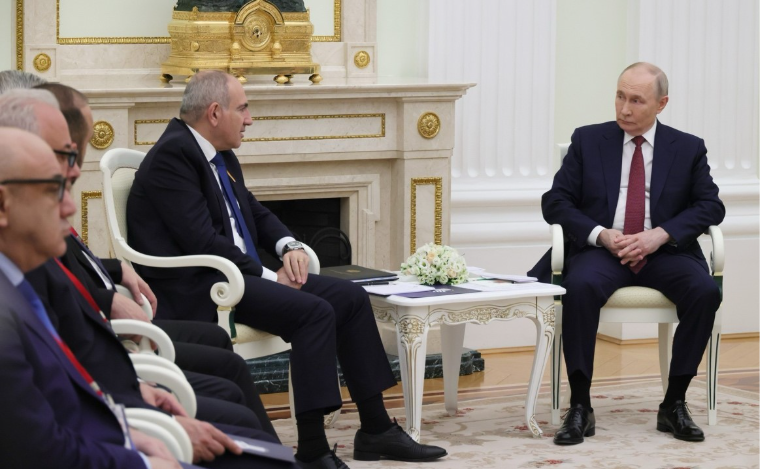
Russia has bristled at Pashinyan’s press westward engagement, issuing threats to its former ally. (Kremlin photo)
For Moscow, Yerevan’s reorientation is more than a foreign-policy disagreement. It challenges Russia’s geostrategic vision for the post-Soviet space. As a result, Russian state media and pro-Kremlin networks have followed the Kremlin’s well-tested playbook and intensified efforts in the pre-election period to portray Pashinyan as reckless, anti-Russian, and beholden to Western interests. From Georgia’s Rose Revolution to Ukraine’s Euromaidan, Moscow has long resisted former-Soviet states pursuing greater political and strategic autonomy.
The reaction against Armenia is particularly caustic because Armenia has long been regarded as one of Russia’s most steadfast partners. Yet Russia’s 2022 invasion of Ukraine accelerated a broader recalibration across the former-Soviet sphere. From Kazakhstan’s search for alternative export routes to Uzbekistan’s increasingly independent diplomacy to Armenia's reassessment of its security relationships, governments across Eurasia are seeking greater connectivity and more diverse partnerships as Moscow’s influence and capacity to project power have weakened. Thus, as Armenia is seeking greater strategic flexibility, new diplomatic and economic partners are filling the space once dominated almost exclusively by Russia.
As Moscow’s influence has waned, though, other countries have been assuming greater importance in Yerevan’s strategic calculus. Washington, in particular, is becoming an important facilitator of Armenia’s strategic reorientation. At the center of this effort is Washington’s proposed Trans-Regional Infrastructure and Prosperity Partnership (TRIPP) to create another trans-Caspian corridor linking Central Asia, Armenia, Azerbaijan, and Türkiye. TRIPP fits into Pashinyan’s strategy of turning Armenia into a regional connector that merges into Eurasian trade and transit networks.
The In-flight Pivot
Beyond the economic implications, the agreement reflects a broader political transformation. While some disagreements remain unresolved, the relationship between Pashinyan and Azerbaijan’s President Ilham Aliyev appears markedly different from the bilateral hostility that characterized most of the post-Soviet era. Officials involved in regional diplomacy increasingly describe direct communication channels between the two leaders as regular, routine, and highly functional.
What was once mediated almost exclusively by external actors is now increasingly handled directly by Armenia’s and Azerbaijan’s heads of state. This growing direct communication between the two leaders may be one of the most underappreciated developments in the South Caucasus and might prove as important as any formal agreement. A lasting peace will depend as much on sustained engagement as on formal agreements.
Armenia’s reorientation and regional integration efforts have also received support from countries such as Kazakhstan, which has emerged as one of the strongest advocates for trans-Caspian connectivity as a cornerstone of its own efforts to diversify its economy towards broader Eurasian trade. Yet this transformation faces resistance from both Tehran and Moscow as both regard the new transport corridors and geopolitical alignments as efforts to diminish their influence and disrupt longstanding regional balances. For Pashinyan, balancing these competing pressures while preserving domestic stability is an extraordinarily difficult task. He is redefining Armenia while it remains dependent on a Russia that views his efforts with suspicion.
However, Pashinyan's rhetoric increasingly reflects a leader working to prepare Armenian society for a fundamentally different future. Following progress in peace agreements with Azerbaijan, he publicly instructed Armenia's military to avoid ceasefire violations and declared that “Armenia is heading for peace, not war.” Such language would have been unimaginable for an Armenian leader during the previous three decades. Today, it captures the central gamble of Pashinyan's vision where Armenia's long-term security and prosperity are realized through normalization, connectivity, and strategic diversification, rather than perpetual confrontation.