Kazakhstan and Uzbekistan Are Deepening Financial Cooperation and Regional Integration in Central Asia
Recent Articles
Author: Caspian Policy Center, Aigerim Orynbassar
06/27/2026
 AIFC
AIFCOver the past decade, relations between Kazakhstan and Uzbekistan have undergone a significant transformation. Since President Shavkat Mirziyoyev came to power in 2016, the two countries have deepened political dialogue, expanded trade and investment ties, and institutionalized regular high-level exchanges. Their main achievements included the signing of the Treaty on Allied Relations (2022) and a number of other business agreements as well as trade turnover having grown to almost $4.8 billion in 2025. Frequent mutual visits by government officials and sustained cooperation across economic, cultural, and security issues have increasingly positioned Kazakhstan and Uzbekistan as the principal drivers of regional integration and stability in Central Asia.
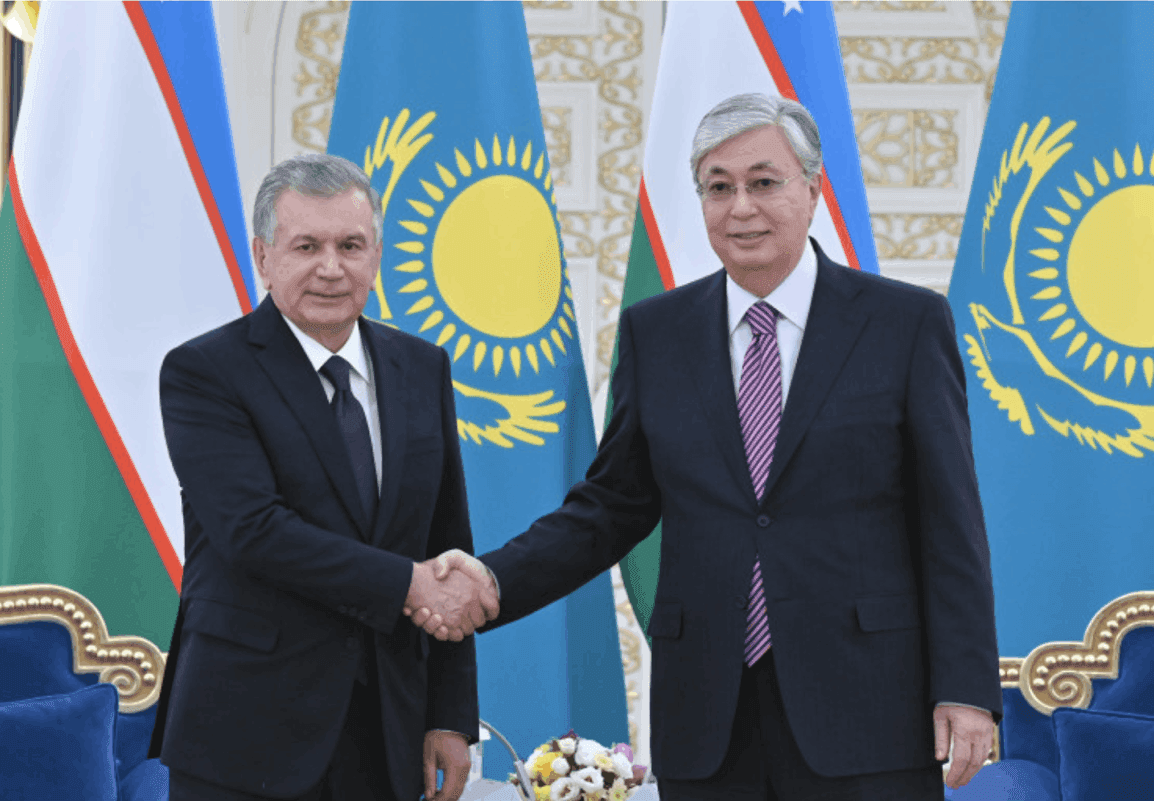
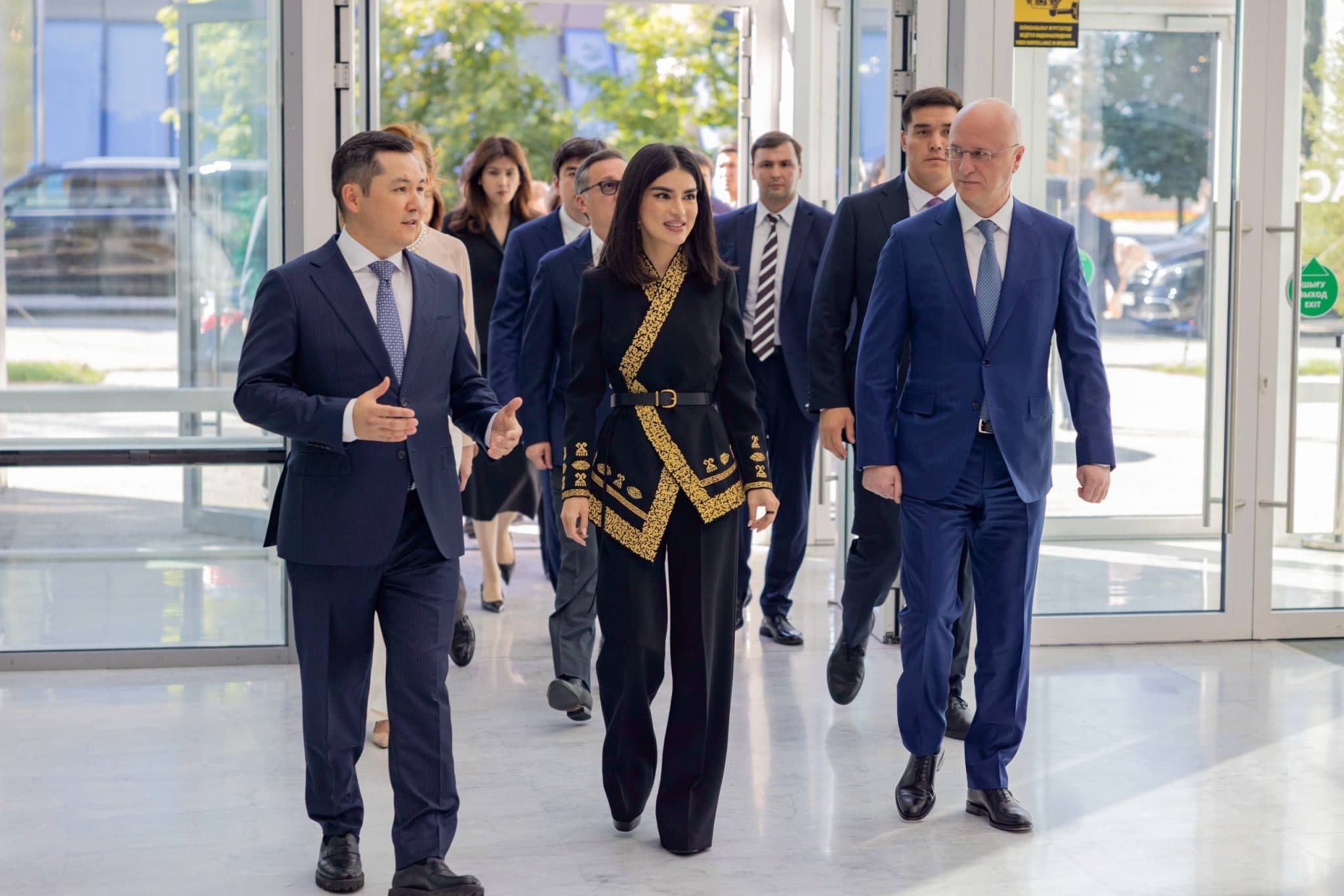
The recent visit to Kazakhstan of Saida Mirziyoyeva, Head of the Presidential Administration of Uzbekistan and the eldest daughter of President Shavkat Mirziyoyev, built on this relationship in key sectors like digitization and business. During her meeting with Kazakhstan’s President Kassym-Jomart Tokayev, Saida Mirziyoyeva conveyed personal greetings from her father, President Shavkat Mirziyoyev. The two sides discussed the further development of Kazakhstan-Uzbekistan cooperation and exchanged views on the political and socio-economic reforms underway in both countries.
President Tokayev emphasized the strategic importance of close cooperation between the two states, noting that the two countries play a central role in ensuring stability and sustainable development in Central Asia. During the talks, the parties discussed prospects for expanding cooperation in several areas, including trade and economic relations, cultural and humanitarian exchanges, digitalization, and broader bilateral engagement. The discussions also highlighted the modernization agendas currently being implemented in both countries.
Mirziyoyeva also held discussions with Kazakhstan’s First Deputy Prime Minister Roman Sklyar, during which the parties agreed to establish more flexible mechanisms for interaction between the administrations of the two presidents to ensure the consistent implementation of agreements reached at the highest level. In addition, during her meeting with State Counselor Erlan Karin, the parties discussed priorities for long-term partnership, including cultural diplomacy, the role of youth in strengthening ties between the two nations, and prospects for cooperation in high technology.
A significant part of the visit was the Uzbek delegation’s visit to the Astana International Financial Center (AIFC), where participants learned about Kazakhstan’s experience in establishing and developing an international financial hub. Kazakhstan’s experience is particularly relevant because Uzbekistan plans to create the Tashkent International Financial Center (TIFC). For Uzbekistan, Kazakhstan provides a regional case study rather than focusing solely on distant examples such as the Dubai International Financial Center, the Hong Kong International Financial Center, and others. Unlike traditional special economic zones focused on manufacturing and trade, the TIFC is envisioned as a specialized financial jurisdiction designed to attract foreign investment, develop domestic capital markets, and position Tashkent as a regional financial hub. The initiative is especially significant given Uzbekistan’s rapidly growing economy, which expanded by 7.7% in 2025, and its nearly 40 million consumers, the largest market in Central Asia. The proposed center will operate under English common law, as does the Astana center, and will offer zero-percent rates on major taxes, reflecting Uzbekistan’s broader strategy to attract international capital and integrate more deeply into global financial markets.
Earlier, in February 2026, a delegation from the Administration of the President of the Republic of Uzbekistan also visited the AIFC. The purpose was to study the practical experience of creating and developing an international financial center as part of the formation of the TIFC.
Cooperation between the AIFC and Uzbekistan has expanded steadily in recent years, particularly in the areas of Islamic finance, green finance, sustainable finance, and capital market development. The partnership is also supported by joint analytical initiatives and research projects, including studies such as “Strategies for Positioning Central Asia as a Unified Investment Destination” and “Capital Markets in Kazakhstan, Uzbekistan, Kyrgyzstan, and Azerbaijan: Prospects and Trends.” These initiatives reflect a broader effort to enhance regional economic integration and attract international investment to Central Asia.
During Mirziyoyeva’s visit, AIFC Governor Renat Bekturov presented the center’s key activities, including mechanisms for attracting investment, developing capital markets, supporting international projects, and promoting innovative financial solutions for the region. Mirziyoyeva emphasized the wider regional significance of this cooperation, stating, “I am confident that sharing experiences will contribute to increasing the investment attractiveness not only of our countries but also of all of Central Asia.”
Economic ties between Kazakhstan and Uzbekistan have also deepened considerably. Currently, 23 companies from Uzbekistan are registered within the AIFC jurisdiction, operating in sectors such as financial services and insurance, information and communication technologies, professional and scientific activities, mining, and wholesale and retail trade.
Uzbekistan has become one of Kazakhstan’s important investment partners. Between 2005 and September 2025, the gross inflow of direct investment from Uzbekistan into Kazakhstan totaled approximately USD 75.6 million. During President Kassym-Jomart Tokayev’s state visit to Uzbekistan in November 2025, seven joint projects worth USD 1.2 billion were launched in the fields of industry, construction, petrochemicals, finance, logistics, and tourism. These projects included the establishment of the International Center for Industrial Cooperation “Central Asia” in the Syrdarya and Turkestan regions, the opening of the Tenge Bank head office in Tashkent, and several major construction initiatives.
Trade and economic cooperation between the two countries also continues to strengthen. In 2025, bilateral trade reached USD 4.8 billion, representing a 16.2 percent increase compared with 2024. Kazakhstan’s principal exports to Uzbekistan include wheat, metal products, flour, and petroleum products, while Kazakhstan imports automobiles, fruit and vegetable products, and fertilizers from Uzbekistan.
The steady expansion of trade and investment highlights the increasingly strategic nature of Kazakhstan-Uzbekistan relations and reinforces the role of both countries as key drivers of regional development and integration in Central Asia. High-level visits like Mirziyoyeva’s only reinforce this relationship by deepening institutional ties and opening new avenues for economic and financial cooperation.