Conflict, Corridors, and Commerce: How the Iran War Is Rewiring Eurasian Trade
Recent Articles
Author: Dr. Eric Rudenshiold
03/19/2026
 shutterstock.com
The widening conflict surrounding Iran has understandably sparked concern across landlocked Central Asia and the South Caucasus to the north. Instability in a neighboring state inevitably raises questions about trade disruptions, energy prices, and regional security. Yet the deeper geopolitical impact of the crisis might ultimately strengthen a transformation already underway across Eurasia—the consolidation of a trans-Caspian corridor serving as the region's primary gateway to global markets.
The war in Iran is not just a regional security issue but also a structural wake-up call for how countries across Eurasia think about connectivity, risk, and economic sovereignty. The war is reshaping geopolitical thinking about Eurasian trade with consequences that could long outlast the fighting. As governments and firms reassess strategic risks associated with transit through conflict zones or sanctioned states, supply chains tend to reorganize around routes perceived as both licit and stable—witness the air corridor that has aggregated along a trans-Caspian route. As a result, the conflict in Iran is helping substantiate decisions already underway to trade via the emergent trans-Caspian Middle Corridor.
For decades after the collapse of the Soviet Union, the countries of Central Asia and the South Caucasus remained economically and logistically bound to Russia. Railways, pipelines, and ports built during the Soviet era effectively kept the region's economic lifelines tethered to Moscow. That arrangement offered access to global markets, but it also gave the Kremlin leverage over transportation costs and trade flows that Russia periodically used to reinforce its influence.
Unleashing a Trans-Caspian Route
This system began to unravel with Russia's second invasion of Ukraine in 2022 and the sweeping international sanctions that followed. The war in Iran is now adding another layer of uncertainty. With Russia sanctioned and Iran both sanctioned and in conflict, Central Asian governments are rapidly assessing all options for how their economies connect to global markets.
Russia’s northern corridor, which long served as Central Asia's primary route to Europe, suddenly became economically risky in 2022, given the threat of primary and secondary sanctions to economies just recovering from COVID downturns. Governments and companies across Central Asia and the South Caucasus began looking for ways to work with each other on alternative export options that avoid triggering crippling trade restrictions.
An unstable Afghanistan offers the landlocked region the shimmering prospect of a path to global sea lanes and the bustling markets of the global south. However, international financiers have so far demonstrated scant trust in expensive rail construction projects associated with the Taliban government.
On Paper Versus in Practice
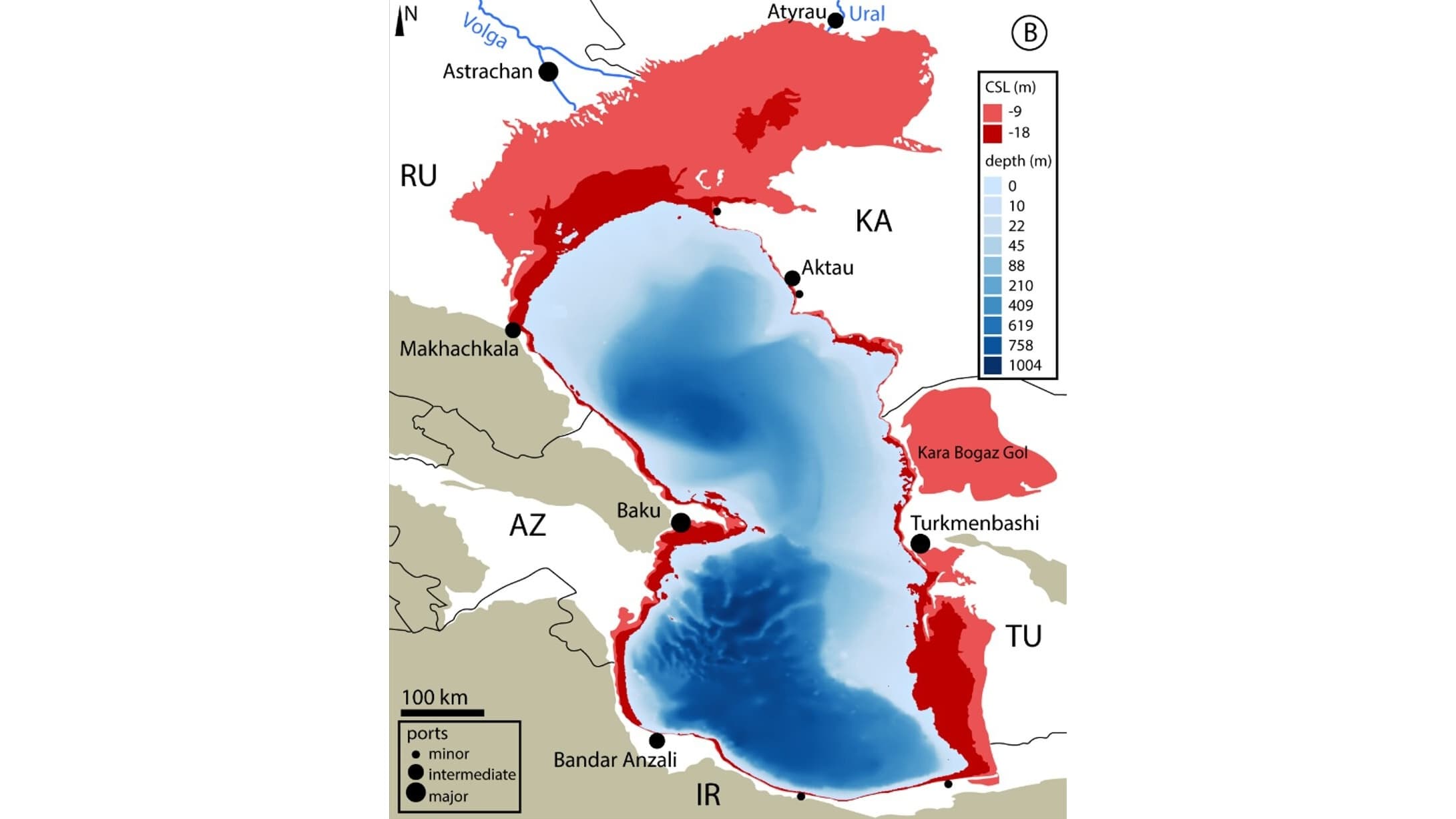
Policymakers also explored the highly attractive possibility of transiting Iran. On paper, Iranian railways offer a comparatively short and already existing rail pathway to Persian Gulf ports. In practice, however, sanctions, financial restrictions, shipping insurance complications, and the risk of secondary sanctions have discouraged investors and logistics firms from building supply chains dependent on Iranian transit. With Afghanistan and Iran to the south, China to the east, and Russia to the north, a solution materialized across the Caspian Sea.
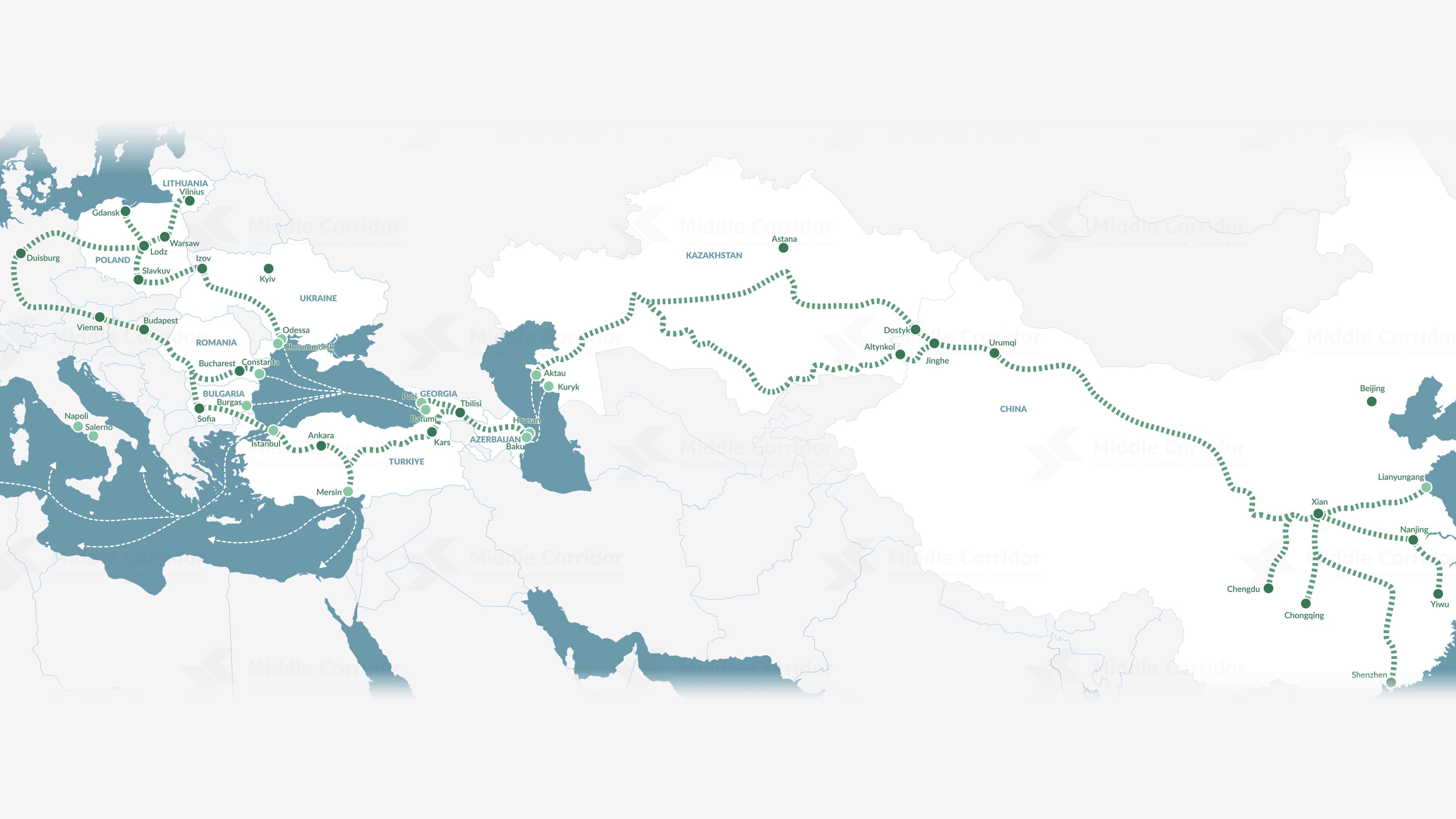
Regional governments are accelerating investments into an east-west trade route that links Asia to Europe through Kazakhstan, the Caspian Sea, Azerbaijan, Georgia, and Türkiye. Known as the Middle Corridor, this multi-modal network combines railways, ports, and maritime shipping to connect the trans-Caspian region directly with European markets. The strategic value of this route is growing as instability to the south and sanctions to the north limit other options.
Unlike many infrastructure initiatives driven by outside powers, the Middle Corridor has emerged largely through shared interests among the countries of Central Asia and the South Caucasus themselves. The war in Iran is now confirming the wisdom of this trend by reinforcing the need for reliable transit routes that bypass both conflict zones and sanctioned states.
The Aftermath of War in Iran
Damage to infrastructure, prolonged reconstruction, and continued sanctions will likely make Iran a far less attractive transit option for years to come. This leaves the Middle Corridor as the region’s most viable pathway to global markets, as it functioned for centuries bridging east and west along the ancient Silk Roads. Today's railways, ports, and logistics hubs represent a modern reprise of that role.
Investments to expand ports, modernize rail systems, and digitize customs procedures have dramatically increased cargo capacity along the route. What once took roughly 40 days by rail and sea to cross Kazakhstan, the Caspian Sea, and the South Caucasus now takes two weeks. The new corridor’s relative speed and reliability are attractive to global commerce, especially as the route will likely serve as the portal to access Central Asia’s strategic mineral wealth.
The significance of these investments ensures the region’s governments will never again be dependent on a single geopolitical gateway. Diversification has become a matter of economic sovereignty. Central Asia and the South Caucasus are exchanging their dependence on Russian trade and transit for an interdependent system of trust across the trans-Caspian space.
A New Economic Geography
The war in Iran is reinforcing the strategic importance of trans-Caspian connectivity. The Middle Corridor is emerging not simply as a contingency plan but as the backbone of the region's integration with global markets.
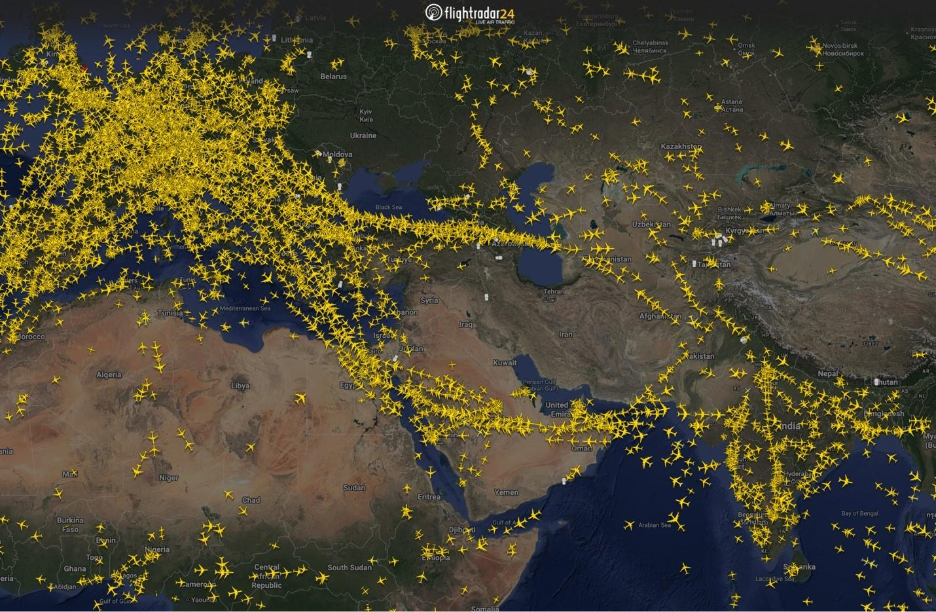 Redirected flights after the conflict in Iran, Source:X
The transformation unfolding across Eurasia reflects a deep reordering of economic geography. For the first time since the collapse of the Soviet Union, Central Asian and South Caucasus states are building trade networks that provide direct access to global markets without relying on major-power transit routes.
A war-torn Iran is unlikely to serve as a major transit hub for this region anytime soon. Instead, its conflict is helping accelerate the rise of a different trade alignment centered on the Caspian Sea. The Middle Corridor offers something increasingly valuable in a turbulent world—a reliable pathway built on regional cooperation, diversified partnerships, and economic sovereignty. For that reason, its importance is likely to grow in the years ahead.
Dr. Eric Rudenshiold is a Senior Fellow at the Caspian Policy Center and a former National Security Council Director under Presidents Trump and Biden.