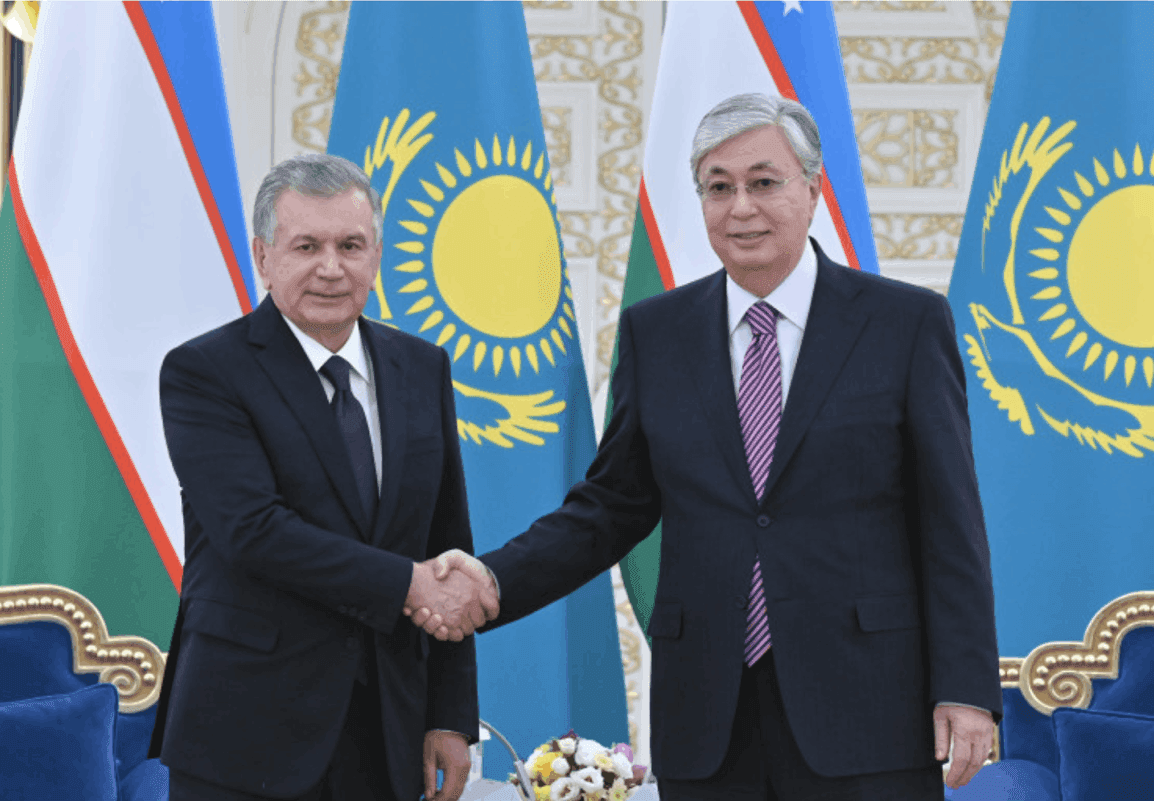
The Mirziyoyev-Trump Call: A Strategic Signal for U.S. Investment in Uzbekistan
Recent Articles
Author: Ana Maria Kvatashidze
08/19/2026
 American-Uzbek Business & Investment Council
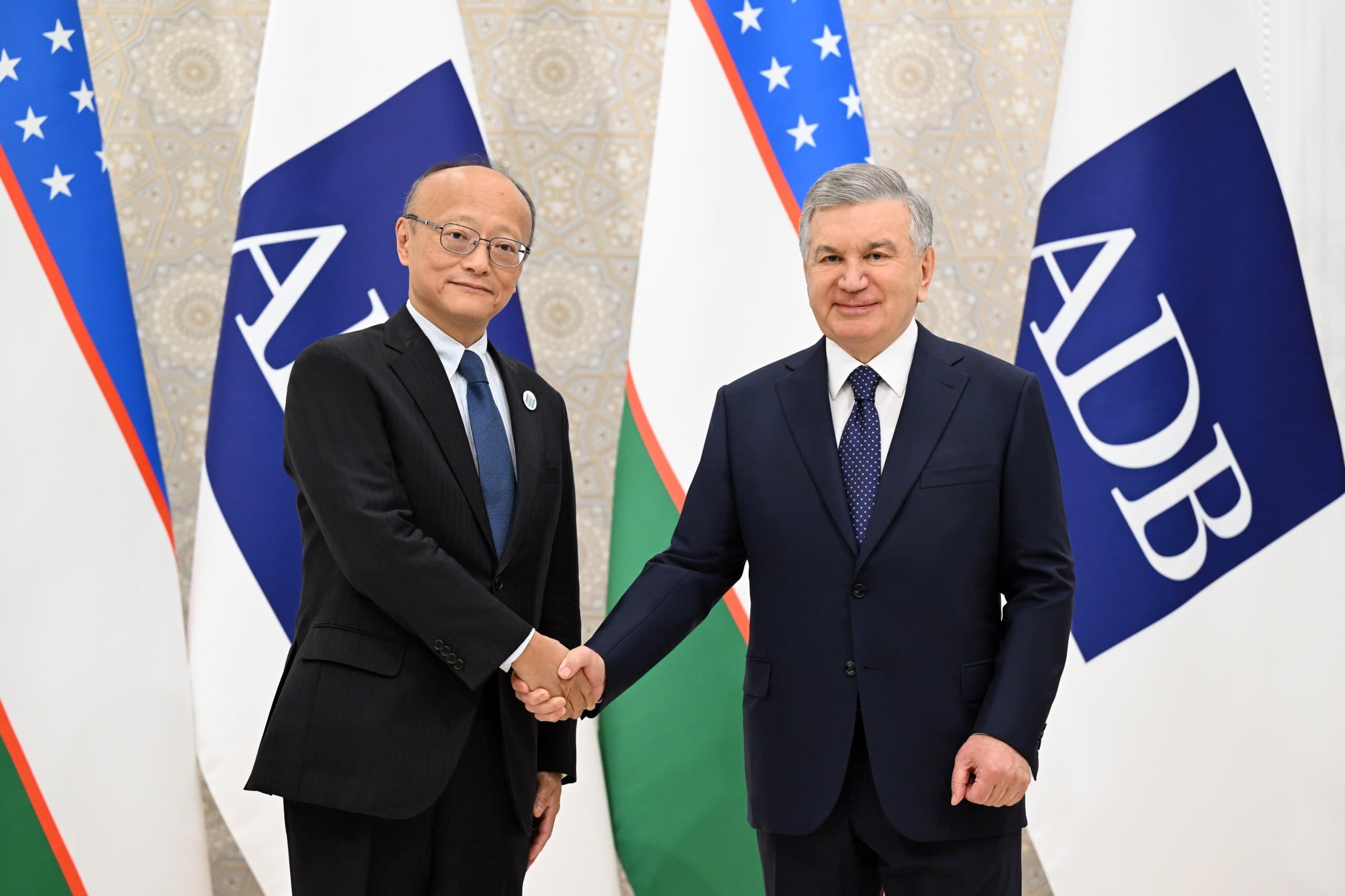
The August 7 phone call between Uzbekistan President Shavkat Mirziyoyev and U.S. President Donald Trump might look at first glace like routine diplomatic engagement. Tashkent expressed strong appreciation for the rapid pace of bilateral dialogue and exchanges covering almost all areas of cooperation. The two sides considered prospects for the further development of strategic partnership relations. Most importantly, Trump characterized the relationship as having reached an 'unprecedented level.’ At the close of the call, Mirziyoyev renewed his invitation for Trump to make an official visit to Uzbekistan.
Looking back at the past year and a half, the call is better understood as confirmation of a structural shift. The U.S.-Uzbekistan relationship has been moving steadily from episodic presidential diplomacy toward an institutionalized economic partnership, with concrete instruments now in place across trade, development finance, and critical minerals. For U.S. investors evaluating Central Asia, that shift is important.
The Economic Relationship is Advancing
Between 2001 and 2021, U.S.–Uzbekistan relations were shaped largely by security concerns - including temporary post-9/11 access to the Karshi-Khanabad airbase, counterterrorism cooperation, but also U.S. concerns about human rights and political reform. Today, the relationship looks different. Economic engagement, investment, and commercial access have moved to the center of the bilateral agenda. The region itself has changed, too, growing closer to Europe and less dependent on Russia and China. That shift fits well with this administration's transactional, business-first approach to foreign policy.
A formal architecture for economic ties between the United States and Uzbekistan has been in place for decades, but Uzbekistan’s economy and an uncertain investment climate limited its potential. That pattern has begun to change. Political momentum is now being turned into lasting institutions to carry it forward and sustain the progress
In April 2026, the two governments officially launched the U.S-Uzbekistan Business and Investment Council in Washington, DC. Having grown out of Trump–Mirziyoyev/C5+1 diplomacy, the Council creates a channel connecting Uzbekistani projects and American businesses with U.S. agencies involved in investment finance, export support, and commercial diplomacy. The U.S. International Development Finance Corporation (DFC) has also moved forward on a joint investment platform with Uzbekistan aimed at attracting private capital. These mechanisms give projects a way to continue to advance between occasional high-level political meetings. This is a significant development for investors.
In June 2026, Washington and Tashkent announced an “early harvest” package under which Uzbekistan agreed to eliminate or reduce tariffs on a range of U.S. goods, while both sides accelerated negotiations toward an Agreement on Reciprocal Trade and Investment and while Washington reaffirmed its support for Uzbekistan's WTO accession. The package builds on $32 billion in commercial deals announced in 2025, including an $8.5 billion Boeing agreement and investments including in critical minerals, mining, energy, finance, and technology. More important than the tariffs themselves is the way trade and investment are now moving together. The stark contrast with 1994 is revealing, since the investment treaty signed that year never entered into force. Three decades later, the two countries are now taking a more integrated approach to building the economic relationship.
Critical Minerals
Of everything on the bilateral agenda, critical minerals is the most important, and arguably the clearest test for how the broader relationship will advance. On February 4 this year, Uzbekistan's Foreign Minister Bakhtiyor Saidov and U.S. Deputy Secretary of State Christopher Landau signed a Memorandum of Understanding on securing critical minerals and rare-earth supply chains, building on an earlier MoU from September 2024. The continuity across administrations is notable. It suggests that critical minerals’ cooperation is less a product of any one administration’s Central Asia playbook than of a broader strategic concern in Washington: reducing U.S. dependence on China-dominated mineral supply chains has remained a priority across administrations. By June, DFC had formalized a U.S. – Uzbekistan Joint Investment Platform spanning energy, infrastructure, minerals, logistics, and advanced manufacturing, aimed at mobilizing private capital and sovereign wealth funds.
The critical minerals agreement came amid a U.S.-hosted Critical Minerals Ministerial where Washington launched FORGE, the Forum on Resource Geostrategic Engagement, as the successor to the Biden-era Minerals Security Partnership. Uzbekistan was among the countries signing new critical minerals agreements with Washington, placing Tashkent within a wider American push to diversify mineral supply chains away from China-dominated processing capacity. For Tashkent, the framework offers a vehicle to attract Western capital, technology, and processing expertise to its substantial mineral resource base.
So far, no specific deposits, feasibility studies, or project-level funding terms under the new U.S.-Uzbek frameworks have been made public. Much of the relationship, therefore, remains at the framework stage. DFC's direct involvement, however, gives the partnership access to a financing mechanism that many diplomatic agreements lack. Whether these frameworks translate into funded, operational projects will be an important test of the broader relationship.
Beyond Minerals
The bilateral investment agenda extends beyond minerals. Publicly announced cooperation suggests a broad span across energy and infrastructure, civil aviation, automotive manufacturing, metallurgy, digital technologies and artificial intelligence, finance, logistics, regional connectivity, and advanced manufacturing. This breadth reflects an effort to position Uzbekistan not only as a bilateral market of more than 38 million people, but also as a potential platform for U.S. firms seeking broader exposure to Central Asia as a whole. That ambition is consistent with Tashkent's own efforts to position itself as a regional hub along the Middle Corridor and within the C5+1 format.
None of this cooperation is exclusive, and Tashkent has been careful to keep it that way. Even as Uzbekistan has been building a critical minerals framework with Washington, the country's Technological Metals Complex has signed a separate agreement with China's Shaanxi Non-ferrous Metals Holding Group covering geological exploration, mining, processing, and higher-value production. Uzbekistan is not simply choosing between Washington and Beijing; it is using relationships with multiple partners to attract capital, technology, and expertise while preserving its own room to maneuver.
Why the Invitation Matters
Mirziyoyev's renewed invitation for Trump to visit Uzbekistan should be read against this backdrop rather than simply as standard diplomatic protocol. Their two meetings last year – September in New York and then in November at the White House – were followed by major commercial and institutional steps, including the $32 billion package of deals and the creation of the Business and Investment Council.
A U.S. presidential visit to Uzbekistan would carry a different weight. Central Asia remains one of the only regions a sitting U.S. president has never visited. It would come at a time when Tashkent can point not only to its strategic location, but also to critical minerals, infrastructure opportunities, and a growing domestic market for U.S. companies as reasons for deeper American engagement. It could also create another opportunity to move larger projects from negotiation toward actual commitment and follow-through.
Implications for Investors
For investors, the question is whether recent developments can give the relationship durability through changes in the political environment. Projects in mining, infrastructure, and energy often require large amounts of capital years before they begin producing returns. DFC involvement can help make such projects more financeable by bringing U.S. government-backed financing into a broader framework alongside private investors and other financial institutions.
There is a political effect as well. As more agencies, companies, and investors become involved, the economic relationship becomes less dependent solely on diplomacy between two presidents. Each project creates another practical reason to keep the broader relationship working, giving both sides more to lose if momentum stalls. The Business and Investment Council, DFC's investment platform, and ongoing trade and investment negotiations give that relationship more structure than simply political goodwill alone.
For Uzbekistan, this also creates more room to manoeuvre. Greater access to U.S. capital gives Tashkent another source of financing alongside its existing partners. Over time, that diversification might matter as much as the amount of American investment itself. The more sources of capital and commercial partnerships Uzbekistan can draw on, the less any single relationship can shape its economic choices.