Transparent and Reliable: How a Strong Foundation Brought Japan Success in Central Asia’s Minerals Sector
Recent Articles
Author: Kurtis Yan
03/13/2026
 Prime Minister's Office of Japan
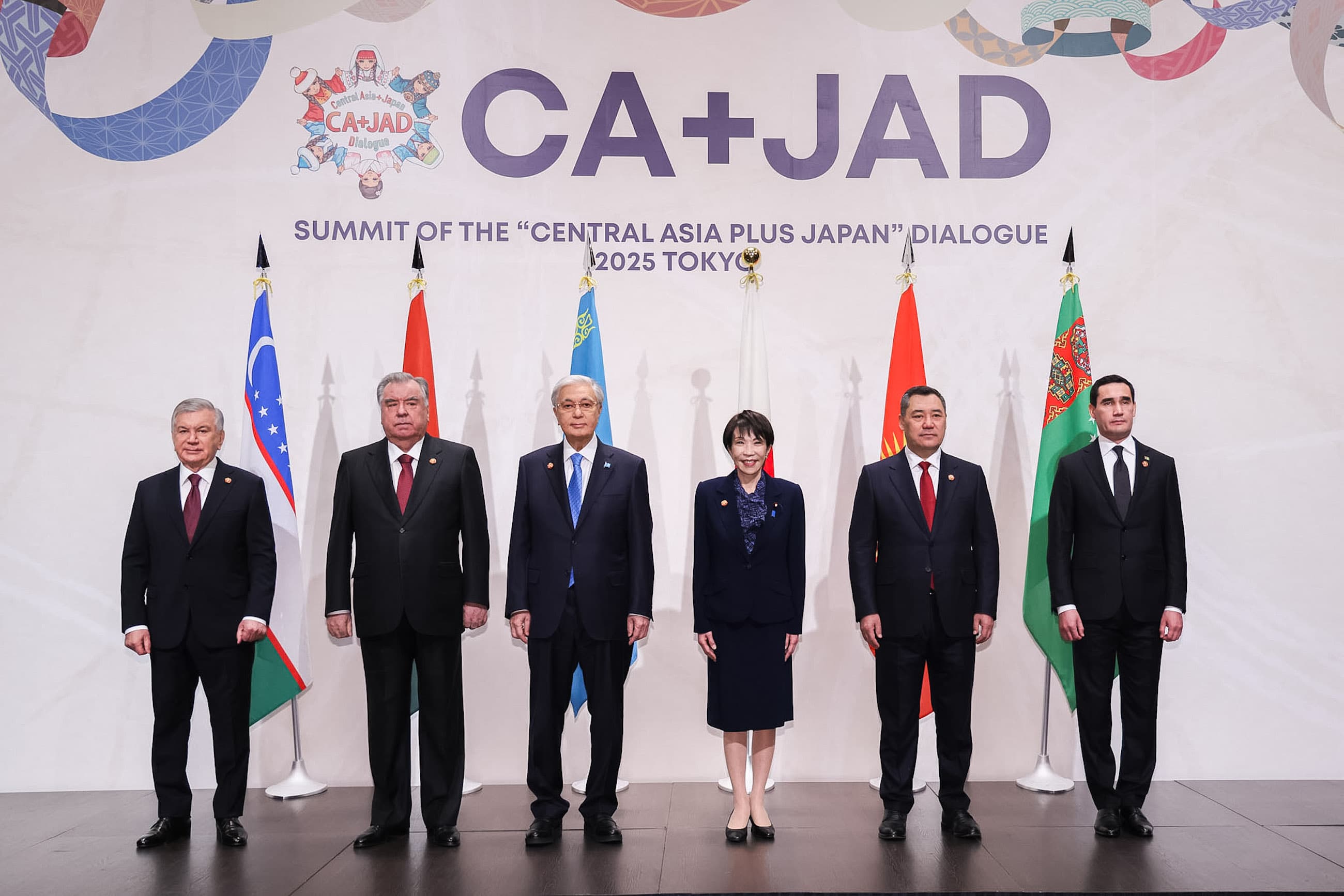
Rounding out an eventful year of diplomacy for Central Asia, the presidents of the five Central Asian (C5) states traveled to Tokyo, Japan, where they convened on December 20, 2025, for the first heads-of-state summit under the Central Asia plus Japan Dialogue (CA+JAD). Beyond signing bilateral deals with Japan, the C5 committed to strengthening cooperation under a Tokyo Declaration. In turn, Japan pledged $19 billion in business investments across the C5 over the next five years.
On the eve of the summit, Kazakhstan agreed to provide Japan with an annual supply of 15 tons of gallium, a significant step that diverges from the typical portfolio of great powers that compete in the region. However, Japan’s latest move is rooted in consistent, long-term cooperation in the background of geopolitical rivalry. After all, Tokyo established the much-copied C5+ platform back in 2004. Japan’s recent success in striking deals with Central Asia arose from years of key investment and balanced partnerships that now extend the scope of its minerals diplomacy. Going forward, Japan’s longstanding and growing partnership with the C5 presents a key lesson and potential opportunity for the United States to bolster its own engagement.
Japan’s Long-Term Strategy
Following the fall of the Soviet Union, Japan provided Central Asia with financial loans, grants, and Official Development Assistance (ODA), exceeding $1 billion in the 1990s. Tokyo quickly moved to develop an official Central Asia strategy in 1997. Throughout the late 1990s and early 2000s, it largely prioritized human development, including medical care, poverty reduction, and road renovation. It also sold excavators and bulldozers to Turkmenistan for the construction of water reservoirs. However, Japan also invested in key connectivity projects and infrastructural upgrades with long time horizons. For instance, the Japan International Cooperation Agency (JICA) led rehabilitation efforts for the Bishkek-Osh Highway and pledged millions for airport modernization. Japan is also the largest shareholder of the Asian Development Bank, which has launched billions of dollars’ worth of projects into the region, from energy to education.
Japan’s Foreign Minister Yoriko Kawaguchi established the Central Asia plus Japan Dialogue (CA+JAD) in 2004, which serves as the primary platform for interregional diplomacy. This marked the first of any C5+ minilateral, and while dialogue remained largely at a ministerial level, it proved consistent and useful in initiating projects. Tokyo has initiated efforts to modernize Central Asia’s energy sector, including the expansion of thermal power plants and the financing of solar power plants in Uzbekistan. Japanese companies regularly coordinate with Turkmenistan on gas plants, such as the completion of a gas-to-gasoline complex in 2019. Meanwhile, outreach to Tajikistan demonstrates Japan’s commitment to human development by improving water systems and by leading educational programs. Japan has also worked to improve transportation. It launched renovation projects at international airports, such as Dushanbe in 2018, and Tashkent, where construction began in 2025 under $1 billion from Sojitz Corporation.
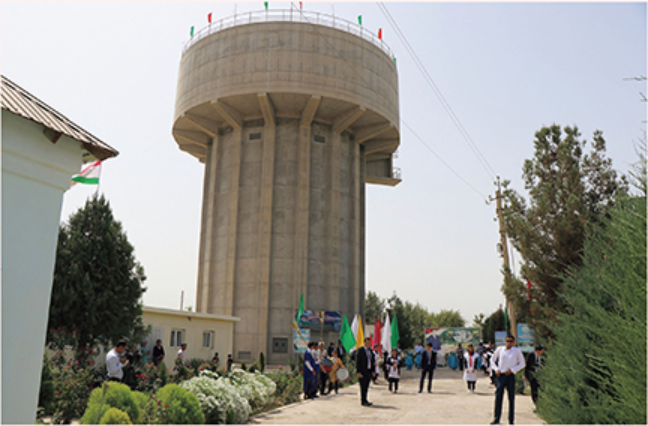
Elevated water tower constructed by JICA in Pyanj District, Tajikistan (Source: Ministry of Foreign Affairs of Japan)
Through its balanced, transparent diplomacy, Japan maintains a strong reputation for reliance and trust, with no fears about hidden agendas or broader interest in power politics of the “great game.” This could explain why Japan’s involvement in extractive energy sectors does not evoke fears of exploitation.
Japan’s Success in the Minerals Sector
Japan’s involvement in Central Asia’s mining sector stems from its own high energy demand and technological needs. Japan receives a third of its uranium from Australia, followed by Canada and Kazakhstan. Japan’s first agreement in Kazakhstan was struck in 2006, in which Itochu agreed to a 10-year contract for the annual purchase of 3,000 tons of uranium from Kazatomprom’s West Mynkuduk. In 2007, four Japanese energy companies agreed to participate in the development of the Kharasan deposits, granting them 2,000 tons of uranium every year.
In 2009, Tokyo Electric Power Company (TEPCO), Toshiba, and the Japan Bank for International Cooperation (JBIC) purchased $220 million in shares of Canada’s Uranium One. This purchase accompanied an agreement for 20% of the company’s offtake, including production in Kazakhstan. Later that year, Japan Organization for Metals and Energy Security (JOGMEC) signed an MoU with Sumitomo and Kazatomprom to aid in the recovery of rare earths from uranium extraction in Kazakhstan. In 2011, Itochu also signed a 10-year agreement for uranium concentrate from Uzbekistan’s Navoi Mining and Metallurgical Combine.
After facing recurrent mineral export restrictions by China in the 2010s, Japan scrambled to diversify its energy supply chains. In 2023, Chinese export restrictions on gallium highlighted a potential supply vulnerability. Gallium is produced exclusively as a byproduct of aluminum processing from bauxite ore, with numerous strategic applications for defense, semiconductors, and electronics. China provides 60% of Japan’s gallium and controls nearly 99% of global production.
For Japan to fill its mineral gaps, and for Kazakhstan to continue diversifying its export markets, a bilateral agreement made sense. The 2025 agreement outlines that the Eurasian Resources Group will launch gallium production at the Pavlodar Alumina Plant in late 2026, providing 15 tons of the mineral annually to Japan’s Mitsubishi Corporation. More importantly, the deal sets the foundation for further minerals diplomacy between Tokyo and the broader C5.
The Tokyo Declaration’s Promise
Japan and the C5 pledged to elevate cooperation at the latest CA+JAD summit in December 2025, building off pre-established areas of partnership and addressing new topics of importance. The Tokyo Declaration established three essential pillars of cooperation: Green and Resilience, Connectivity, and Human Resource Development.
To simultaneously promote climate resilience and economic growth, the parties agreed to enhance critical mineral supply chains and the efficiency of energy production to reduce emissions. They also called to unify regional responses to climate disasters, strengthen food systems, and manage resources. To improve connectivity, Tokyo identified the Middle Corridor as an essential target for development assistance, along with establishing the Central Asia-Japan Partnership for AI Cooperation. On human development, the Tokyo Declaration prioritizes academic exchanges, scholarships, technical assistance, healthcare, and improving the business environment to attract foreign direct investment.
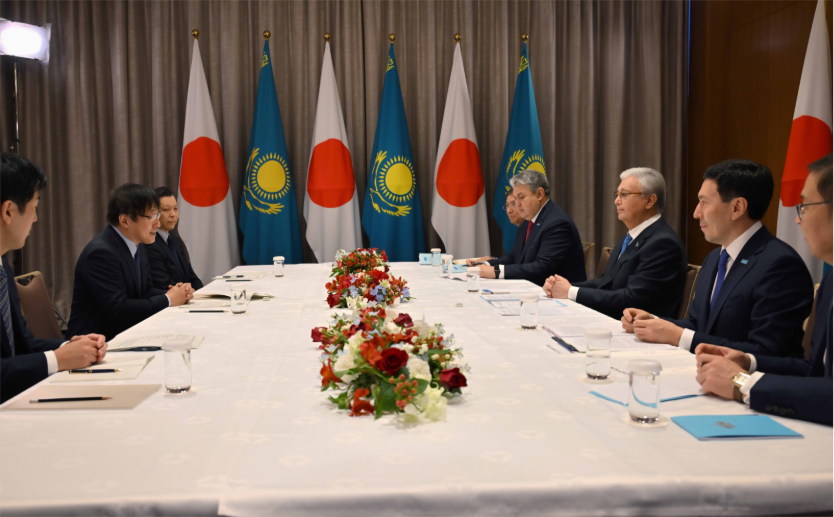
Kazakh President Kassym-Jomart Tokayev meeting with JOGMEC Chief Executive Officer Ichiro Takahara in Tokyo (Source: Qazinform)
On the sidelines, Japan agreed to a trove of bilateral investment deals. Uzbekistan received an investment portfolio of $12 billion, while Kazakhstan signed over $3.7 billion in agreements, including Japanese commitment to modernize customs procedures at the port of Aktau. Kazakhstan also garnered the interest of JOGMEC to participate in geological exploration. In line with its nuclear fleet development and nuclear power plant expansions, Japan’s Kansai Electric Power extended its long-term uranium contracts with Kazatomprom. Kyrgyzstan and Japan signed a range of bilateral agreements, including a plan to develop a hydropower plant on the Chon-Kemin River, while JICA agreed to provide $44 million for electrical grid development and medical equipment.
What the U.S. Can Learn from Japan
Japan’s keen interest in the Middle Corridor and critical minerals provides both a lesson for the U.S. and an angle for future U.S.-Japan cooperation. Japan’s holistic C5 strategy has built a strong backing to attain energy and mineral benefits. Its ODA investments have met the developmental needs of the region, but its particular focus on logistics, the Middle Corridor, and energy modernization ultimately improves the commercial viability of a critical mineral supply chain. Minerals extraction and processing place strong demands on energy infrastructure and water resources, while delivering these minerals efficiently requires substantive improvements to the Middle Corridor.
The U.S. seems to recognize that it cannot create a commercially viable mineral supply chain without investments into complementary sectors. In 2025 alone, it launched the Trump Route for International Peace and Prosperity (TRIPP), while Wabtec agreed to provide locomotives to Kazakhstan. Still, the U.S. lags behind regular Chinese and Japanese investments into the Middle Corridor. To heighten East-West connectivity, the U.S. and its agencies, namely the Development Finance Corporation (DFC) and the Export-Import Bank (EXIM), will need to deploy capital that goes beyond extraction.
Given that the Middle Corridor requires modernization and greater uniformity of regional customs procedures, the U.S. can look to Japan as another engaged ally in the region. After all, the U.S. and Japan signed an agreement in 2023 to diversify critical mineral supply chains, and both participate in the G7. The G7’s Partnership for Global Infrastructure and Investment (PGII) delivers transparent investment to low-income countries and has strengthened alternative mineral supply chains. For example, the G7 and regional banks have pledged $6 billion to the Lobito Corridor, a strategic route that spans from the Democratic Republic of the Congo and Zambia to the Port of Lobito, Angola. To develop a commercially viable supply chain to the U.S., the requisite funds can be channeled by PGII toward midstream processing operations—independent of China—and the modernization of the Middle Corridor.
Japan’s elevated interest in Central Asia presents a unique opportunity for the region to enhance its global posture, while opening the U.S. to an avenue for joint engagement. Both Washington and Tokyo can pool capital together to de-risk projects. Public-private partnerships and joint ventures can de-risk investments at the early stages of the mining process, namely geological exploration, feasibility studies, and environmental impact assessments. Looking ahead, enhanced U.S.-Japan coordination can ultimately raise investor confidence and signal their long-term commitment to strengthening Central Asia’s partnerships beyond Russia and China.