Caspian Policy Center Hosts 10th Anniversary Trans-Caspian Forum
Author: Caspian Policy Center
06/12/2026
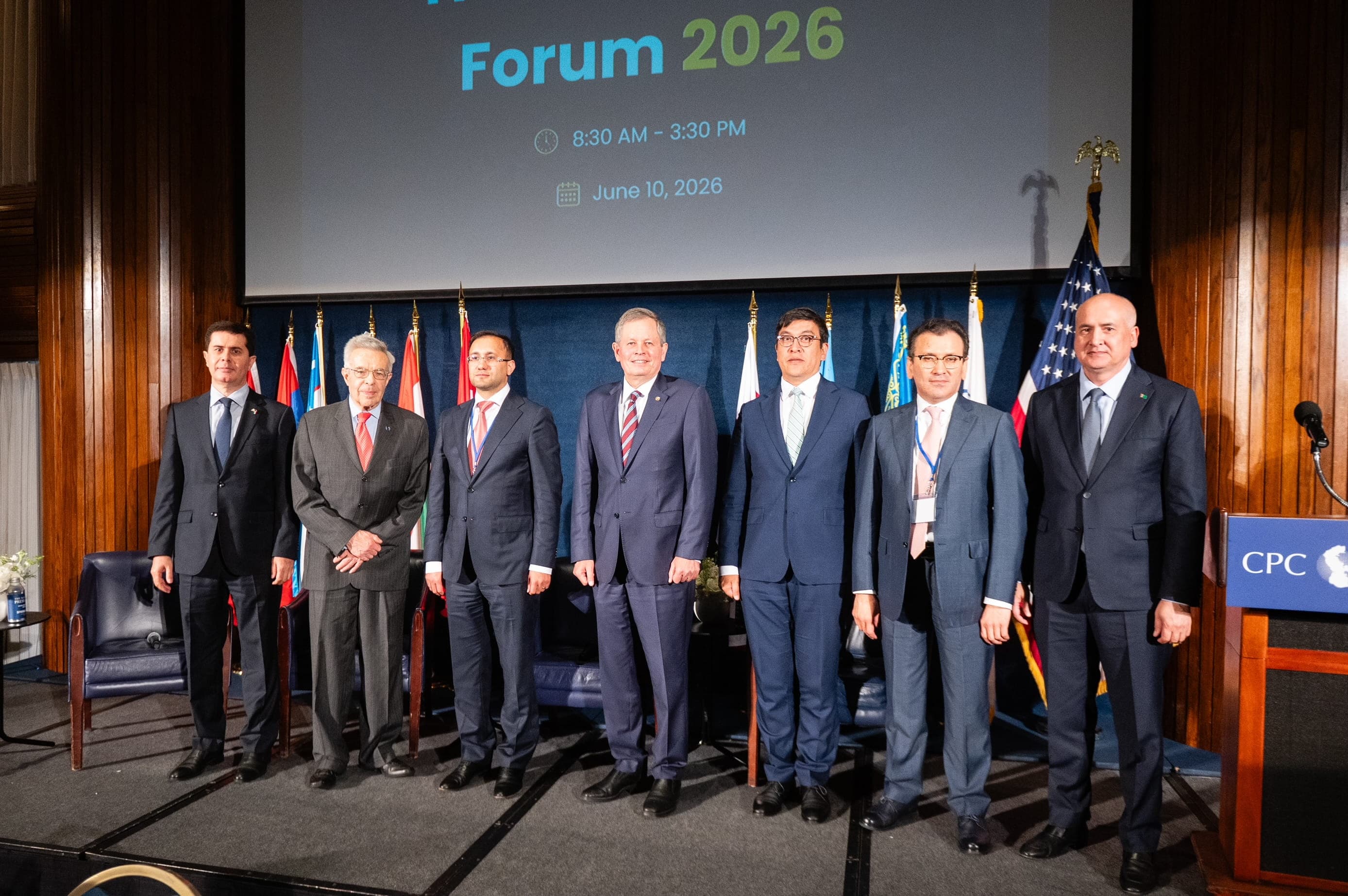
ICYMI: On June 10, we hosted our 10th-anniversary Trans-Caspian Forum at the National Press Club in Washington, DC, bringing together senior U.S. officials, heads of state advisors, and global executives for a full day of dialogue on the issues defining the Caspian region's… pic.twitter.com/V1KF21saPz
— Caspian Policy Center (CPC) (@caspiancenter) June 12, 2026
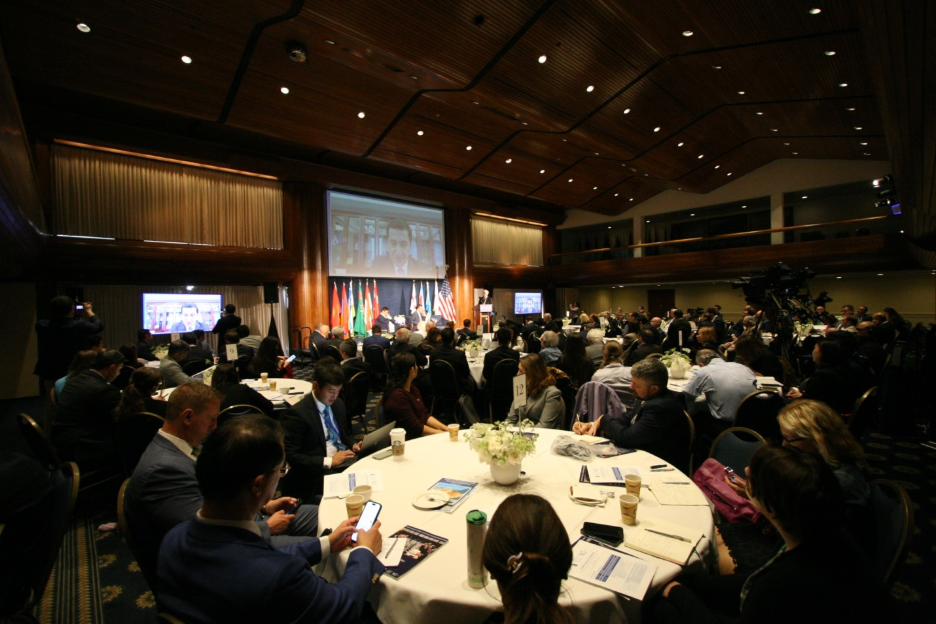
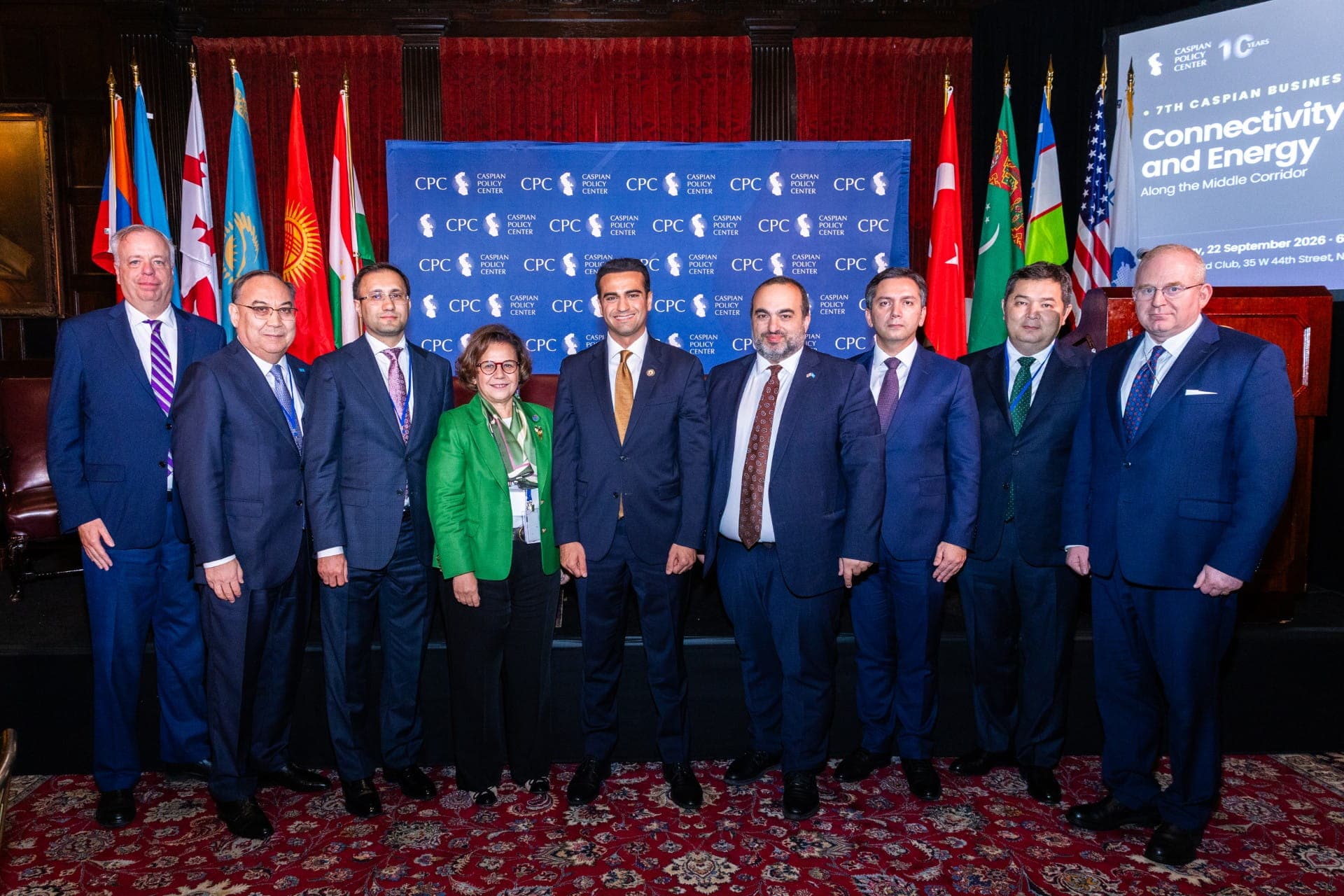
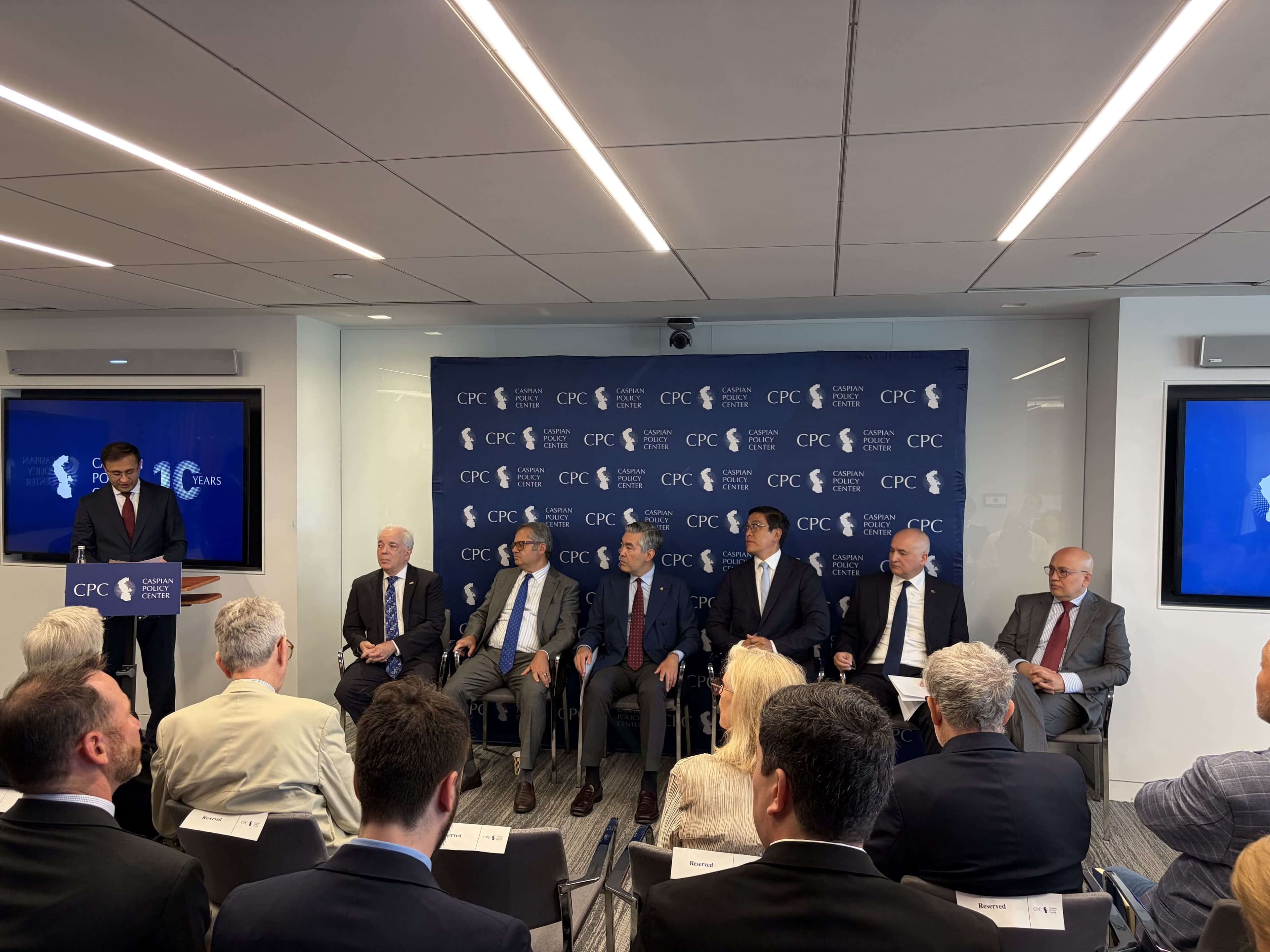
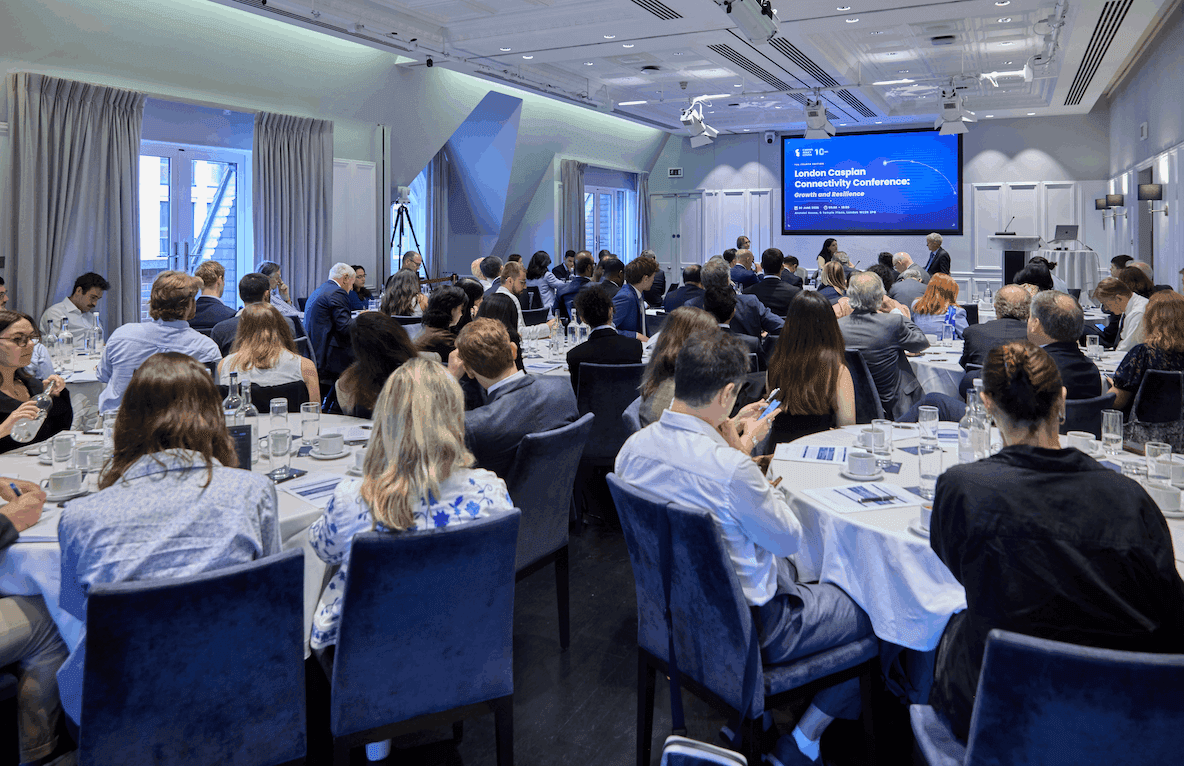
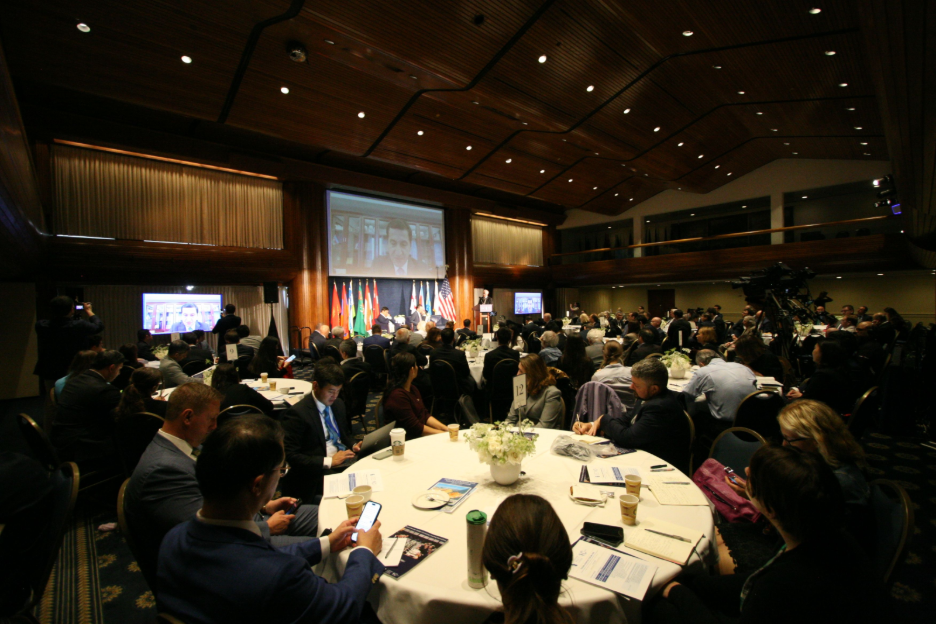
Washington, DC, June 10 - The Caspian Policy Center (CPC) held its 10th anniversary Trans-Caspian Forum in Washington, DC, at the National Press Club. The event brought together senior leaders from the region, U.S. officials, key business officials, and regional experts to explore the evolving strategic relationship between the United States and the Greater Caspian Region. This year marks 10 years of CPC bringing the Greater Caspian Region to the center of American policy conversations. Building on that work, this year’s forum focused on the Caspian region's increasingly pivotal role on the world stage, highlighting energy, connectivity, and critical minerals.
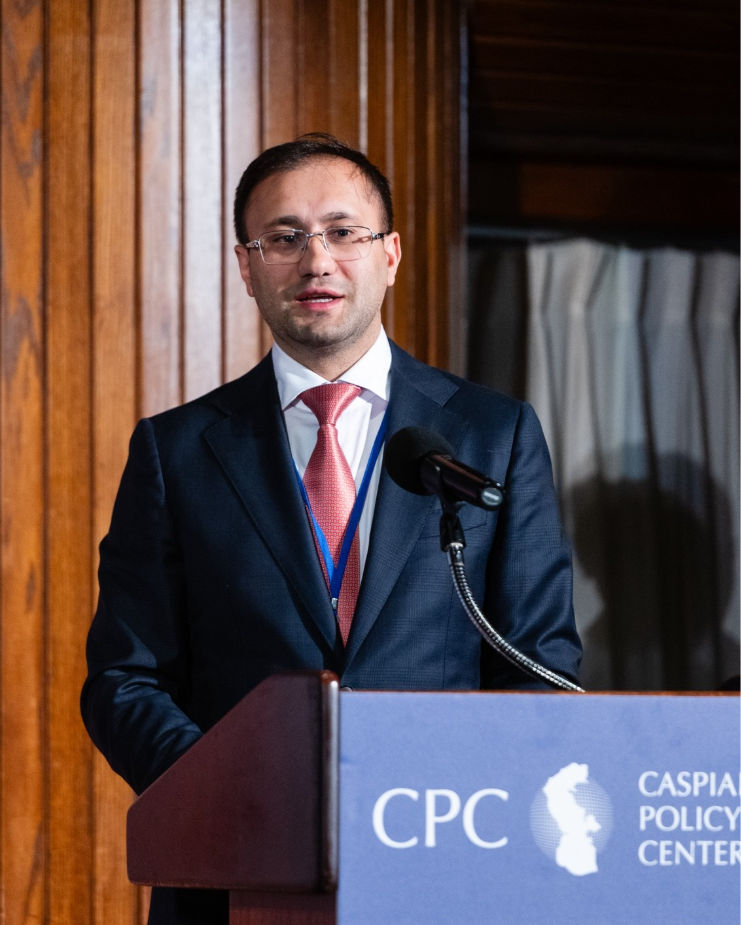
CPC President Efgan Nifti opened the forum with remarks reflecting on the region's remarkable trajectory and marking CPC's 10th anniversary of covering it. He emphasized that "the Caspian region has moved firmly to the center of global affairs, and we at CPC remain committed to providing the insight and engagement this moment demands."
Turning to recent developments, Nifti said, "We have seen the signing of a long-awaited peace agreement between Armenia and Azerbaijan, accelerating development of the Middle Corridor, the enduring ramifications of Russia's war in Ukraine, growing competition over critical minerals, and most recently, renewed tensions involving Iran. All of these developments have reinforced the Caspian region's centrality to global affairs and the urgency of the conversations we are here to have today."
Nifti also highlighted the region's growing capacity for collaboration, both among its own states and with external partners such as the United States. He noted that Azerbaijan's integration into Central Asia's Consultative Meetings, which created the C6 format, "reflects a growing recognition that energy flows, economic corridors, and security dynamics increasingly bind Central Asia and the South Caucasus into a single strategic space."
Nifti closed his remarks by observing that, after a year of extraordinary progress in the region, "the task now is delivery, translating agreements into implementation and ambition into results."
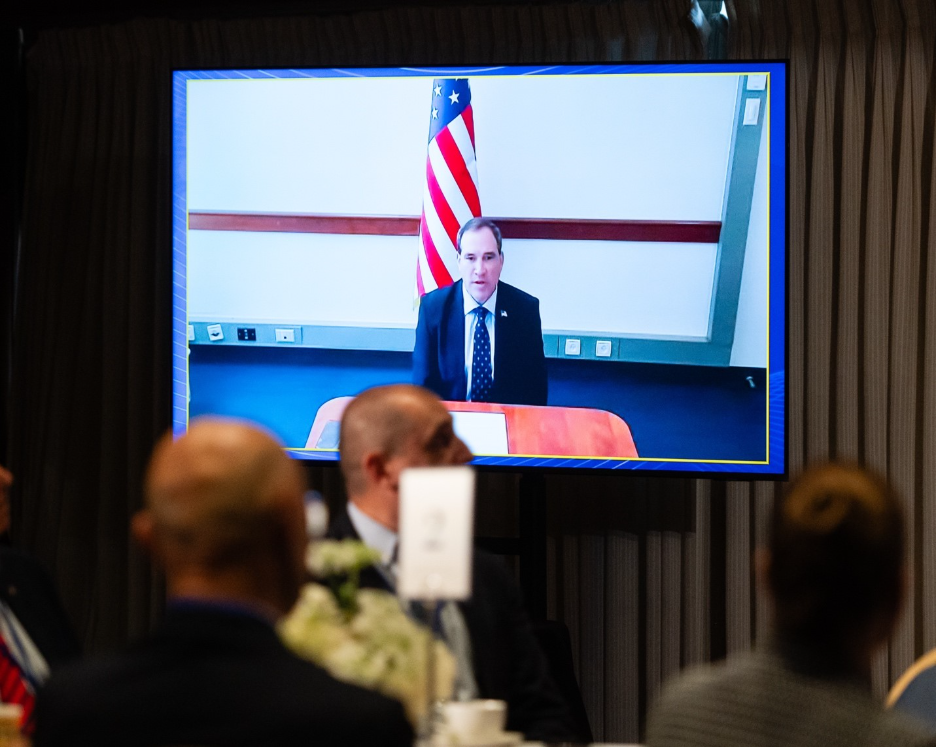
Washington’s perspective on the region’s potential for increased engagement and U.S. partnership was presented in a policy speech delivered by Aryeh Lightsone, Senior Advisor to the Board of Peace. He noted the significant achievements of the last year and a half, with a critical agreement between Armenia and Azerbaijan, as well as regional support for the Board of Peace and the Abraham Accords.
“With a little innovation and creativity, we can get the Middle Corridor to be one of the most important routes in the world, not just in the region. TRIPP breaks a decades-long deadlock between Azerbaijan and Armenia and increases the chance of sustaining peace and economic viability across Central Asia and the Caspian. Regional integration is not optional: it is critical,” Lightstone noted.
Lightstone emphasized in his remarks that “we see new opportunities for growth across the Trans-Caspian. The TRIPP model aims to facilitate private investment to enhance infrastructure efficiency and harmonize regulatory frameworks. The TRIPP Plus Enterprise Fund will help facilitate private investment in other private areas of infrastructure efficiency, digital connectivity through infrastructure improvements, customs, and regulatory harmonization. The goal is not to get a larger slice of a finite pot—the goal is to grow that pot.”
I’d love for all of us to sit at this Forum and to celebrate the 10th anniversary of it, not as competitors, but as companions in creating this format that I think will yield enormous benefits for all of the citizens of the Trans-Caspian countries…and I’m looking forward to when we sit at the 11th (Trans-Caspian) Forum, where we won’t be talking about MoU and policies, but we’ll be talking about trains, roads, and pipelines connecting all of our countries in the most efficient and the most effective way,” Lightstone concluded.
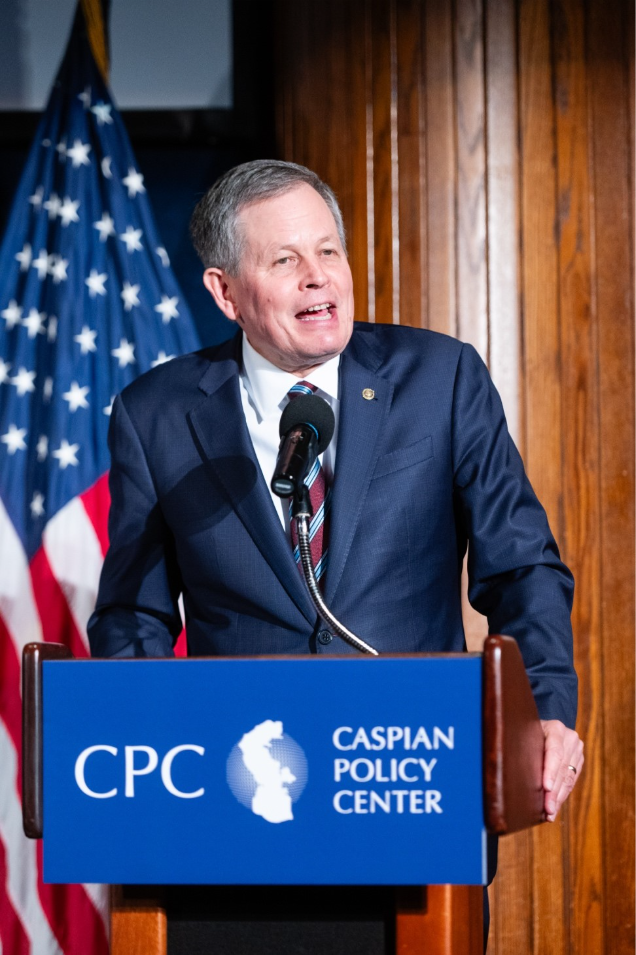
Chair of the bipartisan U.S. Senate Central Asia Caucus, Senator Steve Daines of Montana framed the strategic importance of the region to U.S. foreign policy in a detailed policy speech. Senator Daines first recognized the importance of the region: “The broader Caspian basin has obvious geographic importance due to its position between Russia, China, and Iran. But there has also been an obvious lack of engagement with the United States.”
“The countries of the region long looked to Russia for leadership. The Soviet Union and Russian Federation abused this leadership status for their own cynical purposes and the U.S. failed to convert years of counterterrorism cooperation into anything resembling a long-lasting relationship. [The year] 2025 marked the end of that era. President Trump and Secretary of State Rubio and this Administration’s firm commitment to pursuing American interests in Central Asia and Caucasus have presented a tremendous opportunity for a new era of friendship,” said the Senator from Montana.
He continued to highlight the real-time opportunities for further U.S. engagement in the region, noting, “The signing of the Armenia-Azerbaijan peace agreement and C5+1 Summit are indicative of a broader shift to a new age of American diplomacy as well as a new focus on this geo-strategically critical region. The U.S., Central Asia, and Caucasus are at last strategically aligned; and because of this fundamental change, our relationships are at a point that they should last long beyond my own personal departure from the U.S. senate.”
“I traveled to Kazakhstan, Uzbekistan, Tajikistan, Turkmenistan, and the Kyrgyz Republic in 2020. No other U.S. Senator had traveled to all five countries in more than a decade. In all five countries, I met with the heads of state, and I cannot tell you the warm engagement that I personally experienced meeting the respective heads of state. All five wanted to sincerely deepen their relationship with the United States because of our shared respect for sovereignty, independence, and territorial integrity,” Senator Daines shared.
“I realized that the we could no longer neglect to invest in countries that so deeply wanted a relationship with the United States, and whose friendship carried such geopolitical importance. Building closer relations between our countries is not simply desirable but is a strategic imperative. These relationships must now focus on deliverables—concrete deliverables—on new mines, updated infrastructure, and AI stack investment,” Senator Daines explained.
The Senator also drew special attention to the barriers that still remain for U.S.-Caspian cooperation. He said “Central Asia and Azerbaijan have for too long been subject to the outdated, antiquated relic called Jackson-Vanik Amendment that restricts trade. We’re working in a bipartisan fashion with the House and the Senate to repeal truly a relic of the Cold War and ensure that America can make the long-term investments necessary to bring a powerful change.”
Turning to the energy sector, Senator Daines added,, “Hopefully, projects can lead to the ultimate completion of the Caspian interconnector to connect Europe-bound pipelines to Turkmenistan's vast gas reserves. This would be a critical project, providing massive economic benefit to our Turkmen friends and delivering increased energy security to our allies in Europe. This would also increase the foundation and opportunity for other nations to diversify their infrastructure away from Russia and invest in both regional partners and domestic capabilities. But we, too, must redouble our commitment to these partnerships.”
Senator Daines closed his speech with a hopeful outlook for the future of U.S.-Caspian cooperation and affirmation of his commitment to the partnership. “The past year has truly delivered countless landmark agreements between our countries that have created a road map for our collective future. Our most important asset is trust. Without trust, true understanding is impossible and likewise a true alignment cannot be achieved. I’ll plan to spend more time back in the region and continue with the same determination and commitment,” Senator Daines remarked.
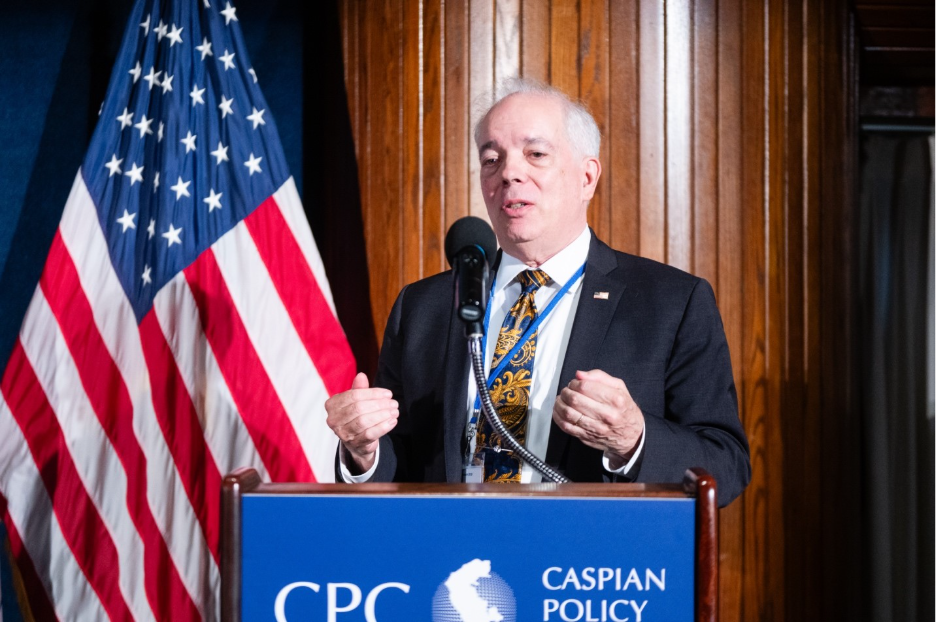
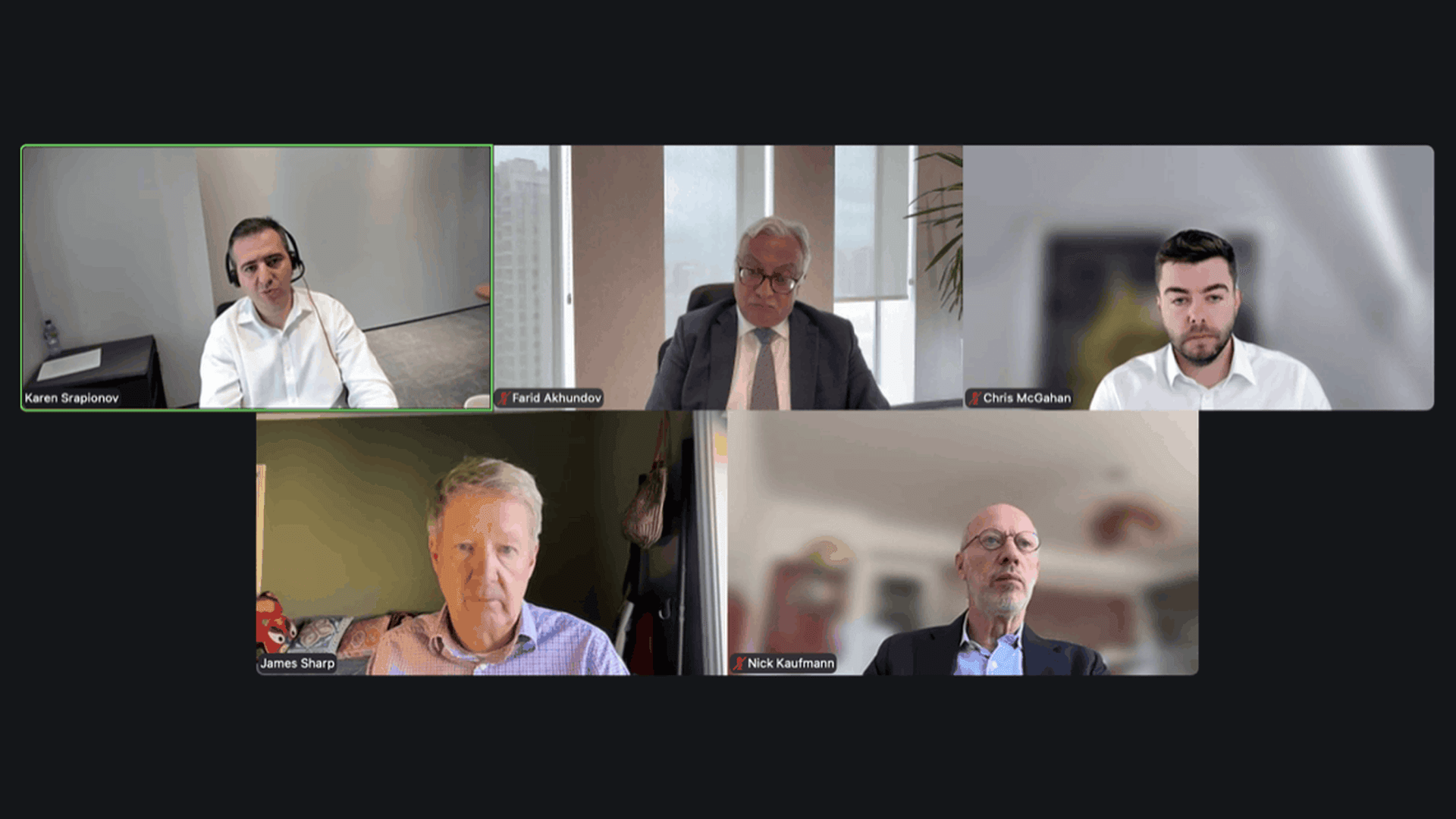
Presidential advisors from Azerbaijan, Kazakhstan, the Kyrgyz Republic, and Uzbekistan shared their visions for the future of the Caspian Region, in the next panel discussion moderated by CPC’s Senior Fellow for Caspian Affairs Dr. Eric Rudenshiold. From connectivity and energy diversification to critical minerals and digital infrastructure, the four policymakers reviewed the region’s remarkable advances with an eye to future needs.
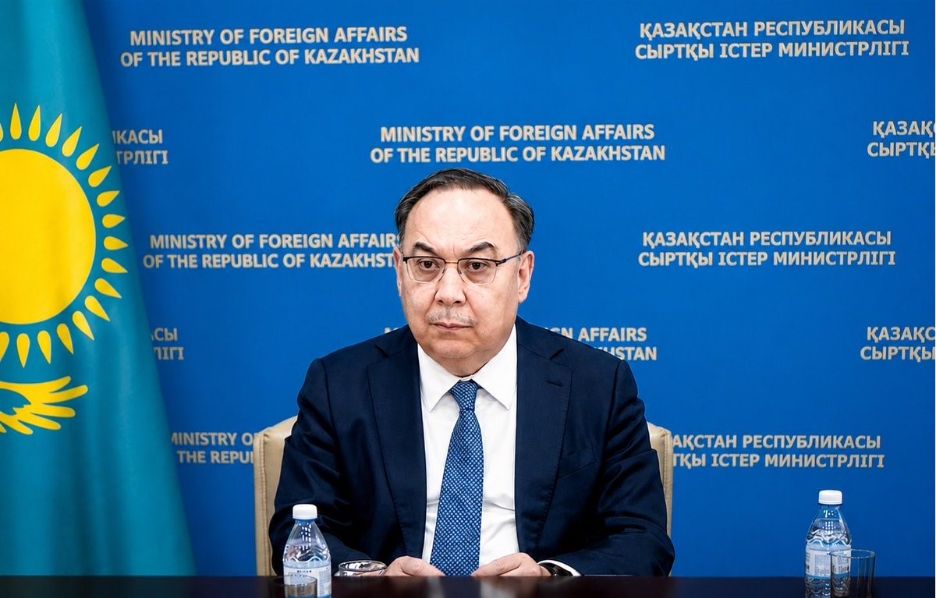
Erzhan Kazykhan, Representative of the President of Kazakhstan for Negotiations with the United States, opened the discussion, stressing the country’s growth and partnership with the United States: “Today the Caspian region is emerging as one of the key crossroads of the 21st century, linking energy and industrial markets and shaping the use of supply chains, transport routes, and security architecture. We have signed 29 commercial agreements with leading American companies, including Wabtec and John Deere, exceeding $20 billion. It is highly symbolic that the first in-person ministerial meeting of C5+1 on critical minerals dialogue was launched today in Astana, bringing together all regional states and the U.S. around a shared strategic strategy.”
Looking to other international partners, Kazykhan said, “Kazakhstan is deepening political cooperation with fellow members of the Organization of Turkic States, which we view as a pragmatic platform for economic, transport, technological, and cultural cooperation complementing and reinforcing the broader Trans-Caspian agenda. Moreover, Azerbaijan’s participation has effectively expanded the C5 to a C6, linking energy and mineral potential with South Caucasus’ processing infrastructure.”
“The Trans-Caspian fiber optic cable linking Kazakhstan and Azerbaijan is scheduled to be operational by the end of 2026. It will significantly strengthen regional digital infrastructure, support new data flows and AI-driven logistics, and will expand high-speed digital connectivity between Asia and Europe. Kazakhstan intends to be the center of the [(trans-Caspian] transformation, a driver of integration and the strategic bridge connecting the Caspian, the Caucasus, and global markets,” Kazykhan said.
Ambassador Kazykhan concluded his speech by congratulating CPC on its 10-year anniversary: “We commend CPC’s leadership in fostering forward-looking dialogue on the future of the Middle Corridor and broader Caspian region.”
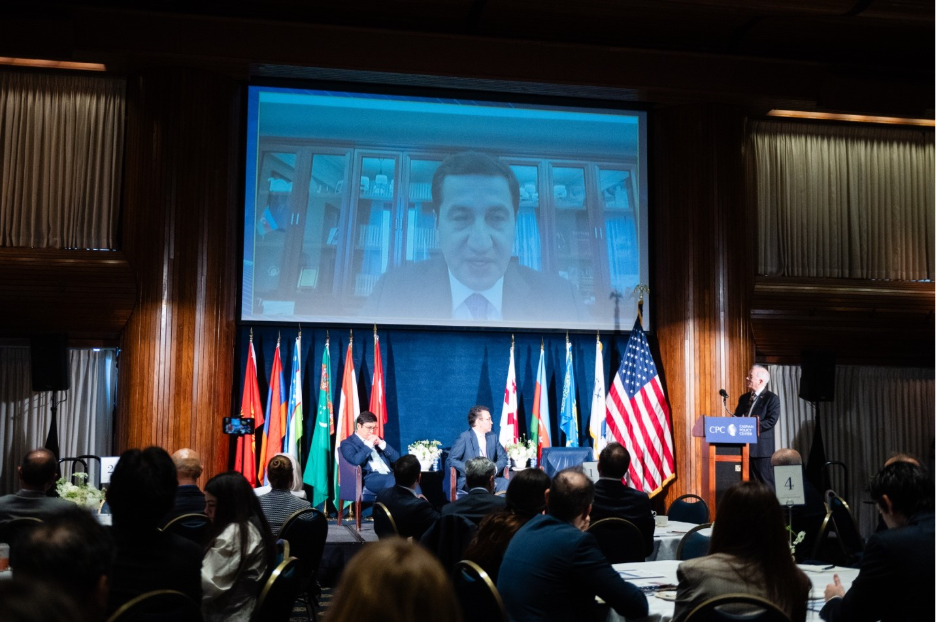
The next panelist, Hikmet Hajiyev, Assistant to the President of Azerbaijan, added, “After the resolution of the Armenia-Azerbaijan conflict, Azerbaijan switched to a Middle Power concept. A critical dimension of this connectivity is linkage with our Nakhchivan region. The digital aspect of this transformation is also essential. The Middle corridor today stands at a decisive juncture. It is transitioning from a supplementary transit route into the central path of European Connectivity.”
Hajiyev also emphasized the critical role of multinational organizations for regional cooperation. “C5+1 is a matter of mathematics, but C6 is a matter of chemistry,” he said. “The Organization of Turkic States also provides another umbrella and dimension to cooperation.... We would like all the parameters to benefit the whole region and build connectivity, trade routes, and confidence together. Azerbaijan will provide logistics, connectivity, and linkages and trade routes.” He concluded, “In a sense, we also see a new regional architecture and cooperation for the broader continent.”
Hajiyev also congratulated the Caspian Policy Center on its 10th anniversary and thanked the organization for serving as an important platform for strategic dialogue between Washington and the countries of the Caspian region.
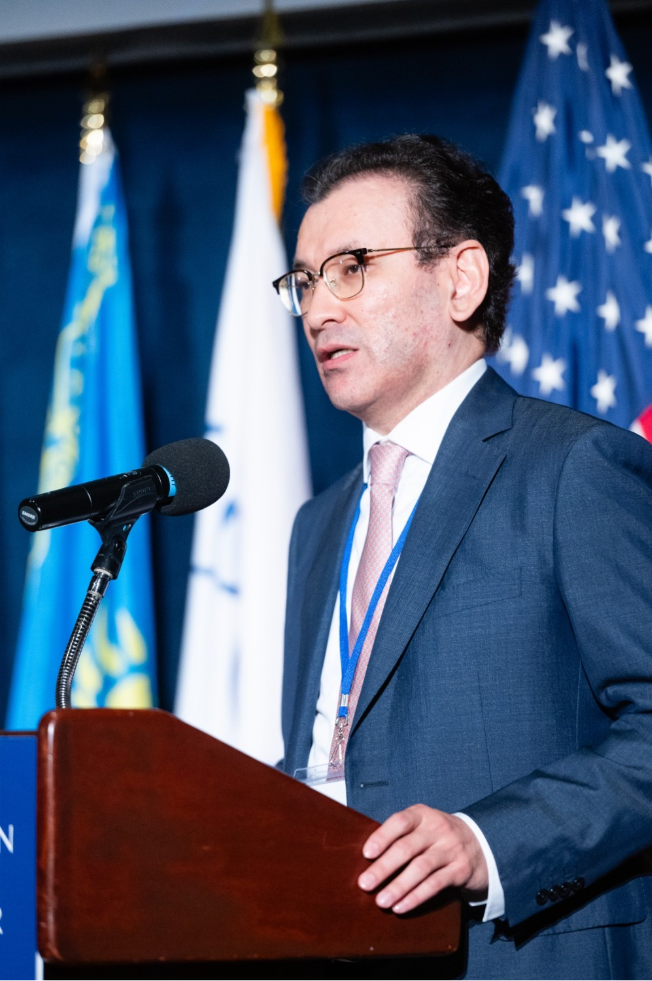
Looking to the Middle Corridor, Deputy Advisor to the President of Uzbekistan on Foreign Policy Javlon Vakhabov , said, “The Middle Corridor is not a fashionable topic to discuss for Uzbekistan; it is a practical question. How does a double-landlocked country reach world markets? Our country looks at the Middle Corridor as an income production strategy, not just as a transit route. Back in 2016, our GDP was less than $60B. In 2025, our GDP has now increased to over $150B.”
Vakhabov also gave a practical perspective on the trade route, noting that “there are also serious constraints to capacity and shipments, and ferry trip shortages due to declining water level. If we are to be serious about the Middle Corridor, we have to understand ferries, terminals, support schedule tables, and handling insurance, and this is a space Uzbekistan is now exploring in its own capacity.”
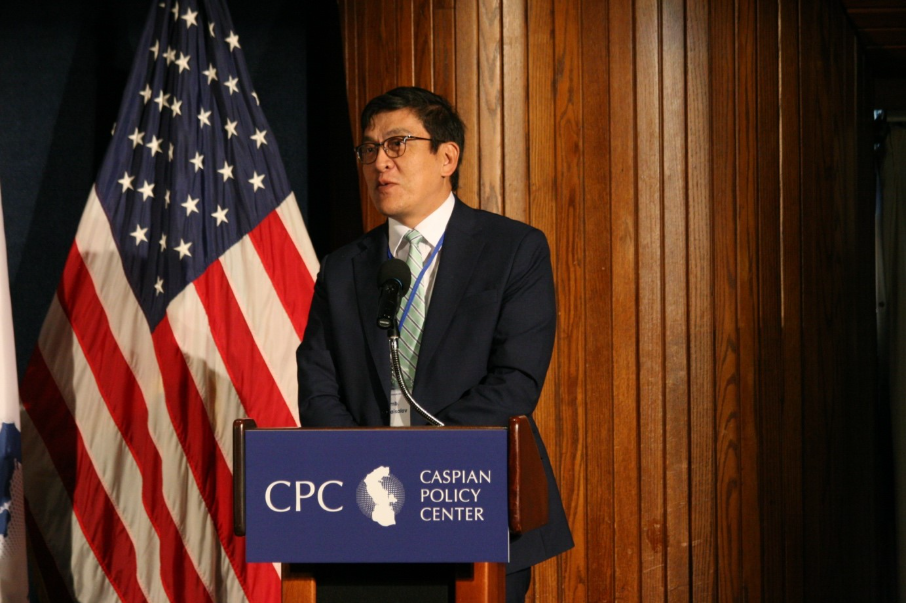
Edil Baisalov, Special Envoy of the President of the Kyrgyz Republic for International Initiatives and Ambassador to the United States, stated that “this is a very special moment for Central Asia and for our bilateral ties with the United States of America. We have been independent for 35 years and this is a special moment of our coming of age. We received support of the UN General Assembly to be named as a non-permanent member of the UN Security Council.”
“The project of the century that will transform Central Asia entirely is the new trans-continental railroad with China, Kyrgyzstan, and Uzbekistan, which is already starting construction and will be completed ahead of schedule in 2029…. This will also open up a mountainous area of Kyrgyzstan which has quite a few critical mineral deposits,” Baisalov highlighted.
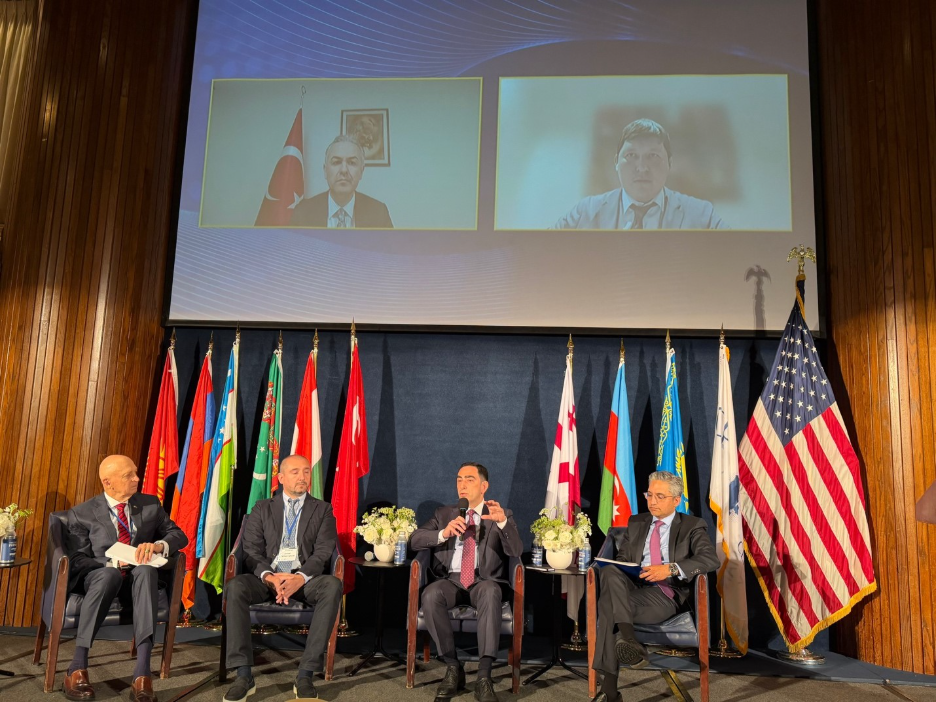
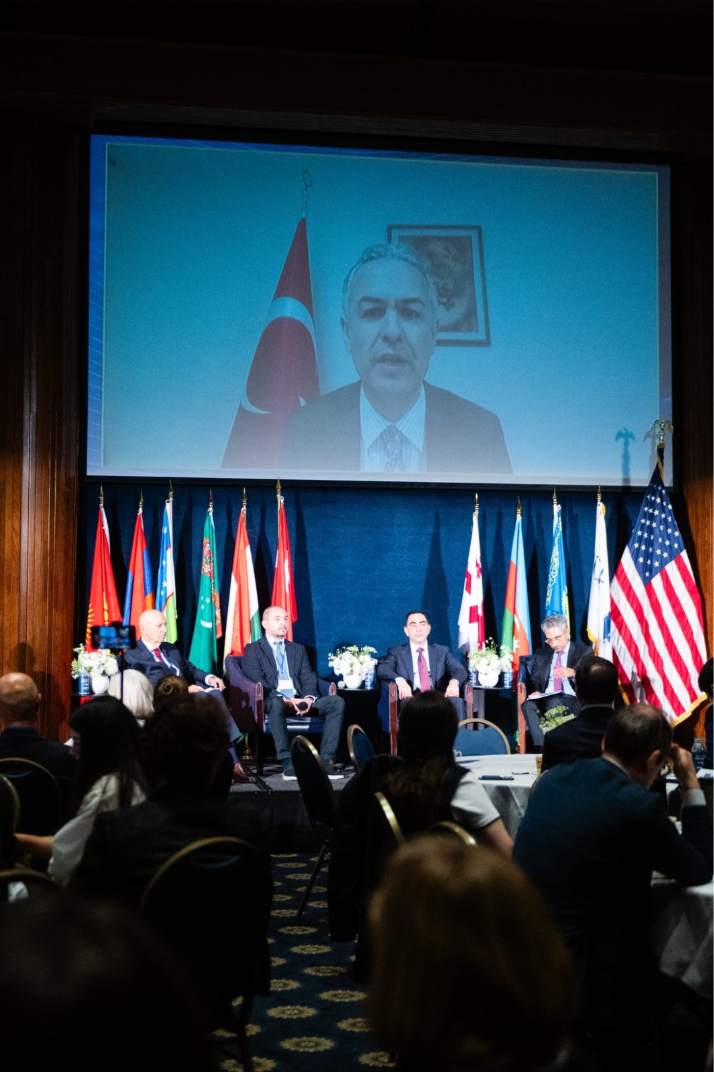
Building on the region’s vision for regional connectivity, the next panel discussion focused on the Middle Corridor, an emerging trade and transport route linking the region's markets with Europe and Asia. CPC Advisory Board Member Ambassador (ret.) Matthew Klimow moderated the conversation which underscored the Middle Corridor's growing relevance as global conflict constrains more traditional routes.
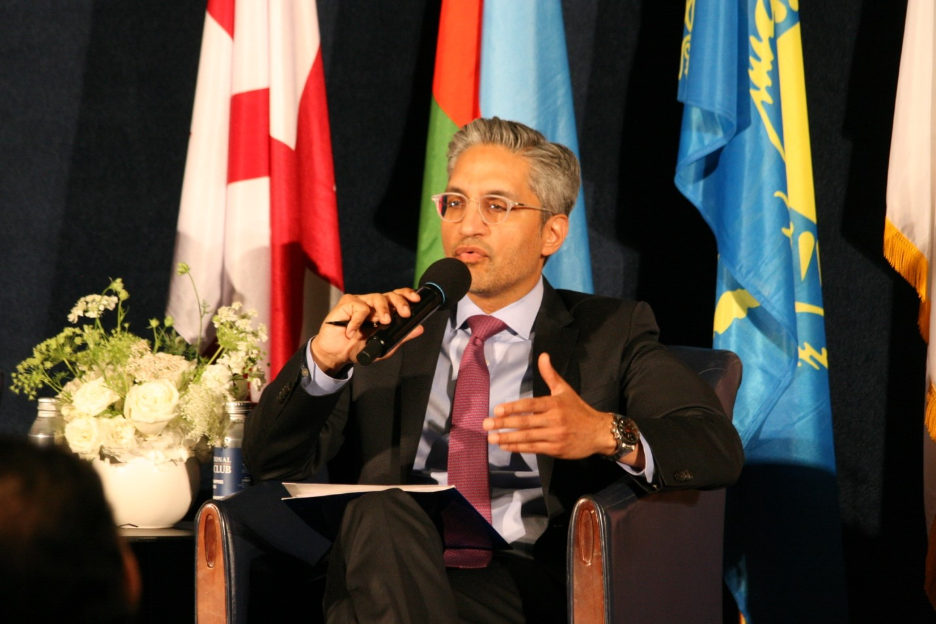
Vinay Chawla, Office Director and Special Envoy for Peace Missions at the U.S. Department of State, provided the U.S. perspective on the trade route. “We know peace agreements don’t hold without economic geography, but I will point out this administration’s commitment to this precursor. Even if we get the Middle Corridor right and describe it as a link, but we get the system wrong, then even that becomes a bottleneck and not a corridor,” he explained.
“This administration has allocated about a half a billion dollars in grant concessional capital to try and leverage additional private finance that excludes the newly authorized investments DFC [the U.S. International Development Finance Corporatiion] has made with a balance sheet with more than $100 billion to invest in infrastructure. We have signed a TRIPP investment framework with the government of Armenia. We’ve established the TRIPP development company that actually gives DFC equity alongside Armenia to build this 42-kilometer railroad, energy, and digital corridor, and to explore critical minerals opportunities,” Chawla stated.
He concluded by saying, “We will look forward to working alongside our EU partners, sovereign wealth funds in Central Asia, the Caucasus, and Türkiye, which are a key player here.”
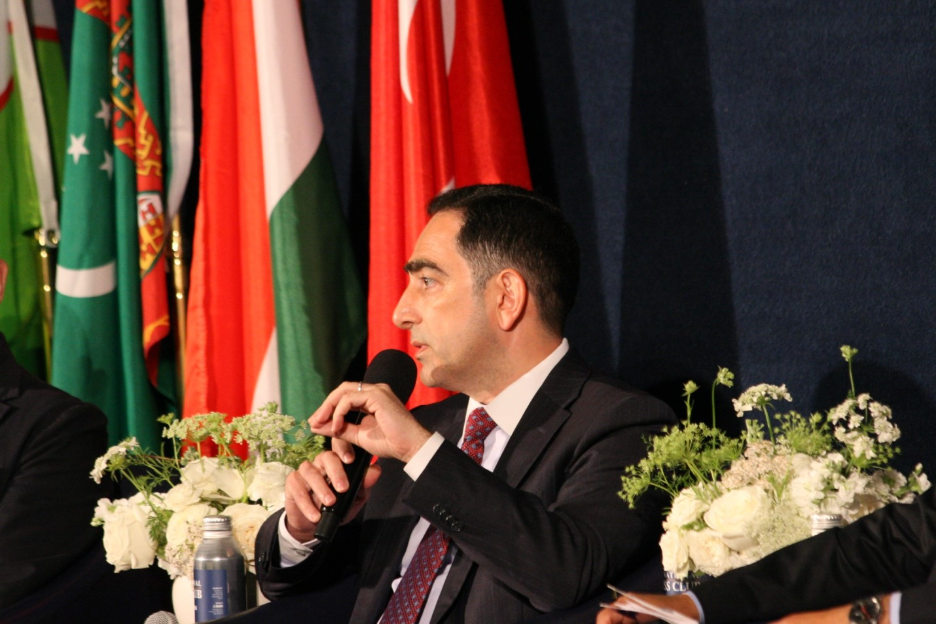
Taleh Ziyadov, Advisor to the Minister at the Ministry of Economy of Azerbaijan, brought a unique lens to the issue, adding that “the Middle Corridor should not just be viewed as a transit corridor. In the context of geopolitical changes in the region, it is much more strategic and will be connected to changes that are coming in the next decade.”
“TRIPP has to be viewed as larger than an Armenia-Azerbaijan peace enabler or regional interconnector. TRIPP, in essence, is the missing link in this newly emerging geopolitical architecture. New supply sources have to have alternatives, and TRIPP is going to be extremely important for shaping up this emerging new economic landscape,” Ziyadov stated.
Zafer Ateş, Director General for Energy, Environment, and Transboundary Waters at the Ministry of Foreign Affairs of Türkiye, gave insight into Türkiye’s perspective: “Türkiye would like to create synergy between the Middle Corridor and neighboring geographies. The Caspian is more than a region of hydrocarbon resources. We have so many opportunities for transport as well; and, therefore, we are carrying out many projects with our partners in the region. The Baku-Tbilisi-Kars railway is the backbone of the Middle Corridor. As Türkiye, we support the TRIPP initiative...[which] would add another dimension to the Middle Corridor, and enhance its competitiveness.”
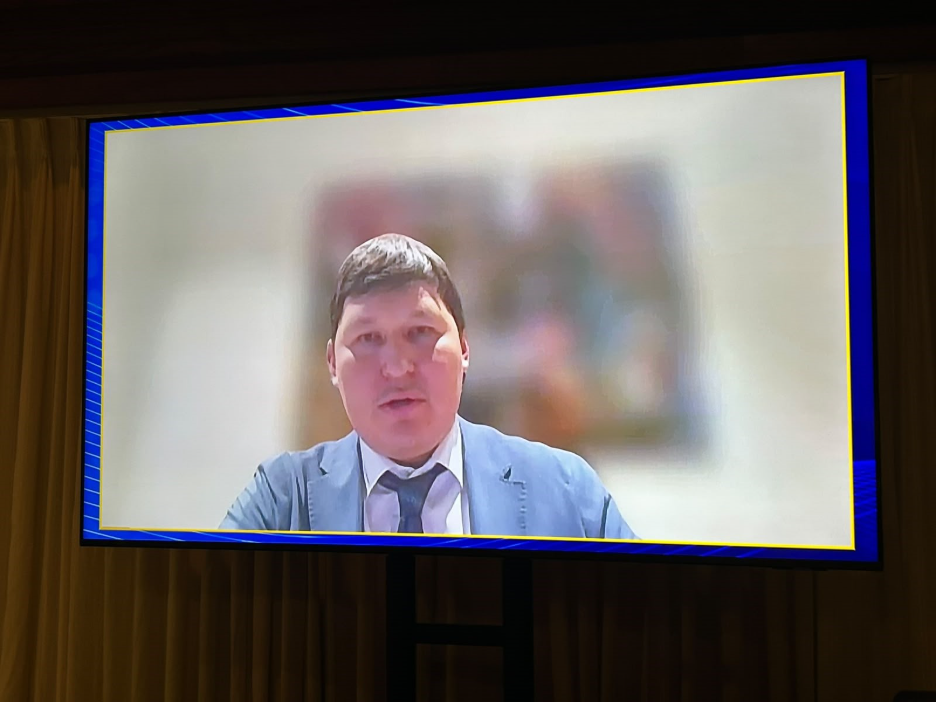
Giving a business perspective, Nurzhan Marabayev, Chief Executive Officer at Semurg Invest in Kazakhstan, introduced his company, “a private holding that is working with international partners on their development of critical infrastructure. We are a member of the Middle Corridor Association. The company and the project are a platform for international companies to get involved in the development of critical infrastructure. We are in discussions with DFC for the financing and expansion of the port of Kuryk.”
Turning to critical minerals, a sector reliant on the Middle Corridor for transit, Marabayev added that “99 of 118 periodic table elements are available in Kazakhstan. We also invest quite heavily into infrastructure, and more than $26 billion has been attracted for critical infrastructure and production facilities over the last three years. We have already transshipped around 300,000 tons using this corridor, and most of this cargo is made up of critical minerals, including copper, zinc, aluminum, lead, and some fertilizers and grain. Within the next two years, we are planning to finalize all projects in our pipeline in cooperation with Abu Dhabi ports, DFC, and several other international companies that will allow us to increase capacity to 110,000 containers per year, and around five million tons of cargo on that.”
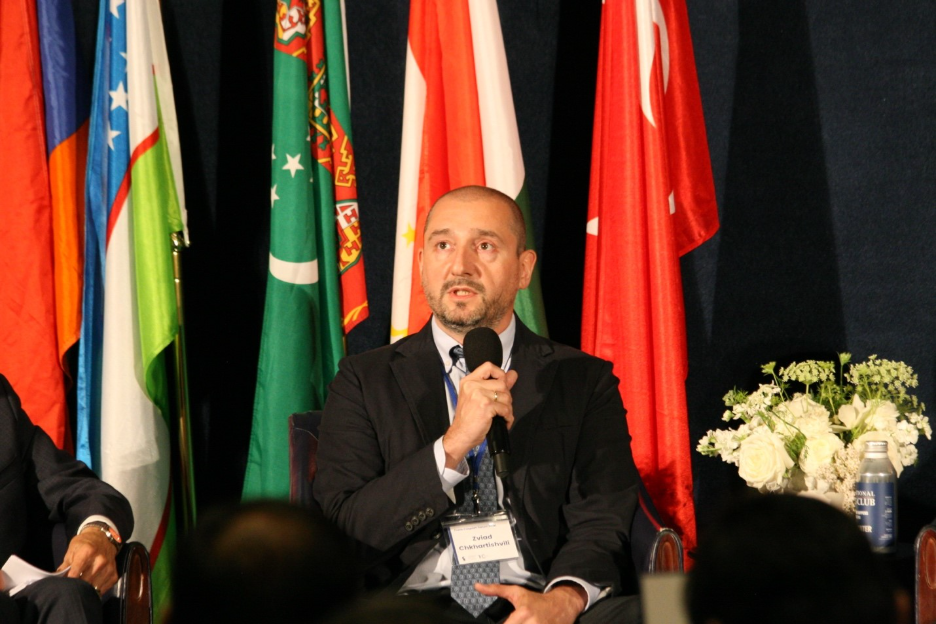
The next panelist, Zviad Chkhartishvili, Director of Poti Sea Port Administration of Georgia, gave important insight into Georgia’s critical role in the development of Middle Corridor infrastructure. “To expand the Middle Corridor’s capacity, we have been deeply engaged with the government of Georgia and the countries of Central Asia on how to transform one of the best alternative routes to a gateway of choice, to become competitive with the Northern and Southern Corridor,” Chkhartishvili said.
He also shared insight into Georgia’s investment into infrastructure, adding that “in the Middle Corridor, most commodities are transported the old way by railway or road transportation, so now we provide an increased budget of containerization. In the next year to three years, we will have a modern port expansion project. Already the Poti port project is one of the biggest we have developed, with state-of-the-art infrastructure.”
Asked about the effects of global instability, Chkhartishvili also noted that, “For supply chains, the most important part is sustainability in this turbulent period when the Strait of Hormuz is closed. Fortunately, we already have the Middle Corridor. The next step now is transforming it into a competitive corridor.”
Digital sovereignty and the implementation of AI in the region were discussed by industry experts in the day’s next panel, moderated by CPC Advisory Board Member Eric Green. The tech business leader group discussed the success of rapid digitization in the region and areas for future growth, as many countries in the Caspian region seek to position themselves to become hubs for AI development and application.
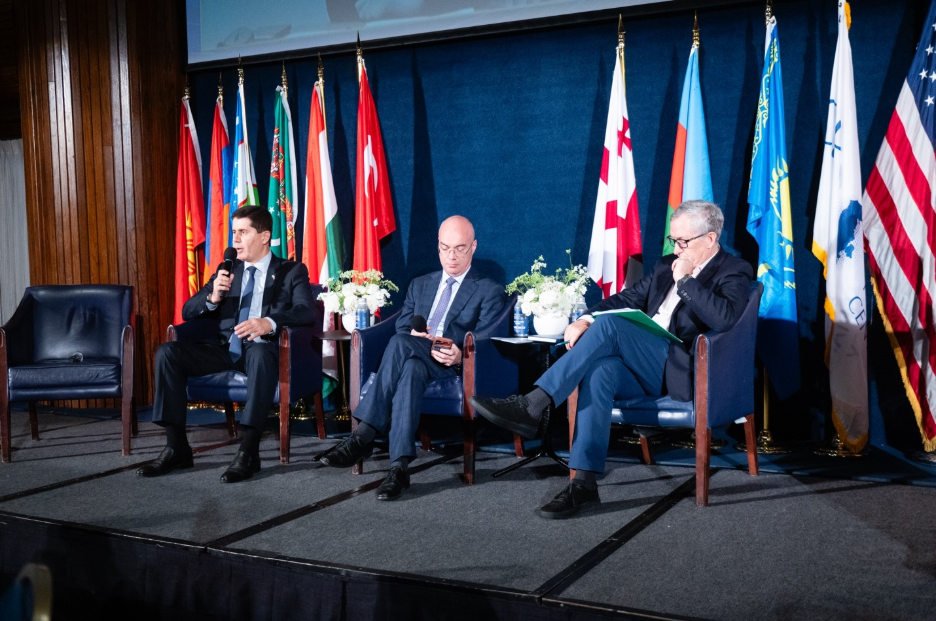
Ambassador of Tajikistan to the United States, Zavqi Zavqizoda, began the conversation highlighting Tajikistan’s commitment to AI development: “Tajikistan is clearly recognizing the importance of digitization and AI, as a key source of sustainable economic development. The President of Tajikistan, Emomali Rahmon, has prioritized the development and stabilization of artificial intelligence.”
The Ambassador also pointed to the country’s unique landscape for digital innovation: “Tajikistan is a fast-growing country, with a growth on average of 8.4% during the last four decades. Secondly, it has a very young and talented labor force with 75% of labor population below the age of 35. Like many other countries in the region, Tajikistan is doing its best to address a shortage of high-level advanced technological specialists and engineers in IT and AI. The country also has more than 70% of water resources in Central Asia, and at the same time it has lots of critical minerals.”
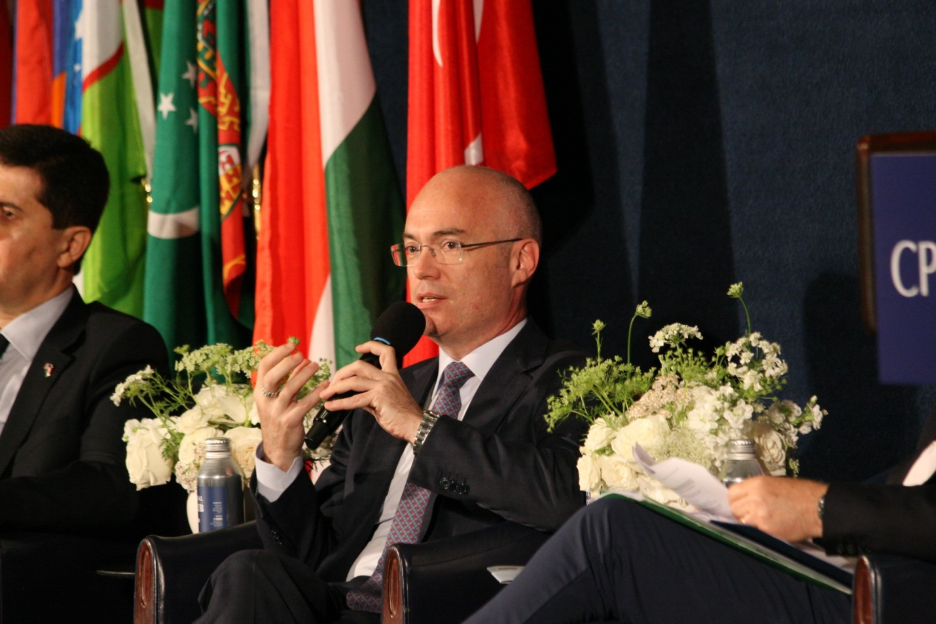
Anatoly Motkin, Founder and President of StrategEast, spoke to the region’s niche in the modern digital space. “Many big companies have a lack of computing capacity, and that is something that could be provided by the region. Low energy prices may be one of the advantages, though it’s not sufficient. We know that also political risks are being perceived. Generating the added value and investing more in the startup pipeline and product industry, not just digital services to international customers, may be the key to how this region could survive the AI revolution,” Motkin noted.
Motkin also addressed the essential issue of talent and education, adding “when we’re talking about junior engineers, we’re talking about people not only who know how to code a specific language but also who know how to build the algorithms. So, I think the investment should be combined in the region with the fundamental studies for IT engineering, not just coding.”
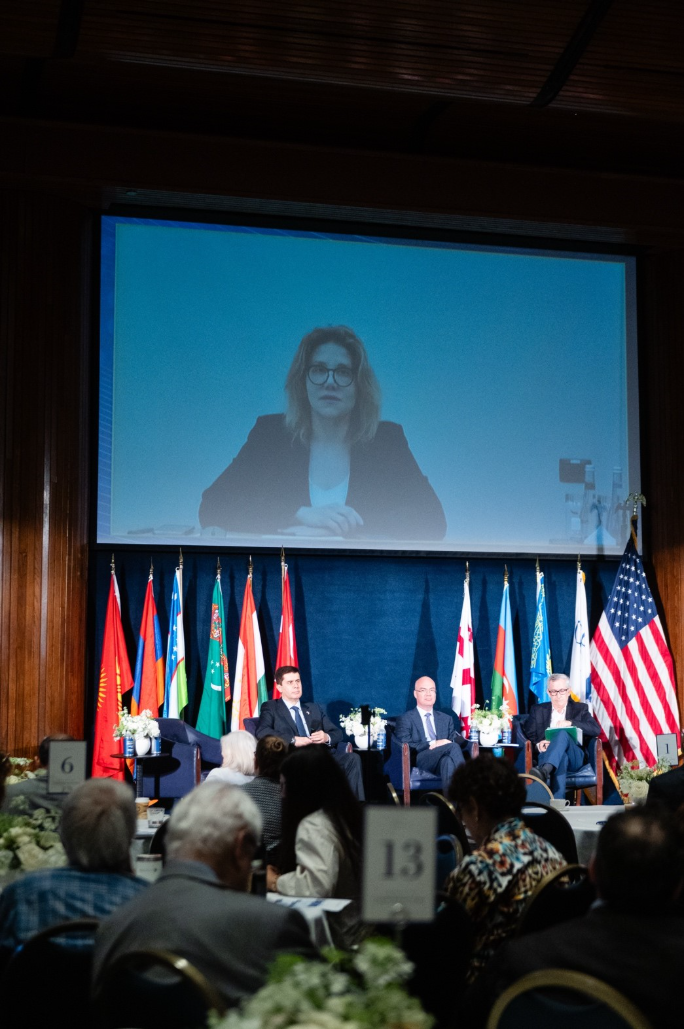
Aida Badalova, Advisor to the Minister at the Ministry of Digital Development and Transport of Azerbaijan, gave insight into Azerbaijan’s digital development. She said, “The topic of digital sovereignty and industrial AI is the next vector that we are considering for Azerbaijan's growth. The significance of digital transformation extends far beyond economic growth alone. Digitalization enables governments to make more effective data-driven decisions, enhances accessibility of public services, and ultimately improves the quality of life for citizens. Substantial investments have already been made in digital infrastructure, and the speed of the Internet in Azerbaijan has increased sevenfold.”
“We believe that long-term success in AI requires a strategic focus on national advantages, and Azerbaijan possesses several such advantages. One of these is energy prices, which are more than twice as competitive as international benchmarks and two gigawatts of power. Equally important is investment into human capital and state programs on education abroad. Nearly 4,000 students have studied at leading international universities, and they have studied information technology, programming skills, and cyber security. Recognizing that talent is the most critical resource in the AI area, we have also established a national Artificial Intelligence Center, where all national infrastructure companies and State Owned Eterprises will have an AI academy, which is dedicated to developing local expertise and supporting the creation of national AI solutions,” said Badalova.
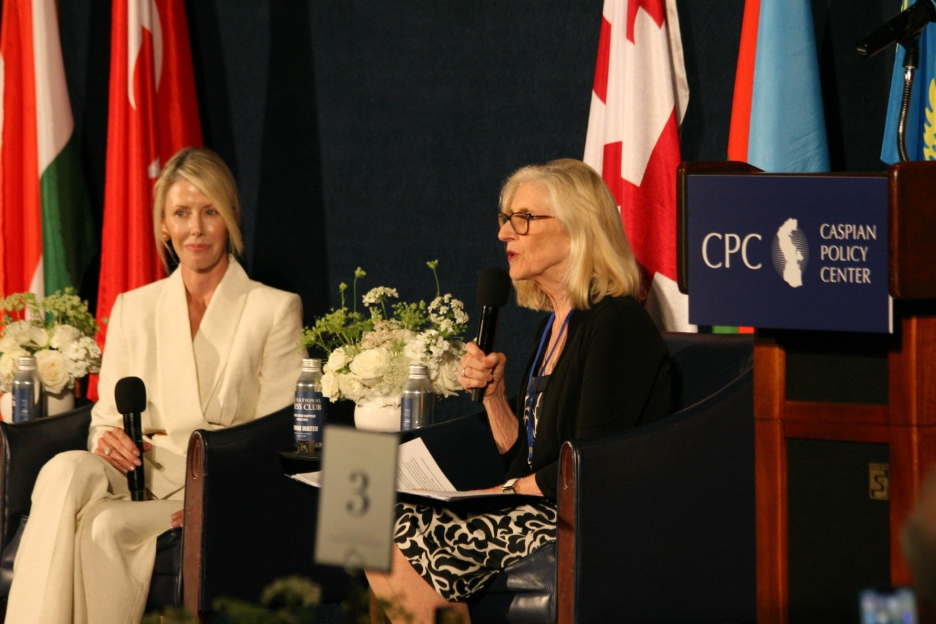
The day’s third panel featured Ashley Beaty, Head of Global Engagement at Cove Kaz Capital Group, who outlined the promising outlook for critical minerals in the region. Beaty noted that U.S. interest in both the sector and the region has spiked in recent years. Moderated by CPC Advisory Board member Dr. Marsha McGraw Olive, the panel also addressed the challenges of implementation in the region and how to secure investor confidence.
“Kazakhstan made reforms to their mining code in 2019 that adopted Australian mining standards that attracted our investment. Kazakhstan was providing on a first-come first-served basis geological concession available through the Ministry of Industry and Construction, and we pursued over a dozen concessions that were greenfield with tantalum, cesium, niobium, and very high value critical minerals that command and provide technology in the U.S.,” said Beaty.
Speaking about Cove Kaz Capital Group's $1.1 billion tungsten mining deal, which develops Kazakhstan's Northern Katpar and Upper Kairakty deposits, Beaty said, “We established the business presence, the trust with the Kazakh government, and that is how we were invited to the tender process to compete. Tungsten is an essential component of the U.S. economy and national defense.”
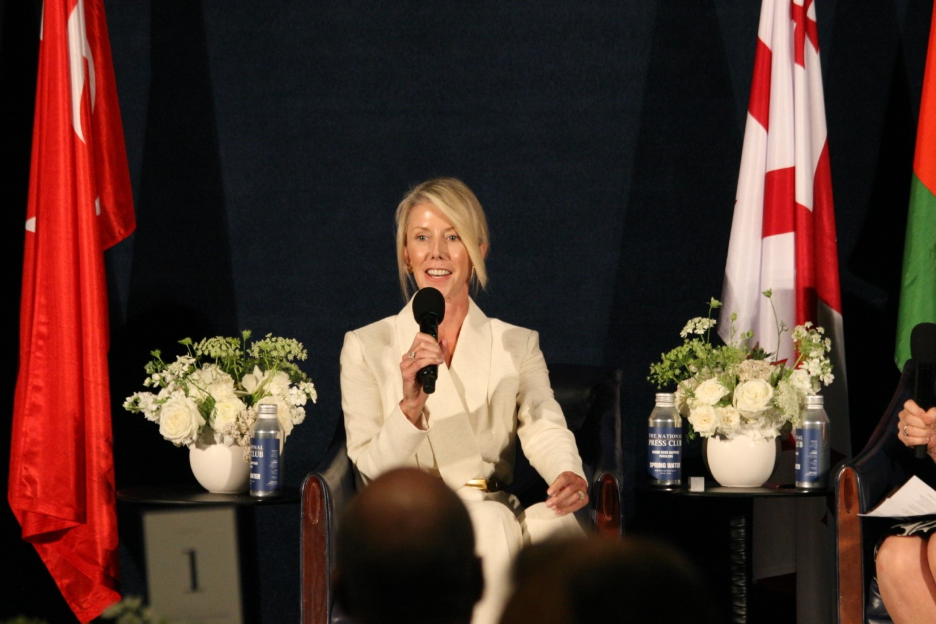 “You go where the geology is, and Kazakhstan has abundant tier-one generational geology across numerous mineral commodities, tungsten being one of them. The U.S.Geological Survey estimates China’s reserves at 2.5 million tons. Our two tungsten projects in Kazakhstan are estimated, through feasibility studies, at 1.4 million tons of reserve base, and so in just these two projects we anticipate when both are in production about 15% of current global supply that will eclipse Vietnam, which is currently the second largest producer at about 8% of global supply. Our initial assessment is 100-200 containers, initially by rail to up to even 400 out of Kazakhstan every year, once this project is complete,” Beaty added.
Beaty also addressed the particular U.S. interest in the region as a critical-minerals partner: “In 2020, Congress authorized the critical minerals list, which markets love because it assigns an economic value to a commodity. A 2020 White House report on minerals estimated that in 2021, $621 million of American consumption of rare earth elements resulted in $456 billion in essential civilian economic activity in the United States. The C5+1 dialogue in Astana shows that this project is not a one-off. The United States has a broader economic interest to mobilize capital to the region.”
“We’ve also announced that we have a pending reverse merger on NASDAQ, and when the business combination is effective and approved, we will trade on NASDAQ under KazResources (KAZR). DFC and Exim Bank have issued preliminary letters of interest which are important signals that this project meets their interest in the region,” Beaty remarked.
Beaty closed the discussion by stressing the pressing demand for critical minerals in the U.S. market. “This is a demand-driven paradigm in tungsten. Demand has easily outstripped supply for the next 10 years. Recycling is actually about a third of global production. Project Vault is being newly created for a variety of mineral commodities to have in the United States to go and get the input materials you need to advance projects. We really want to satisfy U.S. commercial demand downstream,” said Beaty.
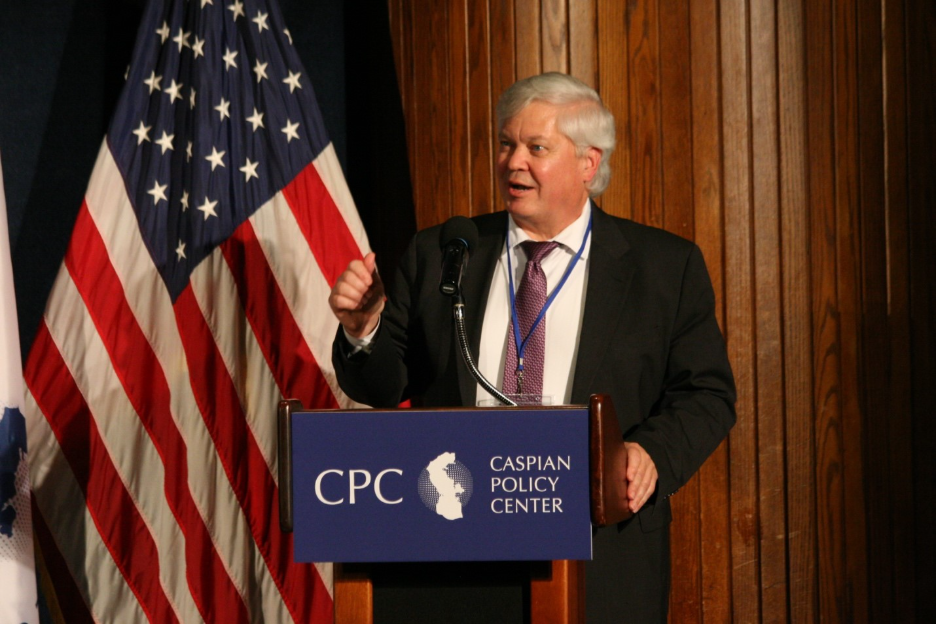
The region’s dynamic role in the rapidly shifting global energy market was debated by energy and policy experts. CPC Senior Fellow for Security Studies Dr. Roger Kangas led a discussion between U.S. government representatives and voices from the region on energy security in the Caspian basin amidst significant global market changes. Speakers addressed the region's existing energy infrastructure and the importance of advancing new energy development for its long-term future.
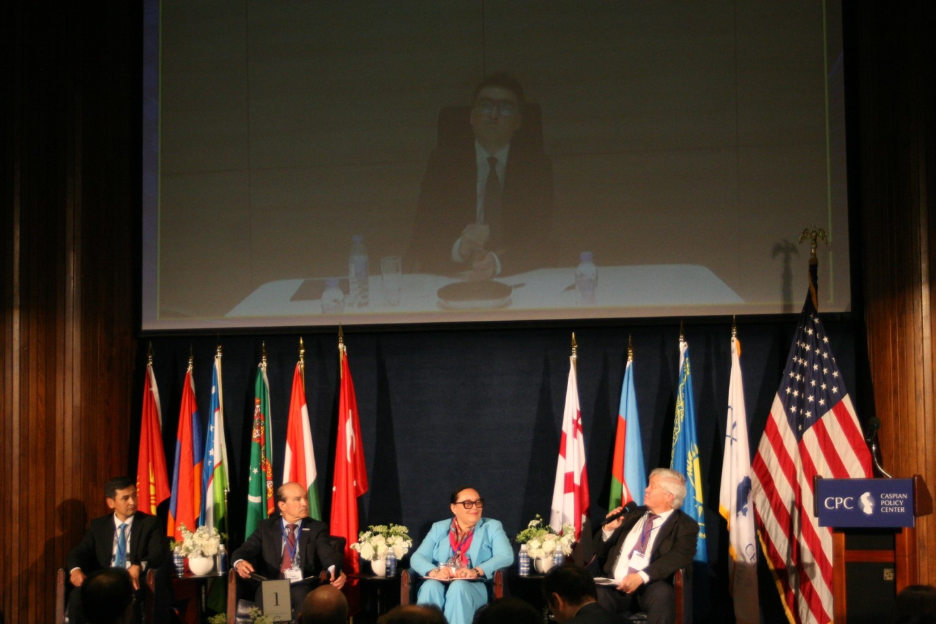 The first panelist, Deputy Minister at the Ministry of Energy of Azerbaijan Orkhan Zeynalov, outlined Azerbaijan’s role in the global energy market and its essential role in global energy security. “If we look at the wider Caspian region, Azerbaijan and Central Asia are creating a single unified space. Economic and energy connectivity play a critical role in this, especially with regards to the Middle Corridor. The crisis of the Hormuz strait really showed the importance of the Middle Corridor and the importance of Azerbaijan. The energy landscape today is not just about the barrels or gigawatts: it’s about the secure routes, and the current crisis shows that secure, reliable, and guaranteed supply is much more important than cheaper energy,” Zeynalov said.
He also shed light on the essential role Azerbaijan already plays in Western energy markets. “Last year, Azerbaijan provided 7% of the EU’s gas, and we are willing to expand on this. Together with Türkiye and Georgia, we are forming a general bridge with the Caspian region, with Central Asia, and with Europe. Today, Azerbaijan is delivering crude oil to 25 countries and natural gas to 16 countries, including 11 NATO members and 10 EU members, ” Zeynalov said.
Finally, looking to U.S. cooperation, Zeynalov stated, “We have a strategic partnership with the U.S., and we’re very grateful to the Trump administration for building up this partnership and for the peace process with Armenia. We think that the U.S. is the crucial country to ensure that the projects connecting this region can be sustainable and long-lasting. Trans-Caspian gas transit and Trans-Caspian crude-oil transit from Turkmenistan and Kazakhstan can be realized. It can be done with some additional cooperation and coordination.”
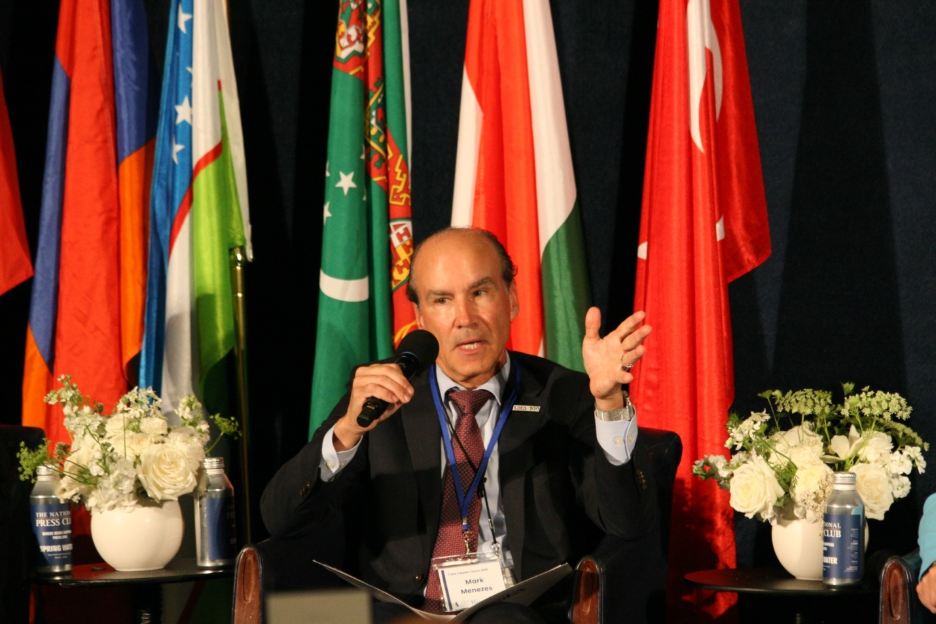
Mark Menezes, President and CEO of U.S. Energy Association (USEA), provided a U.S. perspective. “The Caspian region has always had great amounts of energy, but it was always figuring out the infrastructure to actually get it out in oil, primarily, and then with natural gas,” Menezes noted.
“The region is important, and its supplies of energy and interconnectedness are key to economic prosperity and national security. With the continued restrictions on the Strait of Hormuz, it’s almost self-evident that we need to increase infrastructure to get overland routes running,” Menezes said.
Shifting the discussion to advancing nuclear technology, Menezes noted “Advanced reactors are sodium-cooled or gas-cooled. They don’t use water in the way that traditional nuclear reactors have used it. That means you don’t have to deal with as much radioactive water and potential valve leaks. It has a smaller environmental impact and is not as great of a safety risk. All of these energy projects are very complex, and they bring their own challenges as you go through regulatory uncertainty, financing, and workforce needs.”
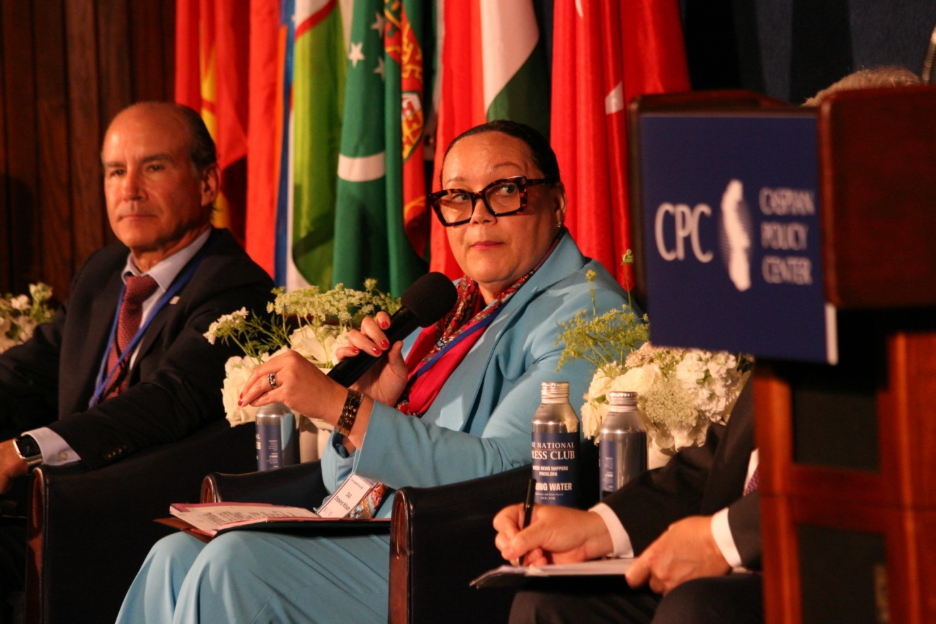
Focusing on nuclear energy, Shawna Wilson, Deputy Assistant Secretary for Security Assistance Programs in the Bureau of Arms Control and Nonproliferation at the U.S. Department of State, gave insight into the region’s nuclear energy development. “Some of the reasons countries are interested in SMRs (small modular reactors) is that they’re flexible and really efficient. You can build them in a factory in one place, move them, and actually have them operational in another. We see a very large and also consequential role for U.S. industry; and if SMRs are deployed, there is potential for generating substantial deals and hopefully creating jobs for American workers. We are looking at Executive Order 14299 that really talks about the deployment of advanced nuclear technologies, and we really use that as our north star, both in our diplomatic engagement as well as with our programming,” Wilson stated.
“On the diplomatic side, we have these 1-2-3 agreements, which, on the export side, are what you really need to begin deploying these reactors. We have a flagship initiative called the Foundational Infrastructure for the Responsible Use of Small Modular Reactor Technology (FIRST). The FIRST initiative is trying to get in with countries on the ground and provide them with resources to make informed decisions. We’re not making the choice for them but, rather, providing the tools they need,” Wilson said.
She also framed the developments in the region, highlighting progress in Armenia, Kazakhstan, and Uzbekistan. “We are now deploying SMR financial and advisory services, laying the groundwork for the deployment of U.S.-made SMRs, hopefully by 2036. We’re looking to do a feasibility study in Kazakhstan, but we’re also deploying an SMR control-room simulator that will be based in Almaty and that’s going to be a training hub for the SMR workforce development throughout Central Asia. Uzbekistan last year, in September, signed a nuclear cooperation MOU, which is usually the precursor for a 1-2-3 agreement. This is an example of how FIRST leverages U.S. expertise for safety and security.”
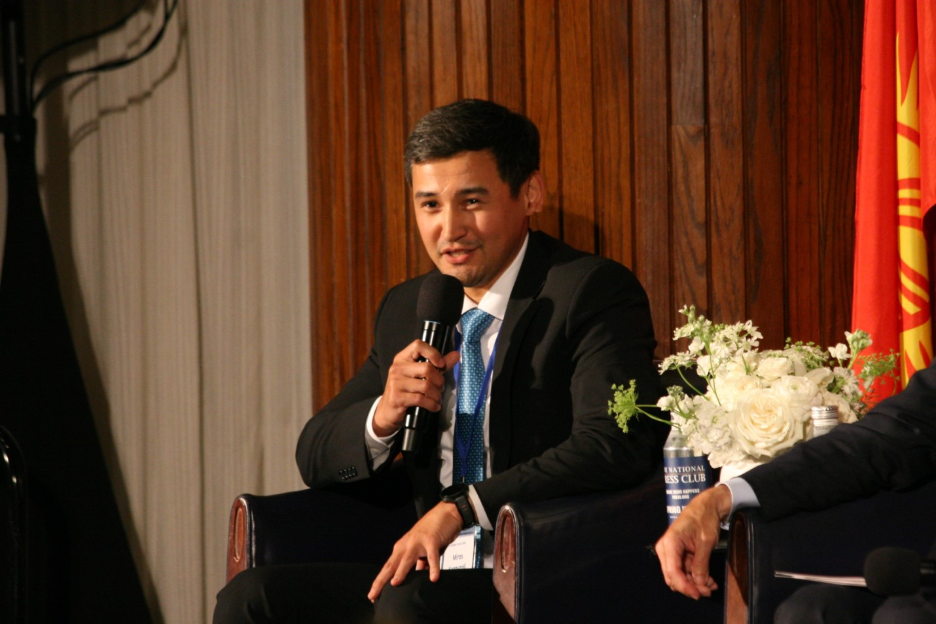 Miras Kyrgyzali, Chief Manager in Kazatomprom’s U.S. Representative Office, continued the discussion on nuclear power in the region, noting, “Kazakhstan supported the introduction of nuclear energy to the mix, and I think this is a huge step and a logical step for Kazakhstan, which supplies 40% of the world’s uranium, which is basically feed material for the whole nuclear industry. Every single movement of Kazakhstan towards nuclear energy is a good pitch for us because it creates substantial demand for ourselves, being a seller of uranium. We sell uranium globally—every third reactor in the world is fueled by Kazakh origin uranium—so we would be happy to see Kazakhstan itself become a customer of ours.”
Kyrgyzali also underscored the importance of modernization in the nuclear power industry: “All of the IT developments and AI will be a tailwind for supporting nuclear generation of electricity online.”
Closing the panel, Kyrgyzali commented, “There has been a sentiment on the Kazakh side that, if you educate people [on atomic energy], they will begin to understand it. I can say that the key obstacle that every single nuclear power plant developer faces is the sentiment of the public. But I think Kazakhstan has already passed this challenge and is now going towards more bold action.”
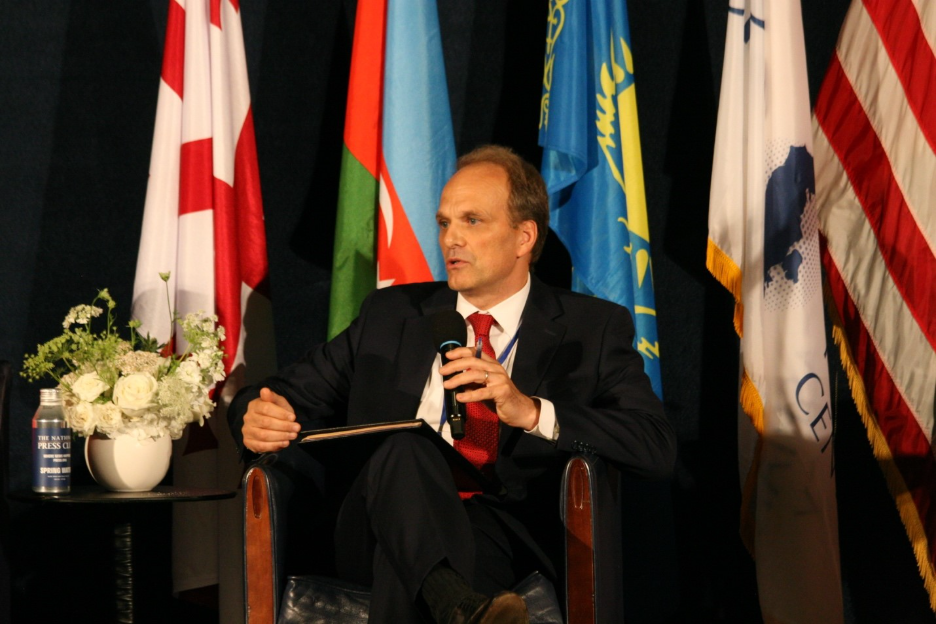
The final panel broached the timely subject of business investment along the Middle Corridor. Business representatives explored the commercial and investment landscape taking shape across the Trans-Caspian region, drawing on perspectives from the legal and regulatory sphere, private capital, and the regional business community. Led by CPC Advisory Board Member Dr. Alexander Sokolowski, panelists discussed what it will take to attract and sustain investment along the route, from building investor confidence to creating the conditions for long-term capital to flow.
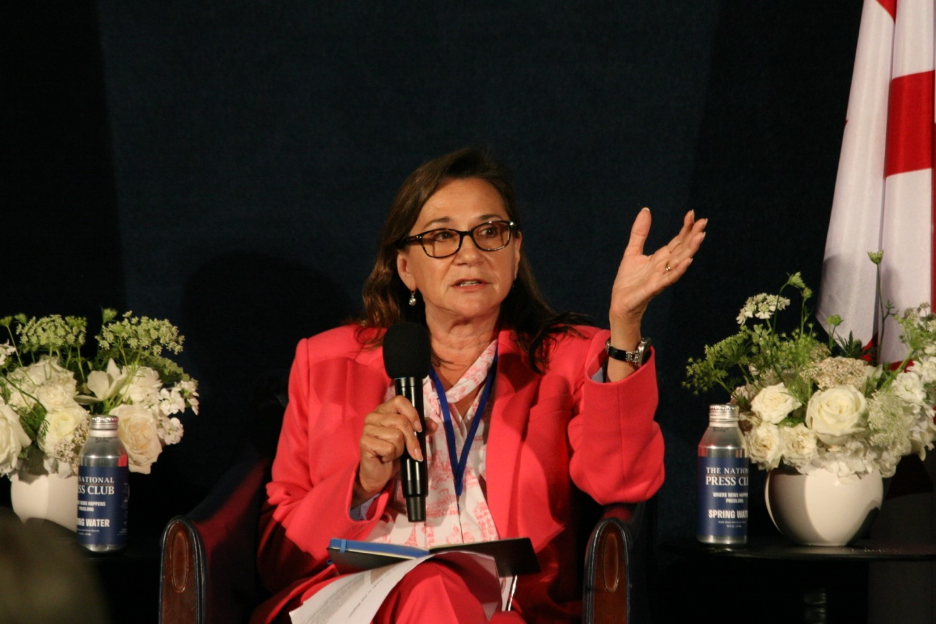
Laura Brank, Partner at global law firm BCLP, opened the panel by explaining the improvements the region has made to foster an attractive and secure business environment: “In terms of the foreign- investment side of things, the OECD looked at the barriers to trade and ease of doing business and made a number of recommendations of what to do. Central Asian countries have made a number of commitments to successfully implementing these changes, but it’s a slow process.”
“One big area of improvement has been in terms of arbitration possibilities, such as the Astana International Financial Center (AIFC), and we have had the privilege of already litigating matters in the AIFC in Kazakhstan. Digitalization has also been very important, and Kazakhstan has made enormous strides, making paying taxes and dealing with bureaucrats much easier than in the past,” noted Brank.
Brank acknowledged the barriers to investment that remain, noting that “investors really need predictability, in terms of laws and in terms of what they are going to pay in their taxes. Those are challenges that we are still seeing. The laws are pretty good right now, but the issue is about the courts, enforcement, and combatting corruption. So, it’s not just about enacting the laws. It’s about enforcing the laws consistently.”
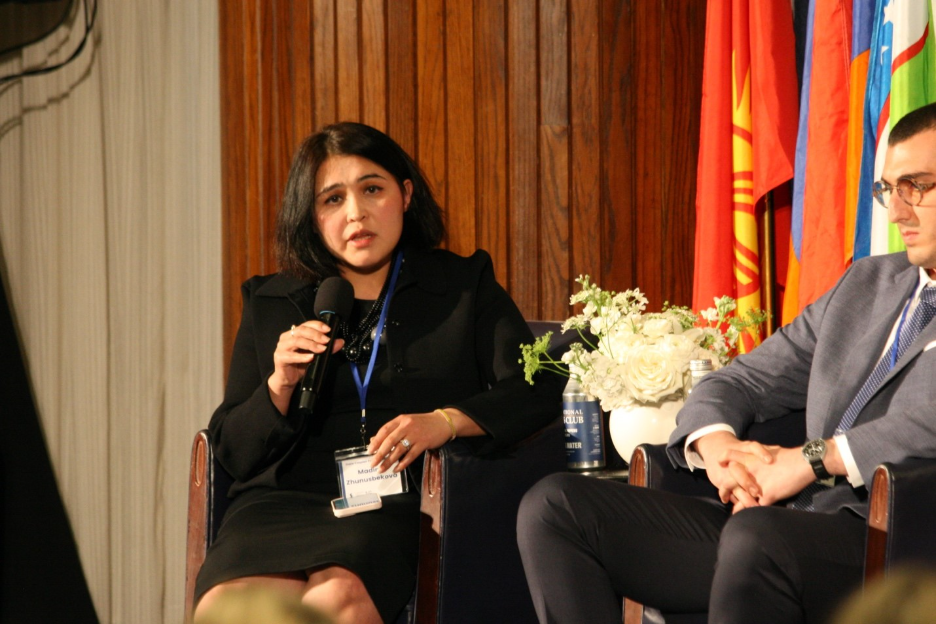
Madina Zhunusbekova, Senior Advisor to the Executive Director at the International Monetary Fund (IMF), described the significant domestic growth in the region, commenting, “People who visited these countries 10 years ago would be astonished how resilient and strong they are right now. We’ve seen millions of people move up to the middle class, and we see how the labor force has changed. Central Asian economies and Middle Corridor countries have shown remarkable resilience, and I think resilience is right now a currency, which is very good for investors to see.”
Beyond strong domestic economies, Zhunusbekova also identified the Middle Corridor as an important matter for investors: “We can expand the Middle corridor. In my personal opinion, right now the challenge is not the vision of the Middle Corridor, but the coordination and adapting to new challenges. At international finance institutions, we often say downside and upside risk. The region has been very resilient, stable, and growing. With all the geopolitical uncertainty going around, in some regards, the Middle Corridor could be seen as an upside risk.”
“Right now is a good moment to enter the region because the governments are very interested in attracting new investors and in providing even more guarantees to them,” Zhunusbekova emphasized.
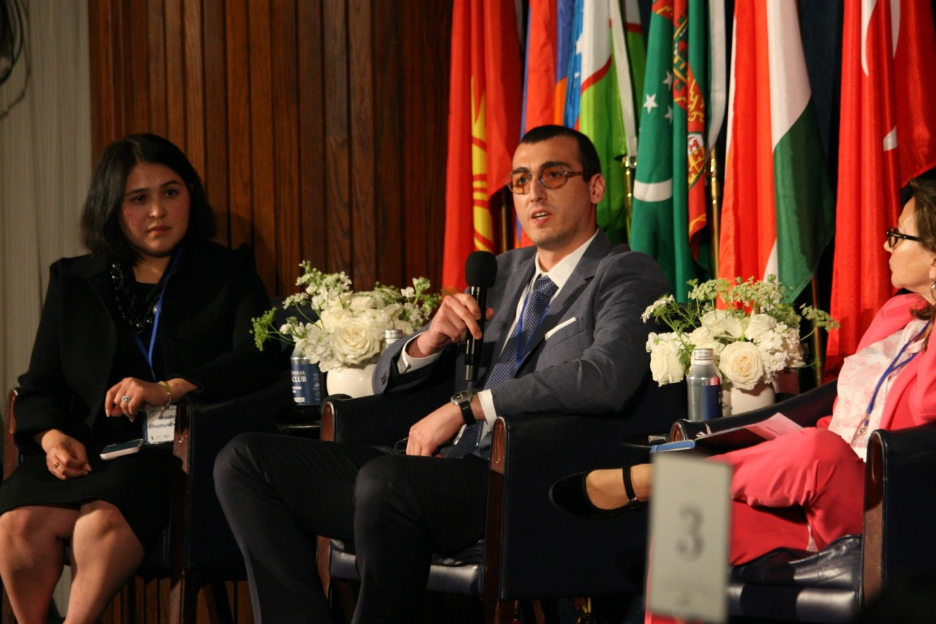
Luka Kervalishvili , Head of Commerce Department at the PACE Group based in Georgia, emphasized promising investments already transforming growth in the Caspian region, stating, “The DFC invested more than $80 million in our company; and with the help of DFC and the U.S. government, we were able to complete the project of building our Poti Port in 2022. This enabled us to attract an additional 1.5 million tons of cargo per year. Moving forward, there have to be more improvements in infrastructure and digitalization, or in automation.”
Looking to the Middle Corridor, Kervalishvili noted that, “Countries coming together and having the same mindset is the biggest challenge, and not just along the Middle Corridor but also globally. You have different policies and different governments, specifically in transportation business. From Azerbaijan, the shortest route to the open sea is Georgia, so any infrastructure expansion in Georgia will be beneficial for the overall Middle Corridor because previously we had infrastructure shortages to facilitate the demand of cargo.”
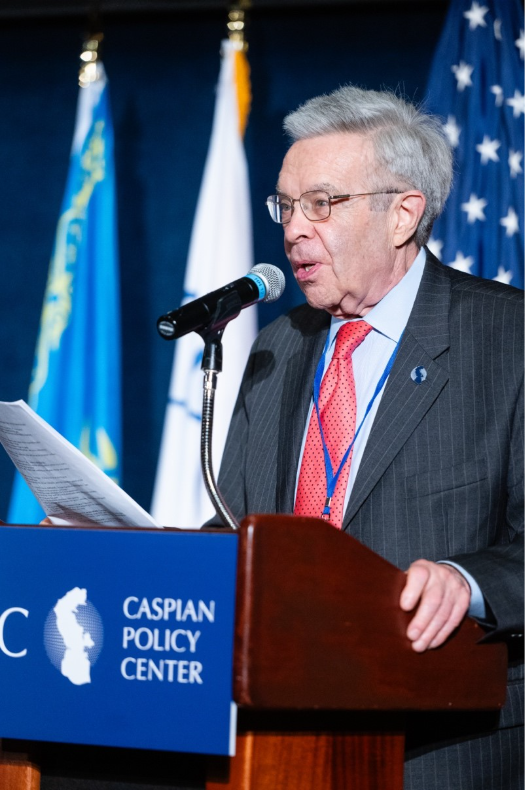
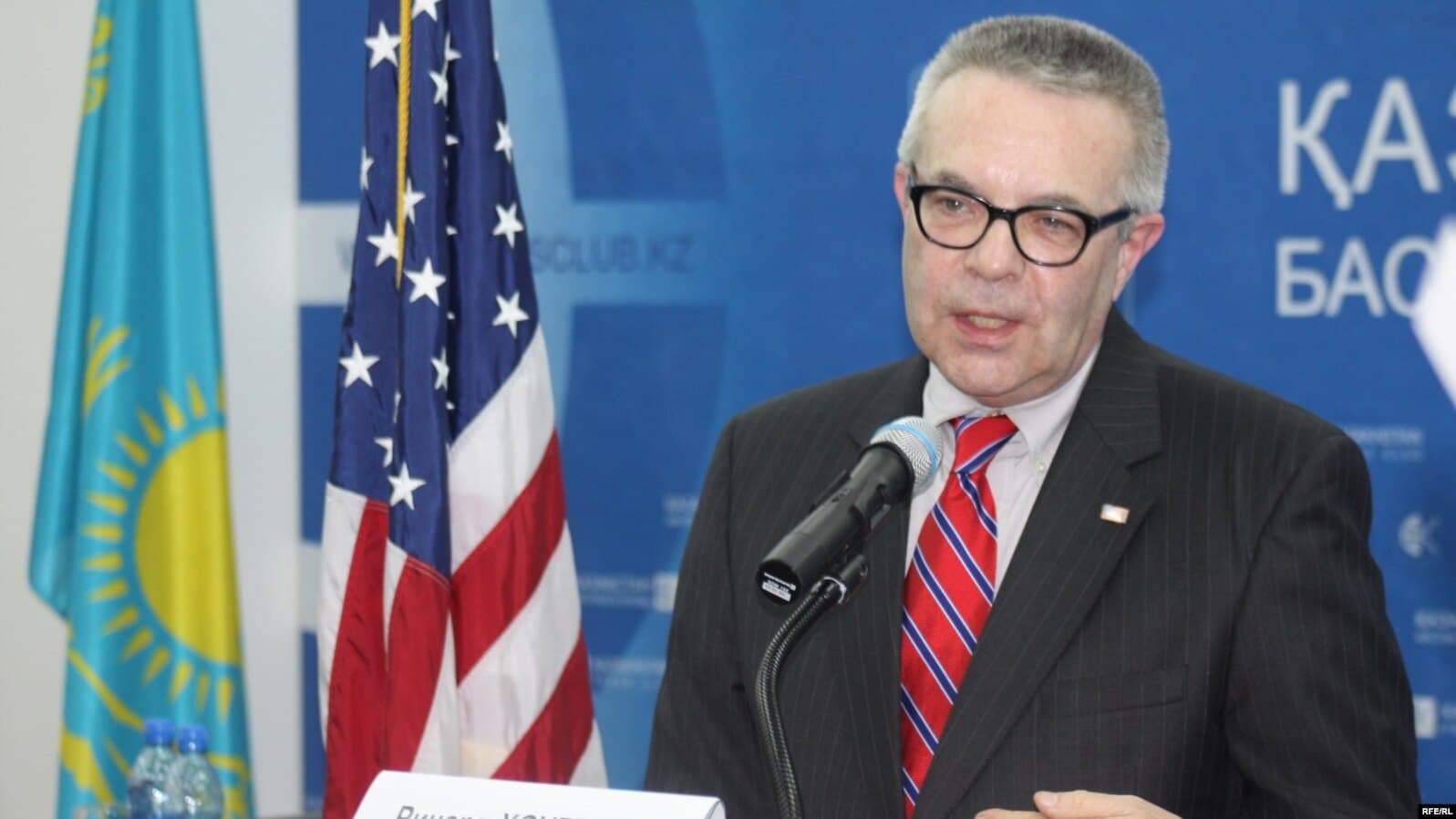
CPC Board Chairman Ambassador (ret.) Richard Hoagland gave final remarks and offered a sincere thanks to all the governments and business leaders who took time from their intense international schedules to participate, some of whom traveled half way around the globe to get to the forum.
Ambassador Hoagland commended the Caspian Policy Center as it marks its 10th year for fostering important and sensitive connections among U.S. officials, civil society, and leaders from the Caspian region. To close the Trans-Caspian Forum, Hoagland thanked CPC Chief Executive Office Efgan Nifti for creating this strategically important and sensitive think tank.