Shipbuilding on the Caspian Sea
Recent Articles
Author: Liam Gibson
08/25/2026
 shutterstock
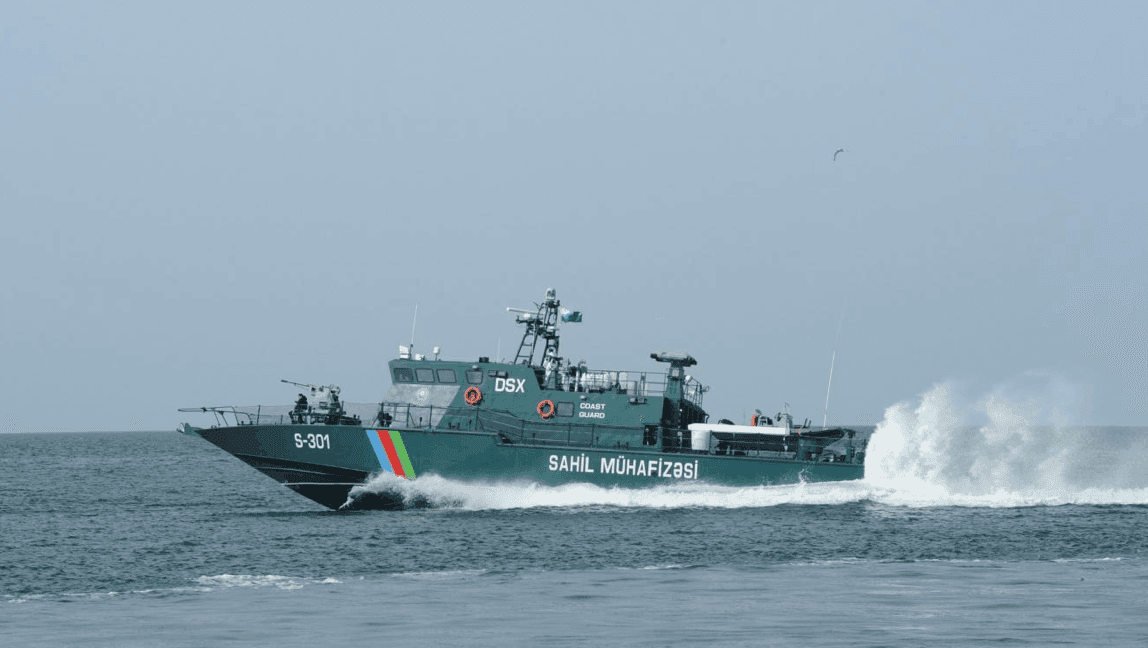
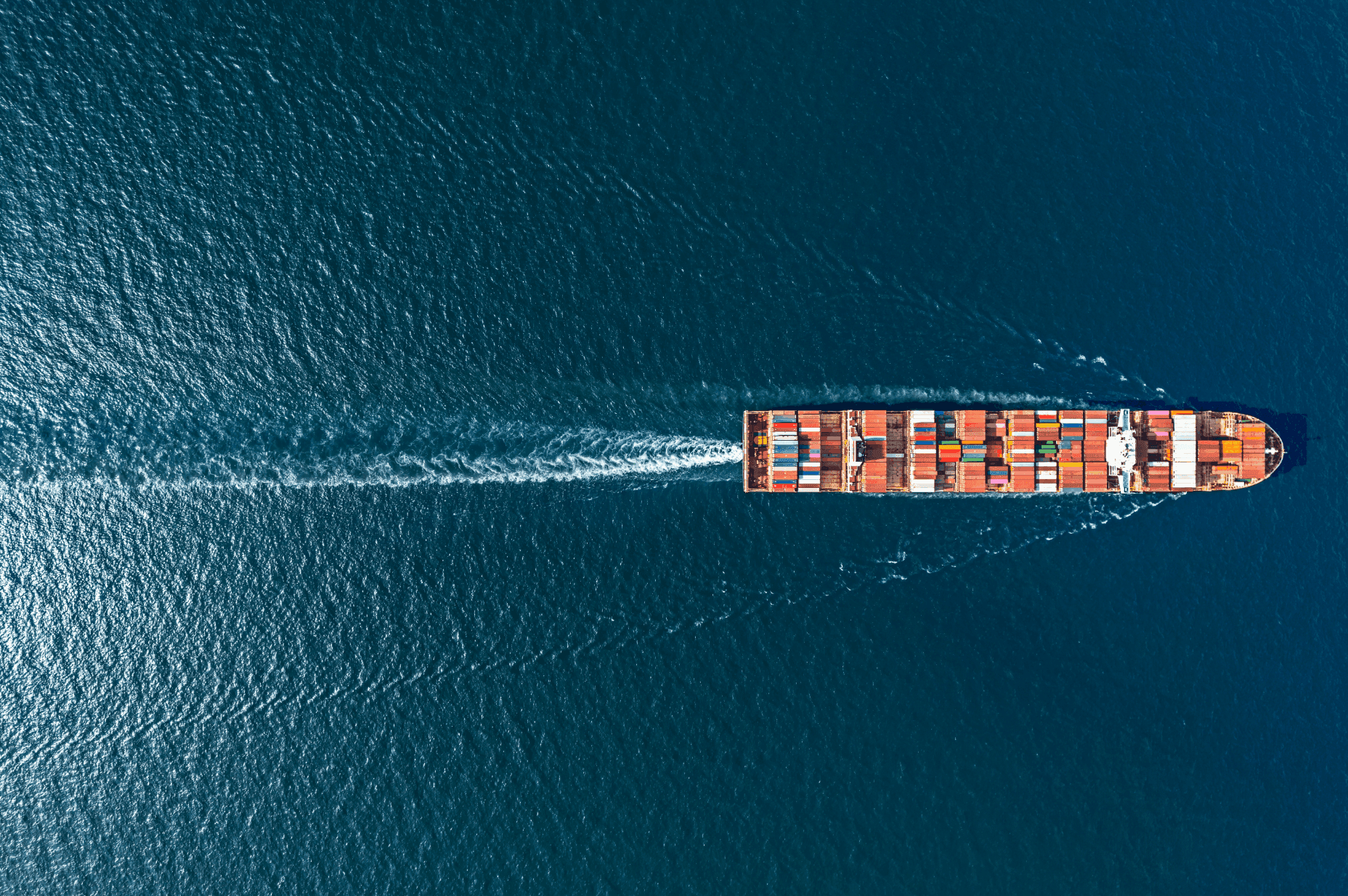
The Caspian Sea has found itself increasingly under pressure. From one side, Ukrainian strikes hammer Russian and Iranian ships navigating the waters. From the other, Israel and the United States bombard the Iranian navy. All the while, water levels drop, threatening maritime activity and fragile ecosystems alike. Nevertheless, Caspian littoral states are investing heavily in new ships and shipbuilding capabilities to exploit maritime trade routes that are critical to Eurasian connectivity.
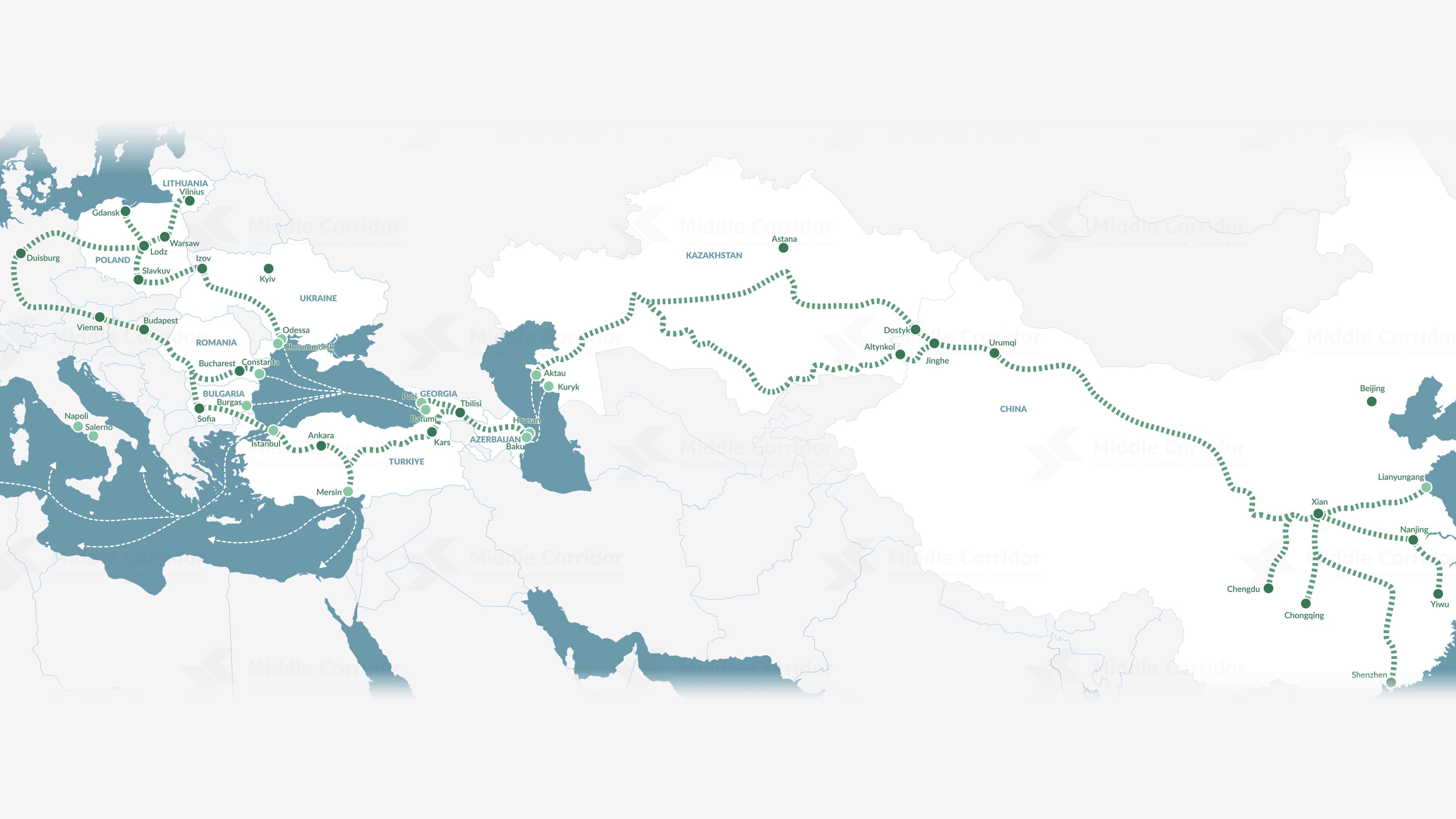
The Middle Corridor has grown rapidly in recent years. Total amount of cargo transported along the corridor reached 4.12 million tons in 2025, an increase of 800 percent since 2021. Virtually all this freight crossed the Caspian Sea, making efficient port infrastructure and abundant maritime capacity key to the route’s viability. Delays at borders and Caspian ports actually caused freight volumes to decrease by 8.4 percent from 2024, highlighting the urgent need for further infrastructure enhancements.
While efficient port management and customs procedures can streamline freight transport, ferry capacity presents a physical limit on how far such improvements can take the Middle Corridor. Consequently, Azerbaijan, Kazakhstan, and Turkmenistan have invested considerably in acquiring new ships and shipyards to transform the Caspian Sea from a frustrating bottleneck to a pillar of transport infrastructure.
Azerbaijan
Although a relative newcomer to the shipbuilding industry, Azerbaijan is already a heavyweight on the Caspian Sea. Baku Shipyard opened in 2013 and boasts the most modern shipbuilding facilities of any Caspian littoral nation. The yard can construct up to four 15,000-ton tankers per year or two 60-70,000-ton tankers per year. Since its establishment, 14 ships have been completed, with 11 more under construction and six more in the design phase. While most of its current projects fulfill orders placed by domestic customers, four of these ships will belong to foreign nations. The UAE has ordered two ships, one of which is in progress, and Kazakhstan has placed an order for two more. Kazakhstan’s ships will both have sea-river capacity, allowing them to transit between the Caspian and Black Seas on the Volga-Don Canal. Russia has also expressed interest in ordering five oil tankers, but the for the time being the Baku Shipyard does not have the capacity to take on additional projects.
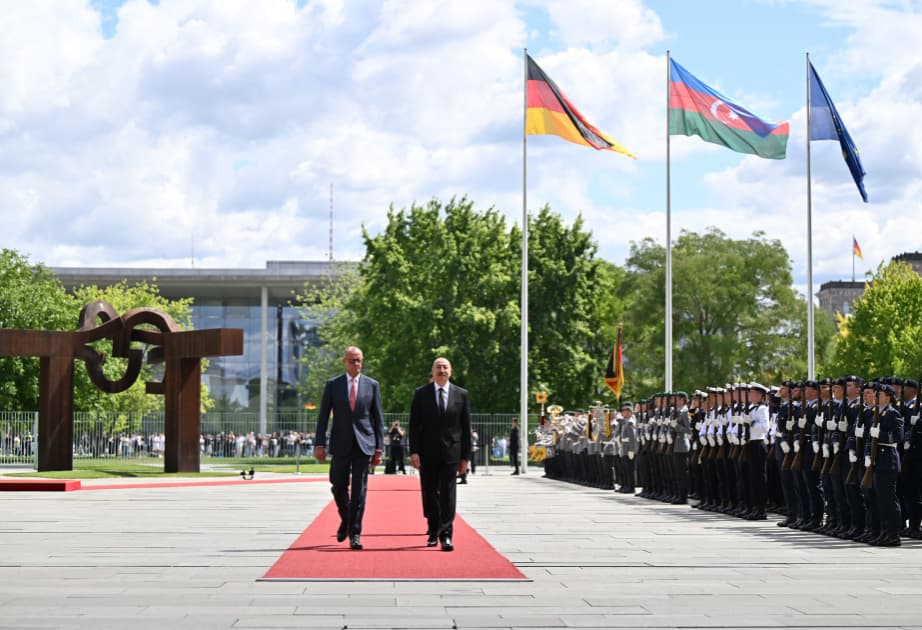
Besides courting foreign customers, the shipyard has become a diplomatic tool for Azerbaijan. In June, Azerbaijani President Ilham Aliyev gifted Turkmen President Serdar Berdimuhamedov the oil tanker “Dostyk,” which means “Friendship” in both countries’ languages. “Dostyk” was built at the Baku Shipyard, and the gift demonstrated both Azerbaijan’s shipbuilding success and its commitment to expanding regional connectivity on the Caspian Sea.
Kazakhstan
On the opposite shore from Azerbaijan, Kazakhstan possesses an established military shipbuilding sector and is working to catch up to Azerbaijan’s civilian industry. As of May 2026, Zenit Shipyard has built 37 ships for the Kazakhstan government since it opened production in 1993. However, the factory primarily constructs military vessels for Kazakhstan’s Navy on the Caspian Sea and has not built any merchant ships. Zenit Shipyard is also home to a research lab responsible for having constructed 20 small specialist ships between 2003 and 2020, although this yard, too, cannot meet demand in the commercial sector. To address the growing need for merchant vessels, Kazakhstan announced last June a 135 billion tenge project to build a shipyard at the Port of Kuryk. That yard will allow for the annual construction of two merchant and five support ships. Shipyard construction will follow the completion of a ship repair yard at Kuryk that should service up to 35 ships per year, although no project timeline has yet been publicly released.
This June, Kazakhstan signed a €100 million deal with the Dutch company, Damen, to build a second shipbuilding center in Kazakhstan’s Mangystau region. Previously, Kazakhstan has supplemented its fleet with ships built by Damen. In July 2023, The National Maritime Shipping Company, “Kazmortransflot” (KMTF), acquired two 8,000-ton tankers built at the Damen Shipyard Galati in Romania. KMTF simultaneously signed a memorandum of mutual agreement with the shipyard to build new, even larger tankers and universal ferries for use on the Caspian Sea. Kazakhstan’s recent push to revitalize its commercial shipbuilding industry demonstrates its commitment to strengthening its role as a key player on the Middle Corridor.
Turkmenistan
Like Kazakhstan, Turkmenistan also seeks to capitalize on the expanding Caspian shipping industry. The Balkan Shipyard opened in Turkmenbashi in 2018, and this May it completed its first ship, a dry cargo vessel. This ship is the first of three currently being built at the plant, the other two being a second dry cargo vessel and a dredging ship. Five more ships are to be built in the coming years, including two Ro-Ro (Roll-on, roll-off) ships and three more dry cargo vessels.
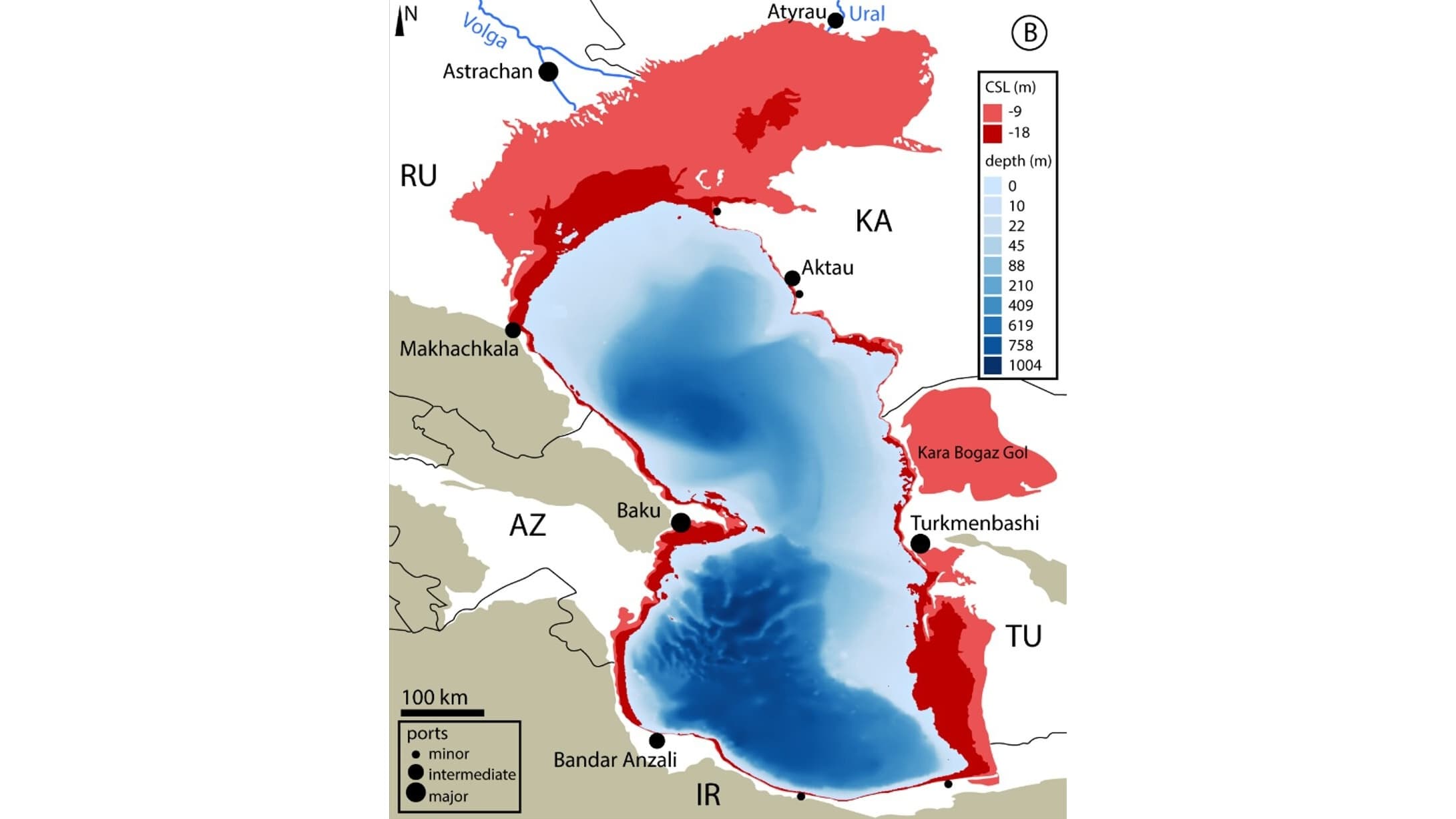
The types of ship being constructed by Turkmenistan point to its desire to take on a larger role on the Middle Corridor. Ro-Ro ships are especially important to increasing efficiency at ports, as they allow trucks and railway cars to seamlessly transition from roads and tracks to ships. The choice to build a dredging vessel also acknowledges the realities of maritime trade on the Caspian Sea. Excessive water consumption for agriculture on the Volga River has caused the sea to become shallower. This has interfered in port operations and forced Caspian littoral states to rely on dredging to maintain navigability. This problem particularly afflicts the shallow northern section of the Caspian Sea, potentially posing a long-term constraint on Russian naval operations and maritime trade.
Azerbaijan, Kazakhstan, and Turkmenistan have invested considerable resources in new vessels and shipbuilding to exploit growing traffic along the Middle Corridor. Greater numbers of cargo vessels could likely help to ease traditional bottlenecks at Caspian ports as the transport corridor becomes an integral part of global supply chains.
The Other Corridor
Russia and Iran have also devoted significant attention to expanding maritime trade on the Caspian Sea, albeit along a different route. Russian- and Iranian-flagged ships have increasingly used the International North South Transit Corridor (INSTC), which intersects the Middle Corridor, for the clandestine transport of weapons since Russia launched its full-scale invasion of Ukraine in 2022. Ship traffic on the corridor has grown markedly: initially to supply Russian troops in Ukraine with Iranian weapons and more recently to support the besieged Iranian regime in Tehran. Despite Israeli and Ukrainian strikes on Iranian naval and commercial vessels, Russia and Iran continue to develop their fleets to maintain this vital wartime linkage.
Russia
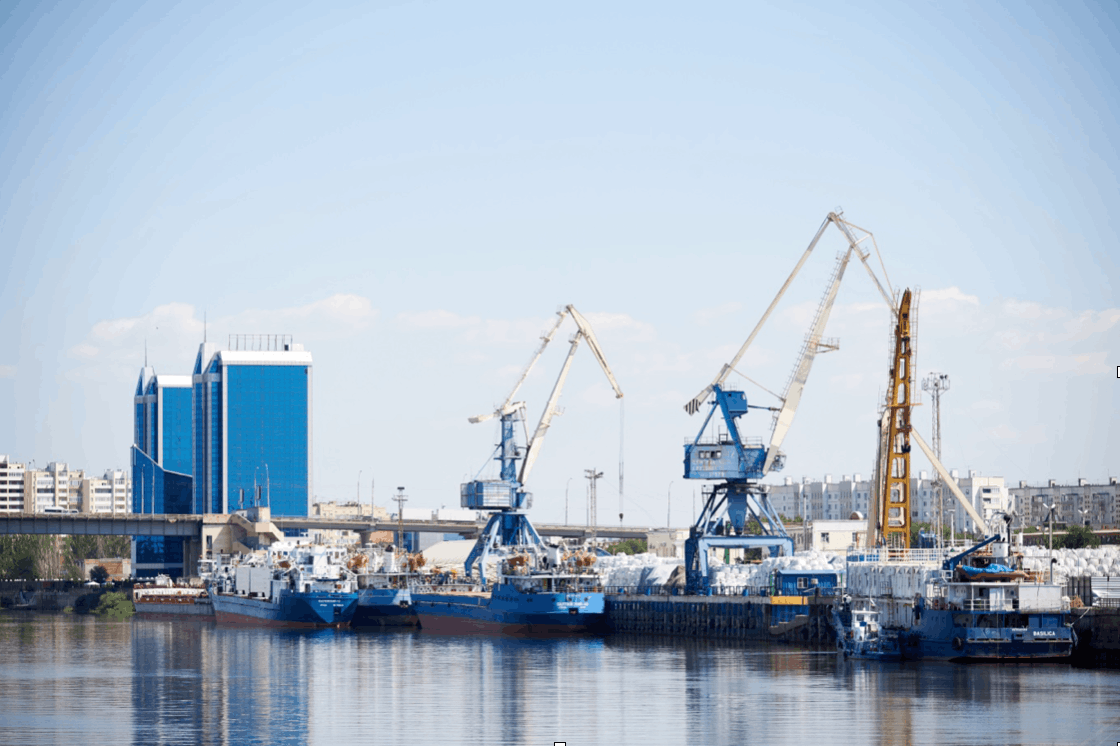
Traditionally, Russia has provided critical shipbuilding services on the Caspian Sea. Several shipyards on the Volga River around Astrakhan have continued to build new container vessels even during Russia’s war with Ukraine. United Shipbuilding Corporation, the largest shipbuilding company in Russia, ordered four multipurpose dry bulk/container cargo ships at the Lotos Shipbuilding Plant in December 2022. The ships were scheduled to be delivered in 2025 to support trade on the INSTC. Notably, the ships’ design allows them to transit the shallow Volga-Don Canal, which connects the Caspian to the Black Sea. Last May, the construction of two universal dry carriers began at the Lenin Shipbuilding and Ship Repair Plant in Astrakhan, bringing the total number of such ships currently under construction at the yard to 10.
These projects fall under a larger Russian effort to rapidly build ships for the INSTC. In March 2023, the Ministry of Industry and Trade of the Russian Federation announced plans to build 21 container ships by 2027. Lotos Shipbuilding Plant was to complete four of these ships by 2026, perhaps indicating a revised timeline for the ships ordered in December of the previous year. Russian officials failed to name the shipyards where the remaining 17 ships were to be built, although the projects at the Lenin Plant might be included in this count.
Whether or not the 21-vessel target will be reached by 2027, Russia has been expanding its shipbuilding capacities on the Caspian Sea. During the St. Petersburg International Economic Forum in June, Astrakhan Region and JSC KIT Shipbuilding Lotos signed an agreement worth over five billion rubles to modernize Lotos’s facilities and establish a modern shipyard that will support shipping to Caspian littoral nations. These Russian efforts mirror those of Azerbaijan, Kazakhstan, and Turkmenistan, although Russia’s primary goal remains the improvement of its connectivity with Iran rather than tapping into the Middle Corridor.
Iran
While the bulk of Iranian shipbuilding occurs on the Persian Gulf, Iran has also been purchasing vessels and constructing new ships for use on the Caspian Sea. In June 2023, Iran expanded its fleet of merchant vessels on the Caspian Sea by 15. This followed the earlier completion of eight new dry cargo vessels. In addition, Iran acknowledged the ongoing construction of four more ships in its Caspian shipyards at that time. Four ships were also claimed to be under construction on the Caspian Sea the following June, suggesting either the continuation of the prior year’s projects or steady orders for new vessels.
These expansions continued right up to the start of joint U.S.-Israeli military action in February. In March 2025, Deputy Minister of Roads and Urban Development and Head of the Ports and Maritime Organization of Iran Saeed Rasouli announced plans to expand and revitalize Iran’s Caspian fleet. On February 10 this year, just several weeks before military action began on February 28, the Iranian ambassador to Russia stated that a new cargo ship would soon begin operating along the INSTC. Whether or not this ship ultimately became operational remains unknown, although it demonstrates the continued importance of the INSTC both to Iran and to Russia.
In recent years, Russia has helped its close ally meet its shipbuilding needs on the Caspian Sea. The Islamic Republic of Iran Shipping Line Group (IRISL), which controls 53% of the Solyanka Port in Astrakhan, signed a contract in January 2023 with Russia to build a cargo ship for use on the INSTC. Alongside the slew of ships built and purchased that year, several more ships joined Iran’s Caspian fleet via the Volga River. However, this strategy occasionally runs aground, both figuratively and literally. In the past, Iranian shippers have had to wait for the Volga to be free of ice before they could access their new vessels.
Despite seasonal limitations, the Volga-Don Canal plays an essential role in connecting the Caspian Sea to the Black Sea and beyond, and Iran has taken on a larger role in these waters in recent years. In 2023, an Iranian company repaired a Russian ship that became damaged after a collision with Volga ice. Iran also joined China and Russia in dredging the Volga-Don Canal that year. These efforts illustrate deepening ties between Iran and Russia, as well as the waterway’s importance to the Islamic Republic long before the current conflict closed the Strait of Hormuz.
In sum, Caspian littoral states are investing heavily into expanding their commercial fleets and shipbuilding capacities. Azerbaijan, Kazakhstan, and Turkmenistan aim to enhance the Middle Corridor’s efficiency as a bridge between Europe and Asia, while Russia and Iran focus on developing their own interests along the INSTC. Although shrinking sea levels pose an enduring challenge, stopgap measures like dredging allow trade to continue for the time being. The energies devoted to enhancing maritime trade by each country on its shores indicate that the Caspian Sea will serve as a strategic crossroads as long as its waters continue to exist.