Commentary: The Middle Corridor: A Work in Progress
Recent Articles
Author: Ambassador (Ret.) Richard E. Hoagland
08/07/2026
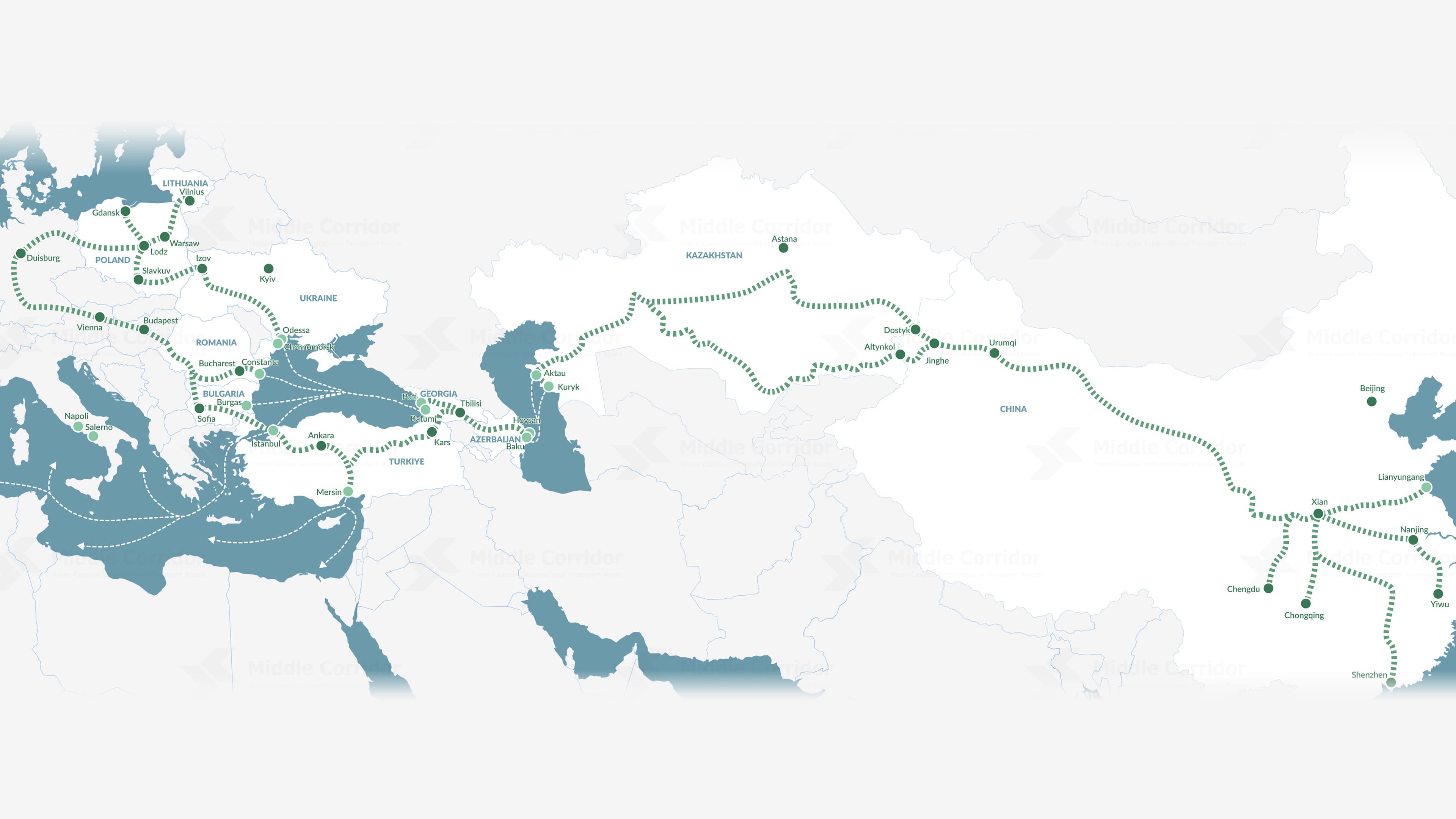 Trans-Caspian International Route
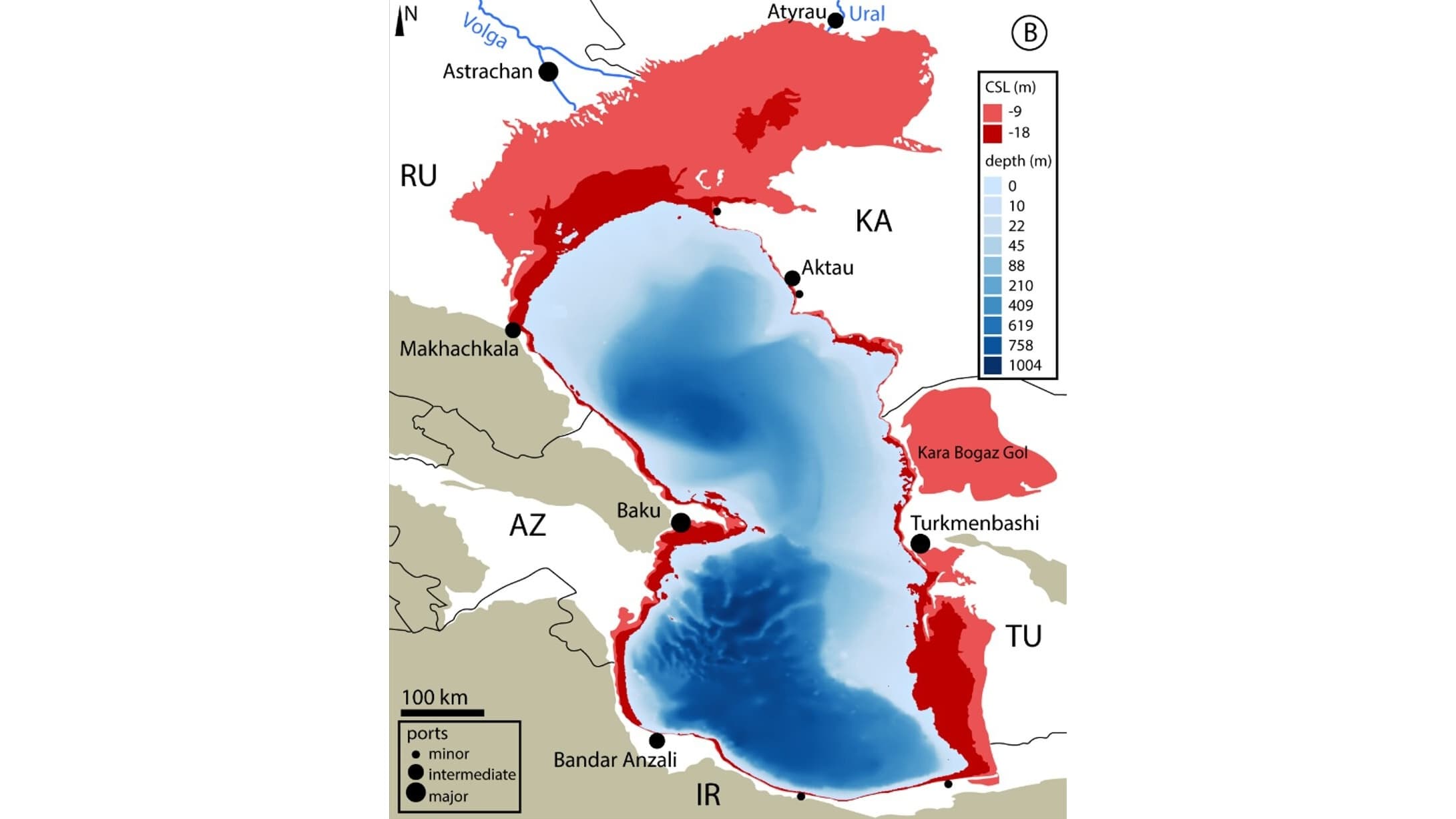
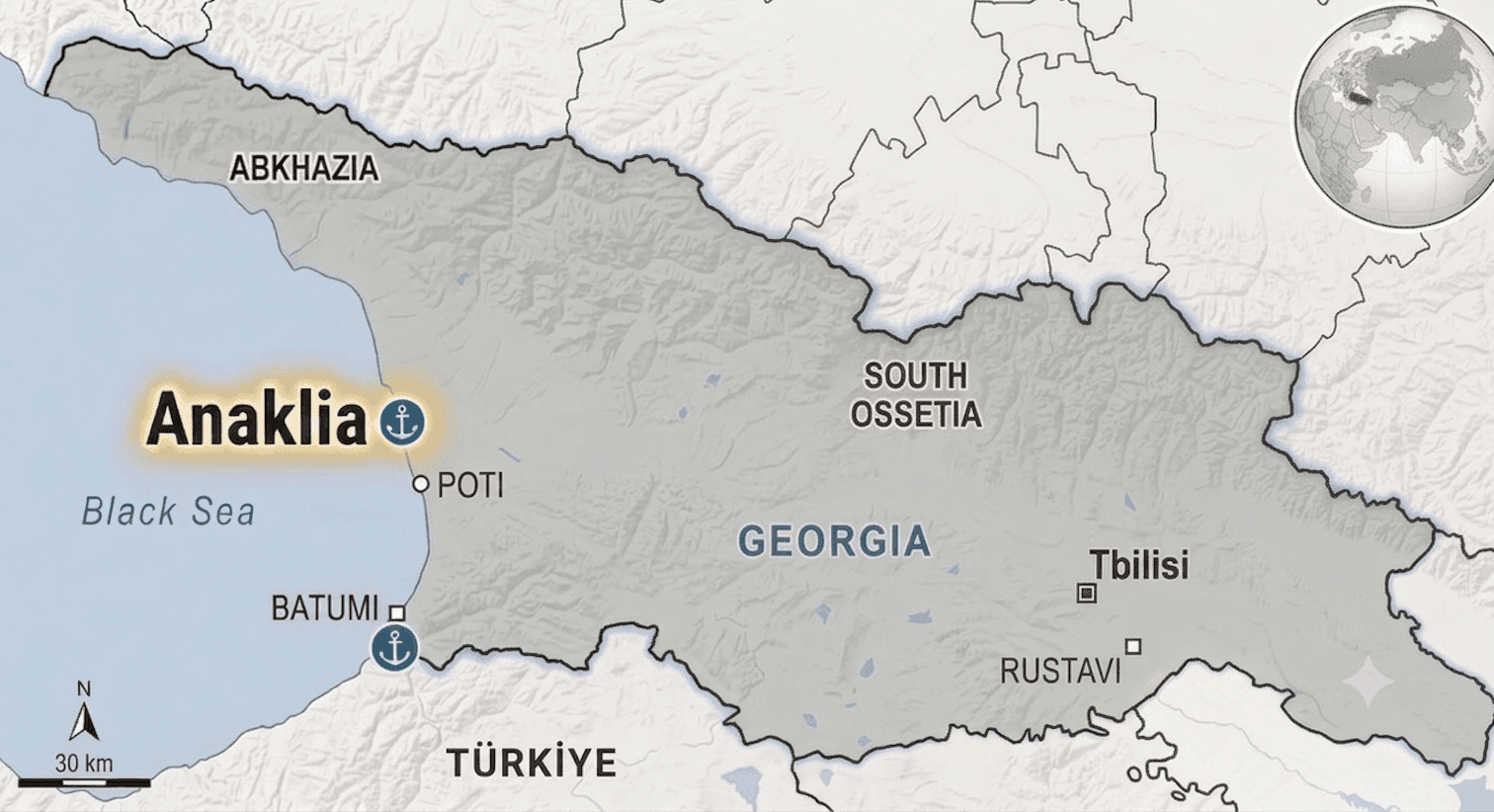
President Xi Jinping of the Peoples Republic of China first introduced the concept of what now includes the Middle Corridor in 2013 at Nazarbayev University in Astana, Kazakhstan, during a public program in which he announced a global initiative for international trade and transportation routes and infrastructure that he called at that time One Road One Belt but that eventually came to be called the Belt and Road Initiative, or simply BRI. The part of that global initiative that passes overland from China though Central Asia, across the Caspian Sea, through the three nations of the South Caucasus, across the Black Sea to Türkiye, and onward into Western Europe is currently called the Middle Corridor.
Those who are not especially expert in modern political geography, including many private-sector businesspeople, might look at a global map, trace the relevant lines, and say, “Sure, that can be done.” Others who know only the basics of modern political history in that vast region might comment, “I see no special problems because, after all, the majority of the countries involved are independent nations that were once all former Soviet Socialist Republics,” implying that they must all be pretty much the same.
However, the currently up-to-date realists, especially those with on-the-ground experience in the region, would point out that that the BRI region traverses relatively wealthy, globally oriented nations like Kazakhstan and Azerbaijan, rather poorer countries like the Kyrgyz Republic and Tajikistan without the financial resources to themselves build hugely expensive infrastructure projects, and “permanently neutral” Turkmenistan that has generally not significantly involved itself in anything beyond its own boarders. Furthermore, there’s Armenia that only fairly recently turned away from close cooperation with, even domination by, Russia. And there’s another essential Middle Corridor node, Georgia, once the darling of the West but with a current government that is much more reserved about the West and more open to Russia than ever before in its independent past. Politically, the Middle Corridor region is quite complex.
In the realm of great-power politics, Russia and China for the past several decades have vied for economic, political, and sometimes even military influence throughout the entire Middle Corridor region. Even though Russia is currently somewhat distracted by its on-going criminal war against Ukraine, it certainly cannot favor the Middle Corridor that not only would both benefit China and economically disadvantage Russia itself but would also make all the countries in the region somewhat less likely to agree, even if reluctantly, when Moscow tries to influence these independent nations.
A fully functional Middle Corridor requires a large number of individual infrastructure projects to make it work smoothly, efficiently, and economically. The first significant project, although not built specifically for China’s Middle Corridor, was the Trans-Kazakhstan Railway that was inaugurated in 2014. Following this was the Baku-Tbilisi-Kars railway in 2017, again not specifically built for China, marking the first new rail passage through the Caucasus mountains since the 1990s. However, it wasn’t until 2020 that the first train, a sort of test run, utilizing the Middle Corridor trade route that had been pieced together by that time, reached China from Türkiye. With that showcase landmark having been achieved, the volume of goods transported along the corridor grew from about 350,000 tons in 2020 to 530,000 tons in 2021.
As a bit of a footnote, it’s important to note that that specific version of the Middle Corridor route transited Georgia and the Black Sea. A more efficient version of the Middle Corridor would pass directly from Azerbaijan, across Armenia via the currently much discussed TRIPP Corridor, to Azerbaijan’s exclave of Nakhichevan, and directly, by land of course, into Türkiye. As Ambassador of Armenia to the United States Narek Mkrtchyan pointed out a few weeks ago during a private discussion, a joint Armenia-U.S. development company has indeed been formed for the project, with the United States holding a 74% interest. “But,” he said, “we still need a master plan before the project can move from concept on paper to on-the-ground construction.” Ultimately, the TRIPP Corridor project will include fiber optics cables, a new railroad and new highways, and electricity transmission lines. Yerevan has initiated this long and complex project, in close consultation with several of the most relevant Central Asian countries. The ambassador said, “We hope we’ll have the preliminary agreement work done by the end of this year – only then can we begin to look at the long process of designing and initiating concrete construction projects.” What that means is that a fully functional TRIPP Corridor as an essential part of the Middle Corridor won’t be functional for at the very least another several years.
It’s important to emphasize that when both public- and private-sector officials and businesspeople talk about “The Middle Corridor” as if it is a fully existent concrete structure like the Brooklyn Bridge, they’re really just repeating what they’ve picked up from word-of-mouth or by having read a few articles that tend to self-referentially quote each other. That’s why it’s important to recognize the current, on-the-ground realities about the TRIPP Corridor that is geographically quite a small segment of the entire Middle Corridor. It’s important to remember, too, that the Middle Corridor still exists really more as a concept, sort of a New Silk Road. Yes indeed, various elements have been pieced together to make it more or less work at this time. But for the Middle Corridor to be a fully functional and essential international trade route for the longer term, much, much more needs to be done, both in hard and soft infrastructure.
It’s indeed important to note that the complexities of soft infrastructure along the entire route are still being negotiated among the nations in granular detail. Soft infrastructure includes, but is not limited to, taxes, tariffs, and fees for the multiple services that will need to be provided, including, but certainly not limited to off-loading and then reloading cargo containers from one rail line to another because old Soviet-era rail gauges don’t match existing European gauges. These on-going soft-infrastructure negotiations are both complex and prolonged because nations want the highest possible tariffs for goods transiting their territories but want to pay the lowest possible fees when their own goods transit the territories of other Middle Corridor nations.
It is indeed important to note that the Middle Corridor is an excellent and, currently, even necessary concept. Furthermore, even in its somewhat disjointed, almost kaleidoscopic, current stage of development, it is essential because the international sanctions against Russia have all but closed the previously long-existing Northern Corridor for China to use for trade and transit with Europe. But for the Middle Corridor to become a highly functional and historically entrenched element of global trade and transit, a bit more needs to be done.