BRI at a Boiling Point: Anti-China Violence and the Security of Chinese Mining Projects in Central Asia
Recent Articles
Author: Kurtis Yan
02/06/2026
 President of the Republic of Tajikistan
Five Chinese nationals were killed in Tajikistan by unknown assailants in two separate cross-border attacks from Afghanistan at the end of November 2025. Three were killed on November 26 by drones equipped with grenades, while the other two were killed in gunfire by attackers on November 30. Authorities in Tajikistan and Afghanistan, under insistence by Beijing, launched investigations into the attacks. So far, no concrete information on the identities of the perpetrators has been released. However, what appears clear from the details of the attacks is that the assailants purposefully targeted Chinese nationals.
Since China launched its flagship Belt and Road Initiative (BRI) in 2013 across the Global South, including in Central Asia, overall antipathy and distrust of both Beijing and the Chinese nationals that arrive to perform labor has increased. In extreme cases, these negative feelings have turned into violence. Following the latest Afghanistan-Tajikistan border incident, the fact that those killed had been working in gold mines and on infrastructure projects has renewed scrutiny of China’s role in Central Asia’s mining sector. Because Chinese mining projects are at the forefront of local dissent in Kyrgyzstan and Tajikistan, they take on a greater focus about the safety of Chinese nationals amidst Afghanistan’s difficult security situation.
China’s Interests and Reception in Central Asia
Beijing has found success in extracting raw materials from its Central Asian neighbors while funneling investment towards the region’s development. The wealth of natural resource deposits in Central Asia is helping to fulfill China’s high energy demands as it modernizes. Also, extractive resource programs, along with BRI development projects, have increased Central Asian economic dependence on China. In turn, the number of Chinese nationals living and working in Central Asia has risen. For Beijing, maintaining strong relations with Central Asian governments is vital to achieve its security goals, which have centered around reducing transnational terrorism threats from the region and limiting sympathy for Uighur populations in Xinjiang.
With China’s overwhelming economic importance for Central Asia, distrust has risen over Beijing’s true goals in the region. Most notably, studies demonstrate that perceptions of economic dominance over local economies raise fears of imperialism and frustration with new BRI projects. These fears only increase with sociopolitical concerns, ranging from Chinese territorial expansionism in Tajikistan to outrage over the mistreatment of Muslim populations in Xinjiang, and even goes so far as fears of Chinese nationals marrying Central Asian women. Overall, the rise of Sinophobia has converged with wariness of economic control, leading to a relatively cool reception by local populations of Chinese nationals despite openly warm relations between Chinese and Central Asian government officials.
The Mining Sector Faces Particular Local Backlash
The mining sector has attained greater importance in recent years, as the number of Chinese-led operations has multiplied. With that, the number of business grievances has only grown, which have at times boiled into precarious situations. Chinese BRI projects are known for their opacity and poor practices, causing protests and local dissent. Kyrgyz mine workers have frequently mobilized strikes to protest low wages and poor working conditions, which, in turn, led to the firing of 400 workers in 2018. Similarly, Chinese workers in Tajikistan receive preferential hiring and treatment upon employment because the Chinese-led ventures offer higher wages to Chinese nationals that move to Central Asia for these jobs. A larger accusation is that Chinese nationals are narrowing housing markets and stealing jobs from local citizens.
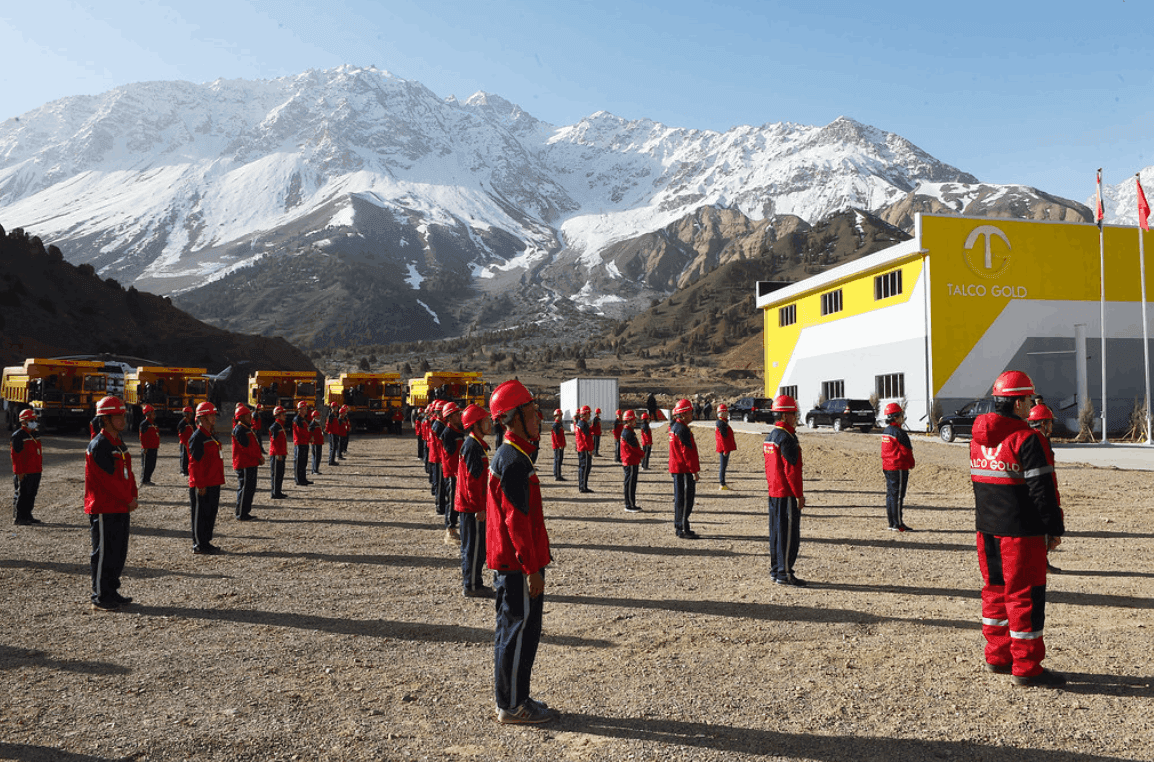
Moreover, many mining projects are in some capacity destructive to the region’s environment, whether it be water contamination or soil destruction due to mine tailings. Given the visibility of these problems, Chinese-led mining projects have become rallying points for heightened local scrutiny—at a higher rate compared to projects led by Russia, Canada, or other foreign entities. For instance, Tajik villages near Chinese mining sites report high levels of pollution and dust accumulation. Local reports indicate that untreated wastewater from refining facilities has contributed to freshwater contamination, killing fish populations and reducing access to drinkable water in areas already facing shortages. Chinese-led gold mines, namely Zarafshon and Pokrud, account for over 84% of gold output in Tajikistan.
A similar story of environmental grievances has unfolded in Kyrgyzstan. In 2019, about 500 residents of Kyrgyzstan’s Naryn province stormed a Chinese gold mining facility and brawled with Chinese workers. The local residents accused the company of soil contamination and the subsequent deaths of livestock, although soil samples revealed no irregularities. However, in a rare instance of government-led confrontation against Chinese management, Kyrgyzstan’s authorities recently arrested the CEO of Kemin Resource Group for environmental damages to local lands and for quickening glacial melt.
As indicated, the majority of mining-related protests in Central Asia have occurred in Kyrgyzstan and Tajikistan. This does not preclude records of anti-China protests in other states like Kazakhstan and Uzbekistan, but most grievances in these countries stem from oil and gas projects, as well as the mistreatment of Uyghurs in Xinjiang.
Why Recent Flares in and from Afghanistan Worry Beijing
Unsurprisingly, Chinese-led mining projects in Afghanistan have provoked grievances similar to those in Kyrgyzstan and Tajikistan. In early January, residents in Takhar Province violently clashed with gold mining officials in an area with frequent Afghan-Chinese ventures. Residents claimed the unrest began due to unregulated digging on agricultural land.
That said, the recent cross-border attacks against Chinese nationals by assailants from Afghanistan not only reflect local anti-China dissent but also reflect rising militant violence in Afghanistan and clashes along the Tajik-Afghan border. Afghanistan has experienced greater state-wide instability since the Taliban takeover in 2021. Attacks by the Islamic State (IS) and Jamaat Ansarullah (Tajikistani Taliban) are becoming more frequent, and as antipathy towards China grows, so too does violence against Chinese nationals. On January 19, IS claimed credit for a bombing at a Chinese-owned restaurant in Kabul that killed one Chinese national and six Afghans. IS stated that the attack was in retaliation tforChina’s treatment of Uighurs in Xinjiang.
Dushanbe has been wary of the Taliban government since 2021. After the cross-border attacks in November, the Tajik government insisted that Afghanistan resolve its security issues, and with high dependence on Chinese partnership, it cannot risk unsettling its greatest economic partner. Growing instability in Afghanistan raises fears in Beijing over the safety of its nationals, who could become more frequent victims of targeted and nontargeted violence. Thus, Dushanbe would likely prefer to demonstrate its resolve to Beijing by independently securing its border from incursions, protecting Chinese workers, and maintaining a strong posture against Kabul.
Heightened violence justifies Beijing’s calls for local governments to ramp up protections for its workers abroad. In some BRI-project countries, Beijing deploys private military companies to defend its projects when local governments fail to do so. China already possesses a military base in Tajikistan’s Gorno-Badakhshan region, and it frequently shares technology with Tajik forces and participates in joint anti-terrorism drills. China already employs security forces from Kabul to protect its mines in Afghanistan, but if cross-border leakage continues into Tajikistan, this could cause a strengthening of China-Tajikistan security cooperation, increase the presence of Chinese-paid local security forces, or even revive Chinese and Tajik joint patrols near the border with Afghanistan.
Since the BRI’s inception, Beijing has demonstrated a relatively high tolerance for the dangers its citizens face in high-risk areas. But as demonstrated in countries like Pakistan, frequent militant attacks on Chinese nationals can place projects in purgatory. Central Asia will continue to carefully observe the unfolding security situation in Afghanistan, in order to protect the longevity of its Chinese-owned projects. With growing discontent over Chinese mining practices and Beijing’s politics, violent spillovers might become more frequent and further disrupt Chinese-led operations.