The TRIPP Corridor after Washington: Next Steps for Getting Down to Business
Recent Articles
Author: Dr. Eric Rudenshiold
01/31/2026
A new agreement between Washington and Yerevan marks a key next step for development of the Trump Route for International Peace and Prosperity (TRIPP)—the connectivity project that brings Armenia into a key and emerging trade route, connects Azerbaijan with its Nakhchivan exclave, and provides needed movement in building normal relations between former warring neighbors. However, this agreement contains no construction timeline, no legally binding obligations, nor does it resolve many sensitive issues involving security, customs, or regional engagement. Instead, TRIPP opens a new course of action that moves from political intent to actual implementation.
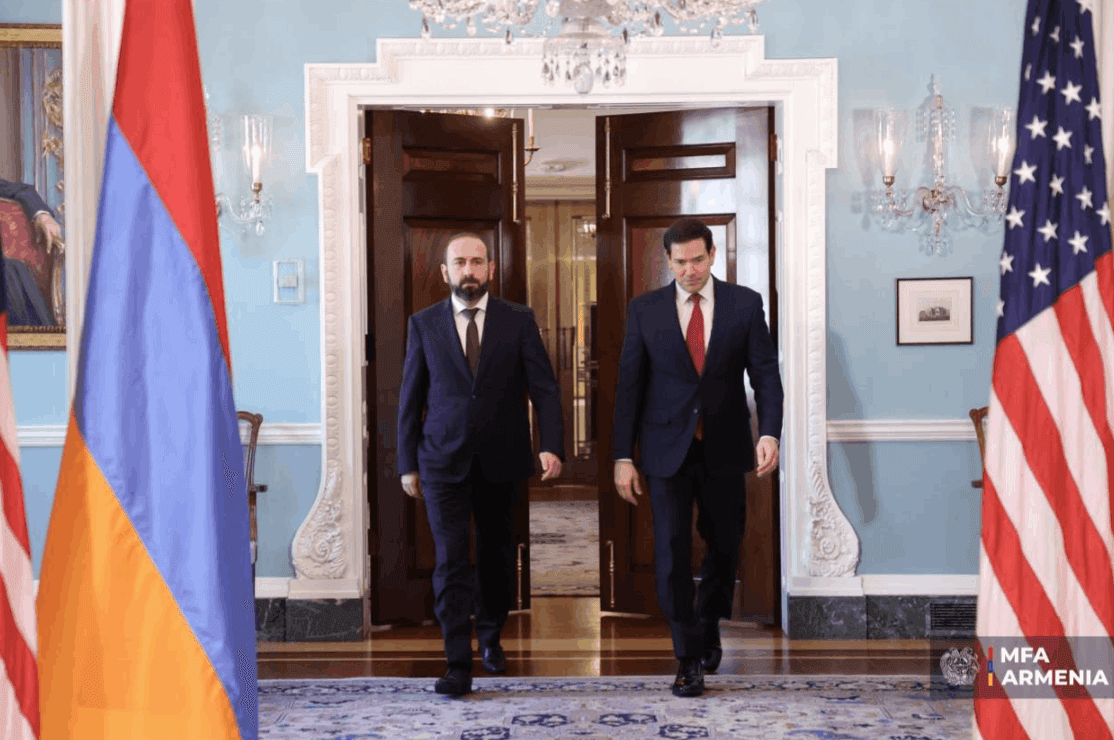
Announced after a January 13 meeting between U.S. Secretary of State Marco Rubio and Armenian Foreign Minister Ararat Mirzoyan, the TRIPP memorandum of understanding (MOU) provides a framework for advancing the White House-brokered Armenian-Azerbaijani declaration initialed last summer. While not binding, the MOU’s intermediate character is precisely what makes the TRIPP framework significant. Like earlier transformational projects in the region, from the Baku-Tbilisi-Ceyhan (BTC) oil pipeline to the Southern Gas Corridor, TRIPP is not a fully formed or framed effort.
Instead, it is likely to advance through a sequence of confidence-building steps, institutional innovations, and sustained external engagements. The MOU should not, therefore, be seen as an end product, but as an affirmation of Washington’s continuing interest and commitment to invest political capital, financial resources, and diplomatic creativity into rebuilding connectivity across one of Eurasia's most disputed regions.
From Declaration to Implementation
The August 2025 White House declaration between Armenia and Azerbaijan was recognized at the time as a high-level breakthrough, after decades of bloody cross-border conflict. That agreement expressed a shared commitment to normalization and regional connectivity, with the TRIPP corridor as its cornerstone. The mechanics of how the rail corridor would function across Armenian territory, linking mainland Azerbaijan with Nakhchivan, were left unresolved. Those undefined mechanisms leave much up in the air, as they have been the most contentious issues in negotiations between Baku and Yerevan, raising questions of sovereignty, security, and border control.
The January MOU addresses some of this gap by outlining an implementation framework to operationalize last summer’s political commitments without mandating their final legal form. Central to this approach is the creation of the TRIPP Development Company, a joint venture with a 74 percent U.S. share and 26 percent Armenian share during its initial 49-year term. Armenia will continue to retain full sovereignty, legislative authority, and judicial control over the corridor. The U.S. partner in the joint venture will enjoy exclusive rights to develop and operate infrastructure and services.
This structure assuages Armenian domestic concerns that the new corridor will neither lessen Yerevan’s sovereignty or territorial control, nor dilute state authority. The framework also allocates to the United States the decisive role in shaping the project's commercial structure, governance standards, and long-term viability. Washington is positioning itself as both a guarantor and anchor investor, much the same role as it played in earlier South Caucasus energy projects.
Strategic Ambiguity Can Be a Good Thing
Some critics are concerned over the missing construction timeline, legal commitments, and provisions for security and customs procedures that would be acceptable to Yerevan, Washington, and Baku. However, these omissions are not necessarily a weakness of the framework. In a region where premature inflexibility often derailed negotiations before they even started, strategic ambiguity could be a stabilizing tool.
The TRIPP framework's preamble explicitly states that legal obligations are not imposed on either party. Such political flexibility allows for Yerevan and Washington to adjust and adapt as talks with Baku develop, as well as when domestic and regional conditions evolve. The lack of preconditioning also lowers the temperature and domestic political cost of engagement for Armenia's leadership when it seeks to introduce the agreement to constituents.
The MOU, in its essence becomes, an evolving agreement without sensitive concessions carved in stone. Yerevan retains the right to enforce its laws and regulations while the TRIPP Development Company provides “customer-facing services” that include document and fee collection, coordination, and administrative support. Mirroring earlier infrastructure projects where security arrangements evolved over time, the new framework avoids forcing early decisions on security—one of the most sensitive issues.
Logic, Economic Opportunity and Connectivity
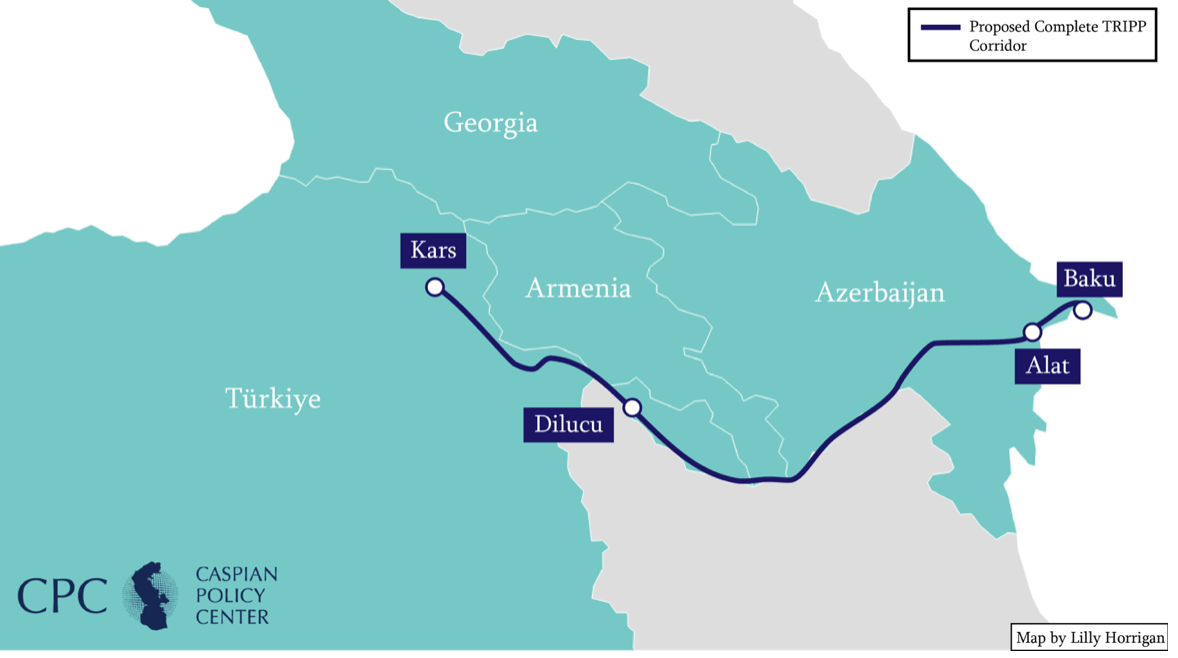 At its core, TRIPP is a U.S.-backed economic proposition. While the 26-mile corridor through Armenia's southernmost province is comparatively short, its potential promises possibly significant economic, as well as political and social, impacts. By linking Azerbaijan proper to Nakhchivan, then onward to Türkiye, the corridor would open new east-west trade flows across the South Caucasus to further connect Asian and European supply chains. For Armenia, long marginalized from regional networks, the project offers a chance to reposition itself as a hub rather than a transit dead end.
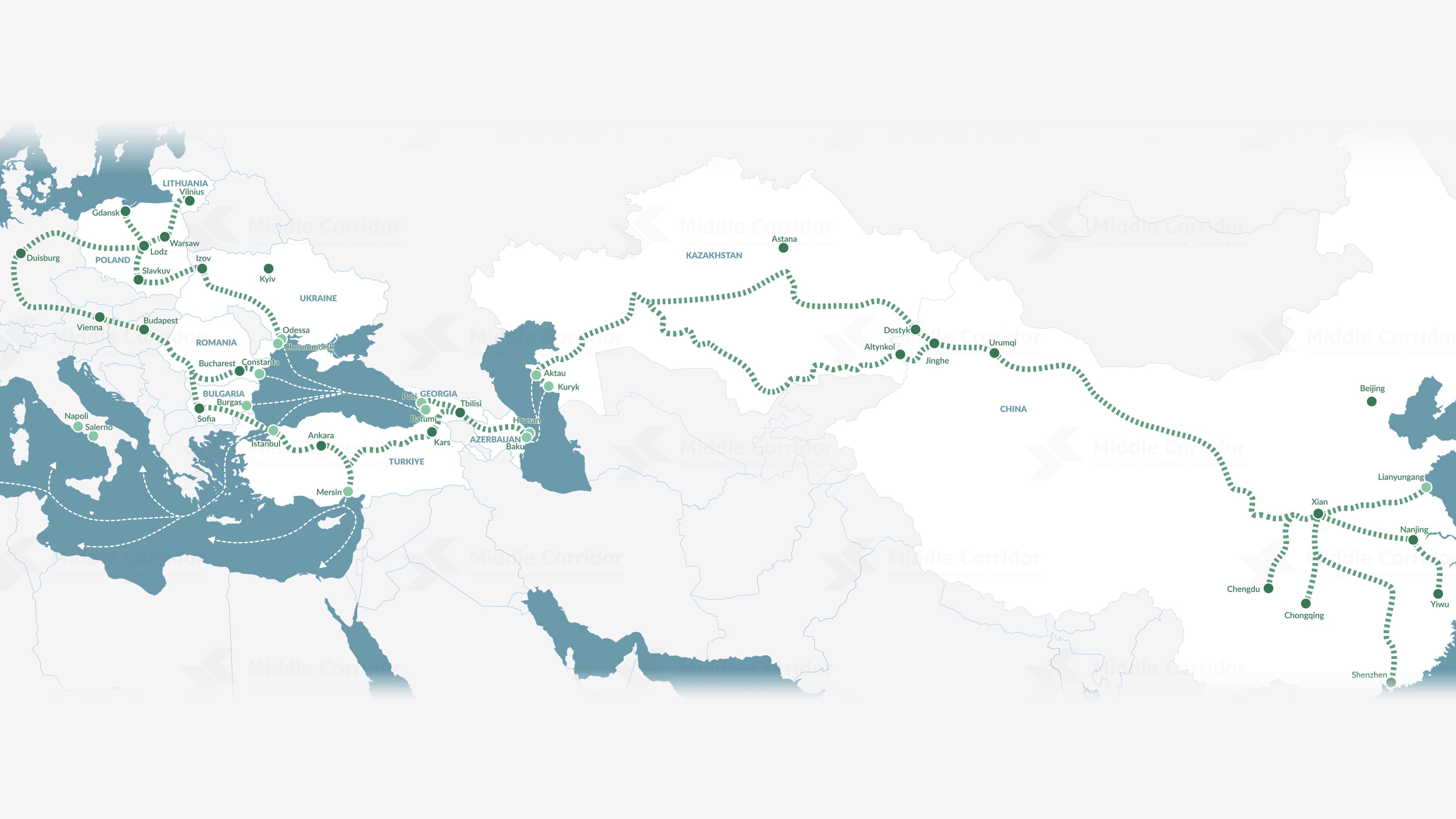
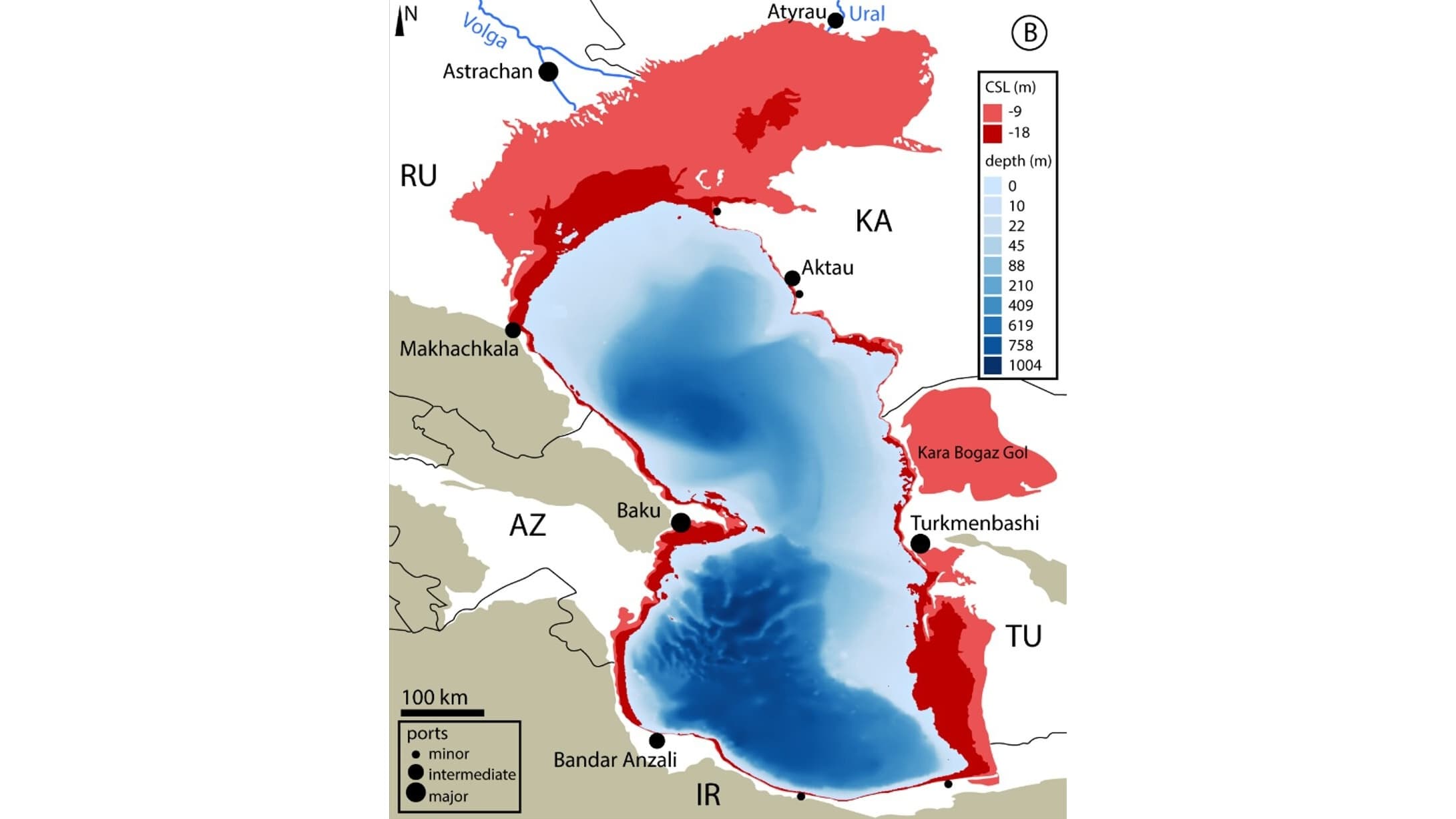
TRIPP’s emphasis on multimodal connectivity (rail, road, energy, and digital infrastructure) capitalizes on the contemporary trade reality of a burgeoning Middle Corridor trade route that joins Central Asia across the Caspian Sea to Europe. The Central Asians have joined with Azerbaijan, Georgia, and Türkiye to fashion increasingly efficient trade infrastructure that is working to develop seamless customs procedures, common digital documentation, and real-time cargo tracking. Pre-TRIPP Armenia had largely been isolated from such cooperative trade coordination. TRIPP’s proposed "front office-back office" model will enable third-party operators to manage documentation and payments to reconcile transit efficiency across Armenia, while Yerevan authorities retain ultimate control and decision-making powers.
TRIPP’s commercial logic is underpinned by the framework's revenue generation specificity. Taxes, customs duties, and other fees on trade and transit portend significant new income for Yerevan, along with enhanced connectivity and markets for Armenia’s export products. For the United States, ensuring financial returns and broader economic benefits underscores that TRIPP is not a philanthropic endeavor. The new trans-Caucasus corridor will align with Washington's interest in securing access to Central Asia’s abundant critical minerals, in diversifying supply-chain dependence away from China, and in strengthening the Middle Corridor trade route as a sanctions-compliant alternative to corridors dominated by Russia or Iran.
Lessons from BTC
Comparing TRIPP with the Baku-Tbilisi-Ceyhan (BTC) pipeline project is instructive. BTC sought to build a Russia-bypassing pipeline to move Azerbaijan’s oil across the South Caucasus to Türkiye. In the mid-1990s, BTC was widely dismissed as too expensive, too risky, and too politically fraught—a “pipe dream.” What changed was not the geography, but the political resolve, along with the quality and consistency of external engagement. Sustained U.S. and European political backing, coupled with financial guarantees and institutional support, transformed BTC into a cornerstone of Eurasian energy security.
TRIPP is at a similar stage in its development. Like BTC, it crosses contested territories and challenges vested interests. Also, like BTC, TRIPP’s success will depend less on the wording in its initial design than on the endurance of the commitment behind it. The U.S.-Armenia MOU provides an initial anchor, but the new corridor will require continual attention to translate paper principles into operational practice.
Detailed feasibility studies, pilot projects on digital customs, confidence-building measures on border management, and incremental infrastructure upgrades can all build momentum without forcing premature final agreements. BTC advanced through precisely such an iterative process, with each stage reinforcing investor confidence and regional buy-in.
Partnership and the Azerbaijan Question
One of the most striking features of the current TRIPP framework is the relative absence of Azerbaijan. While the project is explicitly designed to connect Azerbaijan to Nakhchivan, Baku is missing from the initial framework and has yet to publicly endorse the modalities outlined in the U.S.-Armenia MOU. Baku’s silence, however, should not necessarily be equated with rejection, as the next delicate phase of the process will likely soon begin.
For Azerbaijan, the corridor has long been discussed as an opportunity to connect directly with Nakhchivan and for enhancing Baku’s trade with Türkiye and Europe. Concerns over the security of its citizens using the TRIPP route have featured significantly as stumbling blocks in negotiations. The framework's emphasis on Armenian "back office" authority with a U.S.-managed “front office” may be seen as a creative arrangement to facilitate, rather than constrain, unimpeded transit for Baku.
Thus, the absence of binding commitments might prove an asset, leaving room for trilateral consultations and technical negotiations that outwardly bring Azerbaijan into the design process without forcing it to accept a fait accompli. With a careful and transparent rollout, TRIPP’s framework approach could evolve into a genuinely trilateral mechanism.
Geopolitics Beyond the Corridor
The implications of TRIPP extend well beyond the South Caucasus. By strengthening the Trans-Caspian trade route, the project contributes to a broader reconfiguration of Eurasian connectivity at a time of heightened geopolitical competition. For Europe, the corridor offers diversification at a moment when relations with Georgia are strained and dependence on traditional and sanctioned routes is increasingly risky. For Central Asia, TRIPP promises a doubling of the Middle Corridor’s transit capacity and another passageway for its exports to reach global markets.
The project has already attracted scrutiny and condemnation from Russia and Iran, both jealous of Western-backed connectivity projects in their back yard. Defining TRIPP as a peace-building and economic effort, rather than a zero-sum geopolitical gambit, becomes all the more important in this context. BTC’s lessons of strategic neutrality, inclusiveness, and consistent engagement will be essential to minimizing resistance and avoiding potential escalation.
An Intermediate Step with Transformational Potential
The U.S.-Armenia TRIPP framework agreement is best understood as the conduit between aspiration and realization. The agreement does not resolve all outstanding issues. It does not lock the parties into a predetermined trajectory. Instead, it establishes an institutional and political platform allowing for more detailed negotiations to take place as needed.
TRIPP’s value lies in the inherent opportunities it creates: for Armenia to redefine and reengage its regional role; for Azerbaijan to consolidate peace dividends; for the United States to secure a strategic corridor that aligns with its own economic and geopolitical interests; and for the wider region to take another step toward normalization through shared infrastructure. A final lesson of the BTC pipeline is that increased connectivity between the countries of the South Caucasus enhanced their sovereignty, independence, and interdependence.
Opportunities to resolve long-standing conflicts are rare and often fragile. Without sustained engagement, intermediate frameworks like TRIPP can become unsustainable and wither into diplomatic footnotes. However, with persistence and a willingness to capitalize creatively on ambiguity, this kind of framework can become the foundation of lasting change. The TRIPP corridor is not yet a finished project, but the MOU is working to move purposefully from paper to process. That, in the South Caucasus, is a major accomplishment.