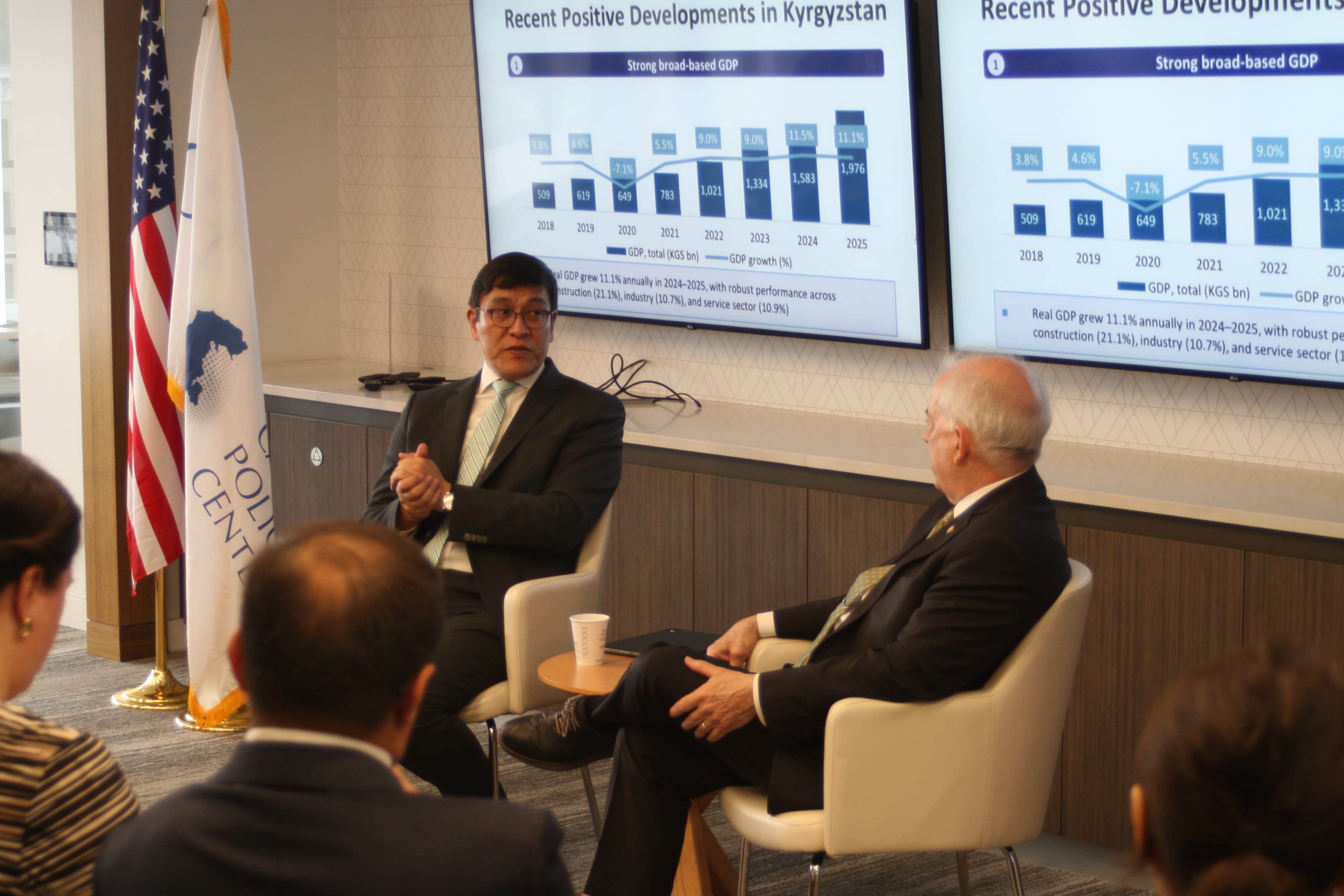
7th Caspian Business Forum: Connectivity, Finance, and Energy along the Middle Corridor
Recent Articles
Author: Caspian Policy Center
09/23/2026
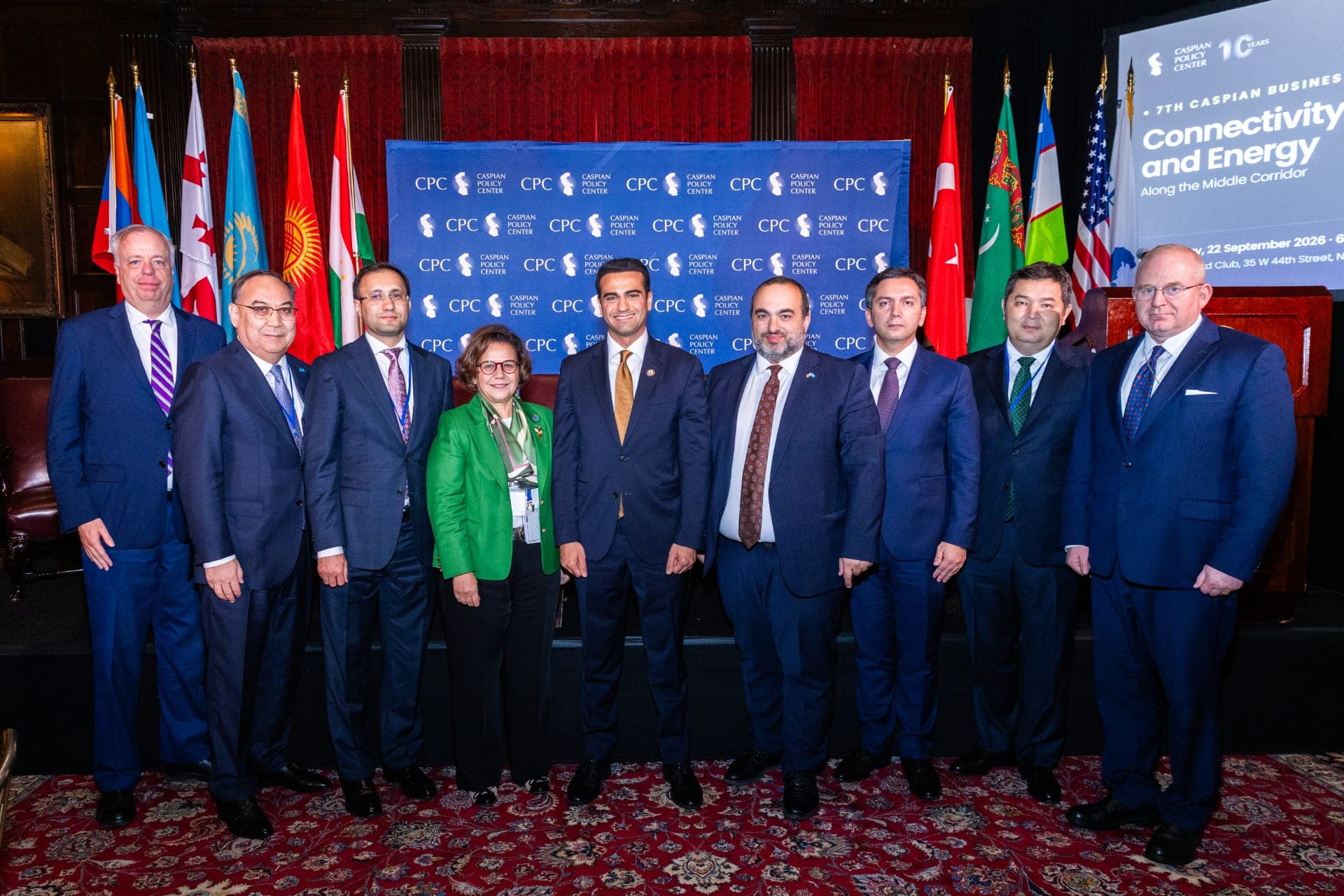
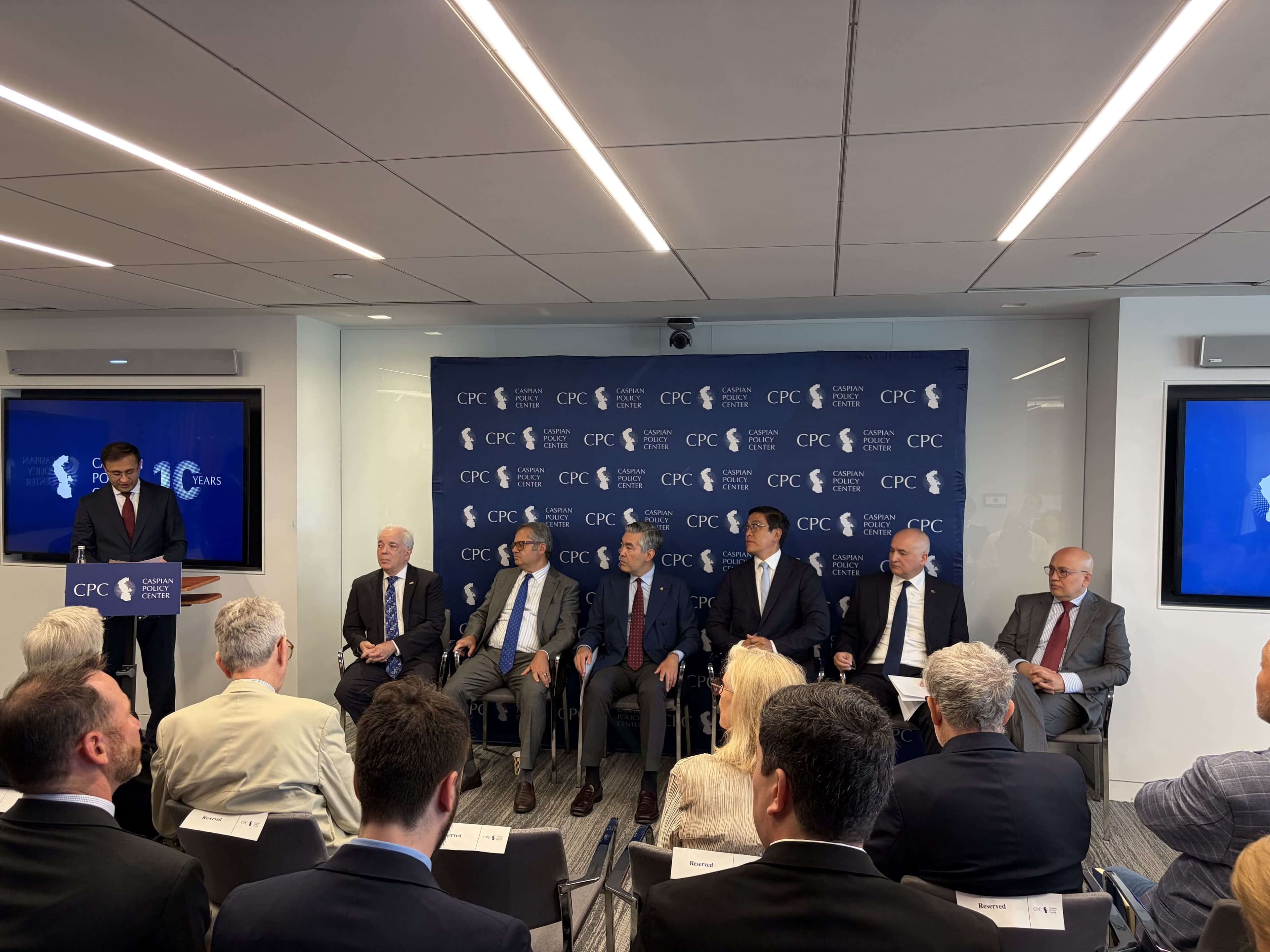
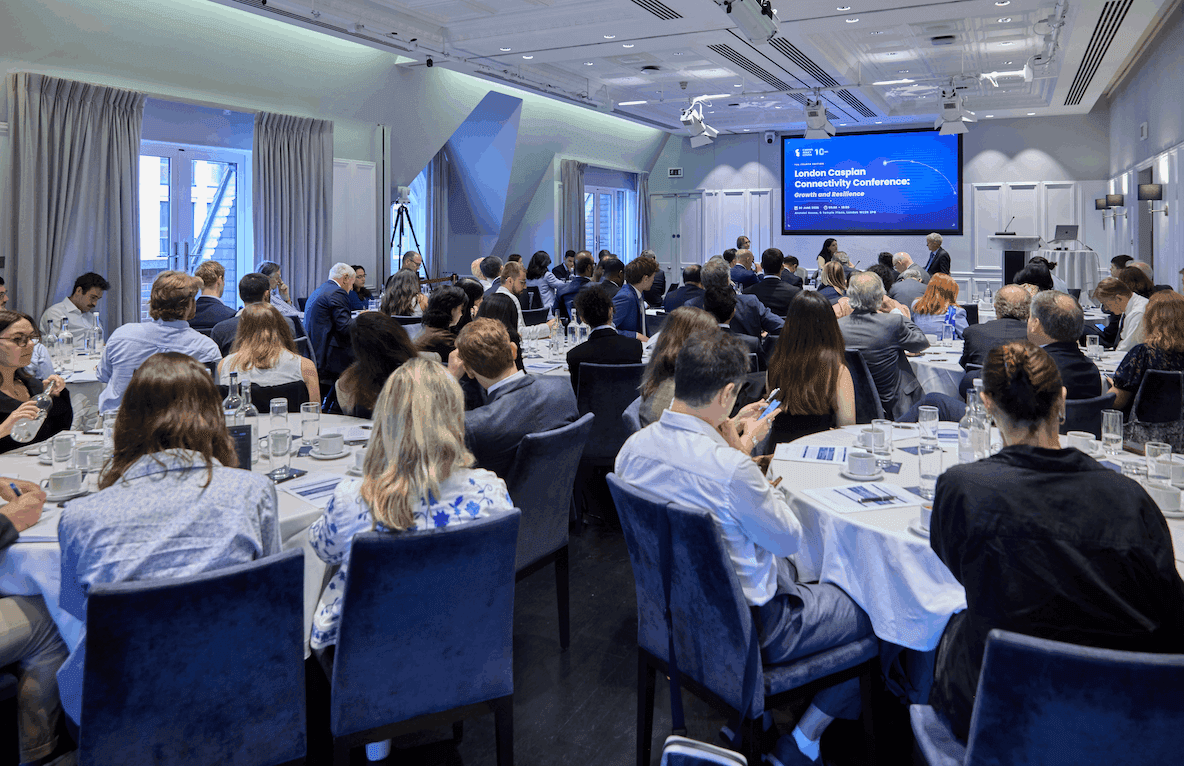
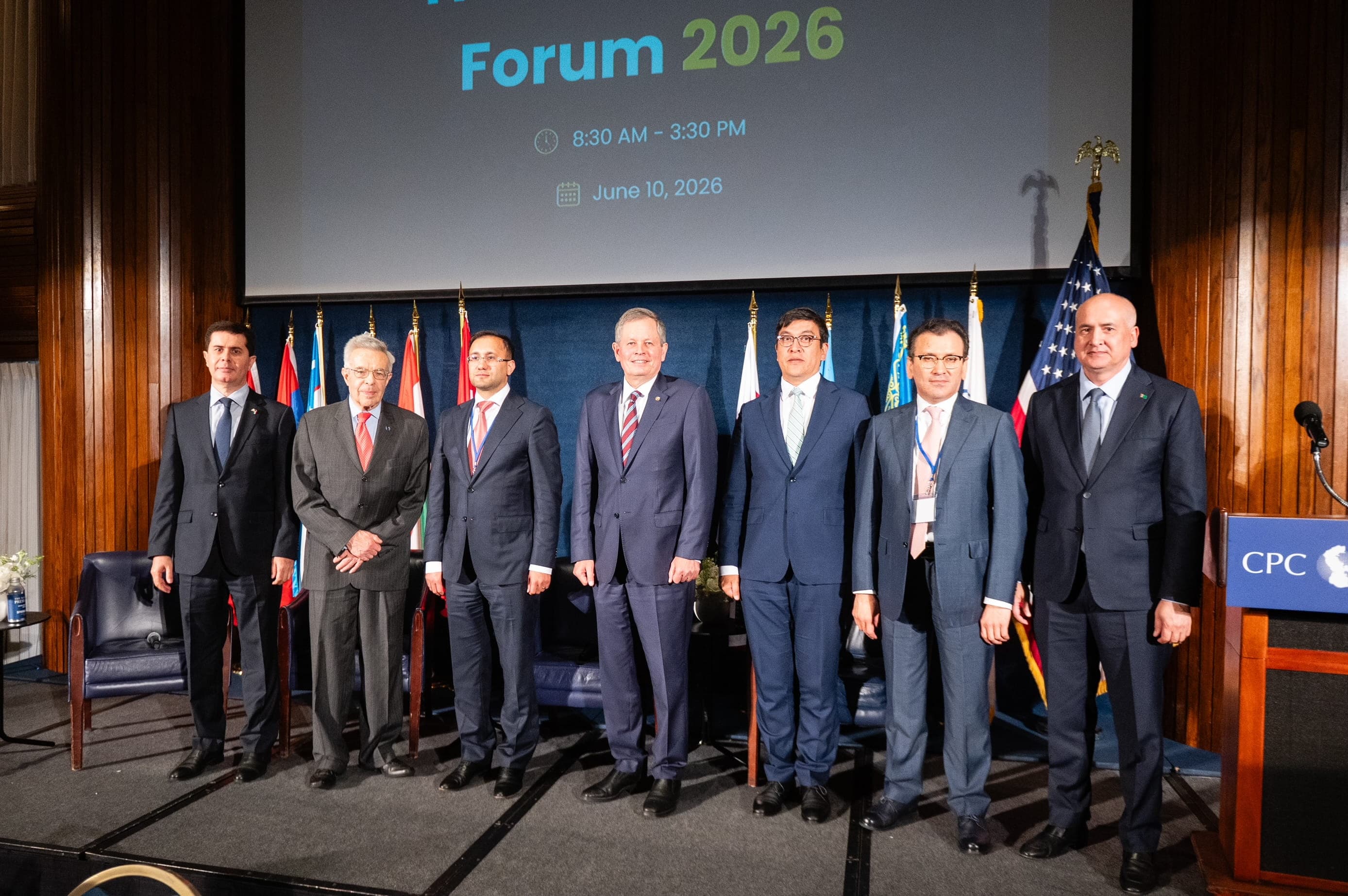
New York, NY, September 22 – The Caspian Policy Center (CPC) held its seventh annual Caspian Business Forum in New York, bringing together senior government officials, business leaders, and regional experts from the United States and across the Caspian region. Held during the United Nations General Assembly and marking CPC’s 10th anniversary, the Forum focused on the rapidly evolving economic and geopolitical landscape across the South Caucasus and Central Asia, with discussions centered on the Middle Corridor, the Trump Route for International Peace and Prosperity (TRIPP), energy and critical minerals, and opportunities for greater international investment and commercial cooperation.
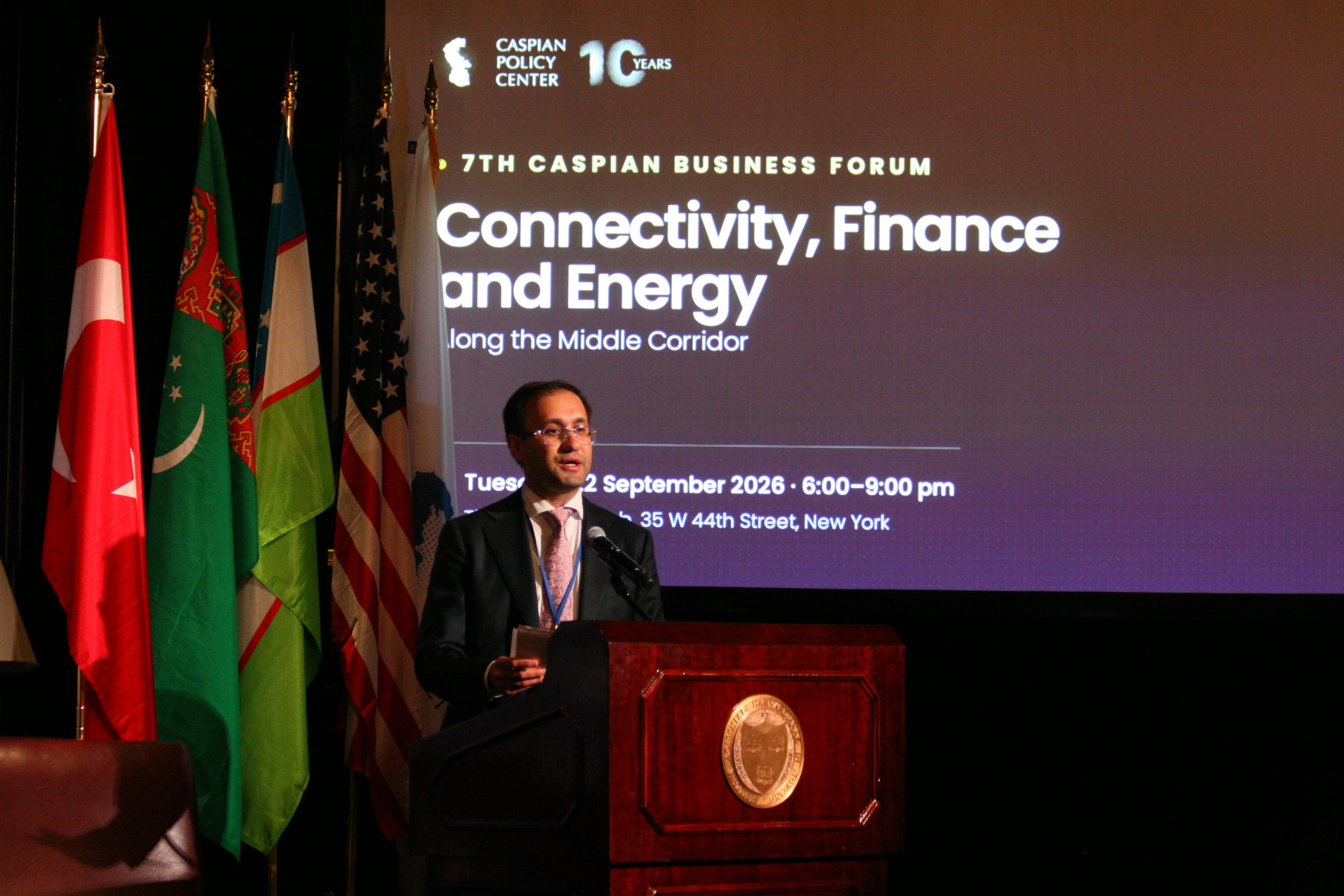 CPC President Efgan Nifti
Efgan Nifti, president of CPC, opened the Forum by highlighting the significant developments that have reshaped the Caspian region over the past year and the growing importance of the Middle Corridor as a trade and connectivity route linking Asia and Europe.
“With routes through Russia constrained by sanctions and maritime trade facing renewed instability in the Middle East, the strategic and commercial case for the corridor has only grown stronger,” Nifti said. “The question is no longer whether the Middle Corridor works, but how quickly it can scale.”
Nifti stressed that realizing the Corridor’s full potential will require greater coordination alongside continued investment in physical infrastructure. “For the Corridor to reach its full potential, it must increasingly function as one integrated system — with harmonized border procedures, coordinated ports and railways, and digitalized documentation,” he said. “The challenge now is not simply to build more infrastructure, but to make the entire corridor faster, more reliable, and easier for businesses to use.”
Nifti highlighted growing regional cooperation, pointing to Azerbaijan’s formal integration into the Central Asian Consultative Meetings at last year’s Tashkent Summit, expanding the regional format from C5 to C6. The development, he said, reflected “the growing reality that Central Asia and the South Caucasus are increasingly part of a single strategic and economic space.”
The CPC president also highlighted growing U.S. government and private-sector engagement in the region, pointing to increased attention to Trans-Caspian connectivity, investment, and commercial opportunities. “The United States has played an important role in these developments. Last November’s C5+1 Summit brought all five Central Asian leaders to Washington and was accompanied by more than $25 billion in announced commercial agreements between American companies and regional partners, spanning transportation, aviation, agriculture, technology, and critical minerals,” he said.
“Since then, that momentum has continued. Last month, Secretary of State Marco Rubio announced that the new Trans-Caspian Enterprise Fund is operational, backed by $201 million in U.S. government funding to support private-sector investment along the Middle Corridor. In the South Caucasus, the U.S.–Armenia TRIPP Development Company is intended to advance new rail, road, pipeline, and digital infrastructure.”
Concluding his remarks, Nifti said the convergence of greater regional cooperation, new connectivity initiatives, and increased international engagement had created a significant opportunity for the region. “Twenty years ago, the level of regional cooperation we see today would have been difficult to imagine. Now, the countries of the Caspian themselves want greater connectivity, trade, investment, and integration. At the same time, the current geopolitical landscape has opened a rare window to deliver this.... We cannot afford to let this window close,” Nifti said.
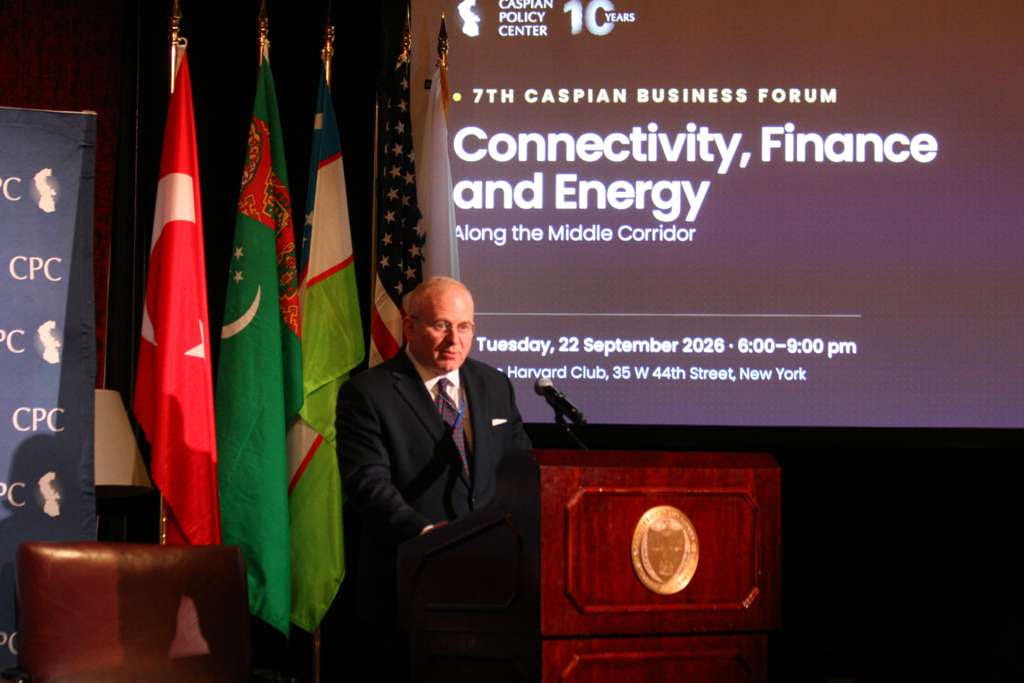 Peter Andreoli, Deputy Assistant Secretary, Bureau of European and Eurasian Affairs, U.S. Department of State
Peter Andreoli, Deputy Assistant Secretary in the U.S. Department of State’s Bureau of European and Eurasian Affairs, delivered the first policy address. He highlighted the importance of stability and regional connectivity to unlocking greater investment across the South Caucasus and Central Asia.
“Connectivity and prosperity feed off stability. Risk is real and has been present in the region for some time, but for too long, the brilliant potential of the South Caucasus and Central Asia has been overshadowed by risk, keeping a lot of transformative capital on the sidelines,” Andreoli said.
Andreoli pointed to the progress between Armenia and Azerbaijan as an opportunity to build stronger economic ties across the region. “Even more remarkable than the signing of the peace agreement between Armenia and Azerbaijan is the stability and peace that has been established on the ground. The United States recognizes that durable peace must be underwritten by strong, enduring partnerships,” he said.
Andreoli also highlighted the Trump Route for International Peace and Prosperity (TRIPP) as a new model for U.S. engagement in regional connectivity. “The TRIPP initiative is a paradigm shift in how the United States and regional partners are approaching regional connectivity,” he said, adding that the planned multimodal transit corridor could become a key link in the broader Middle Corridor.
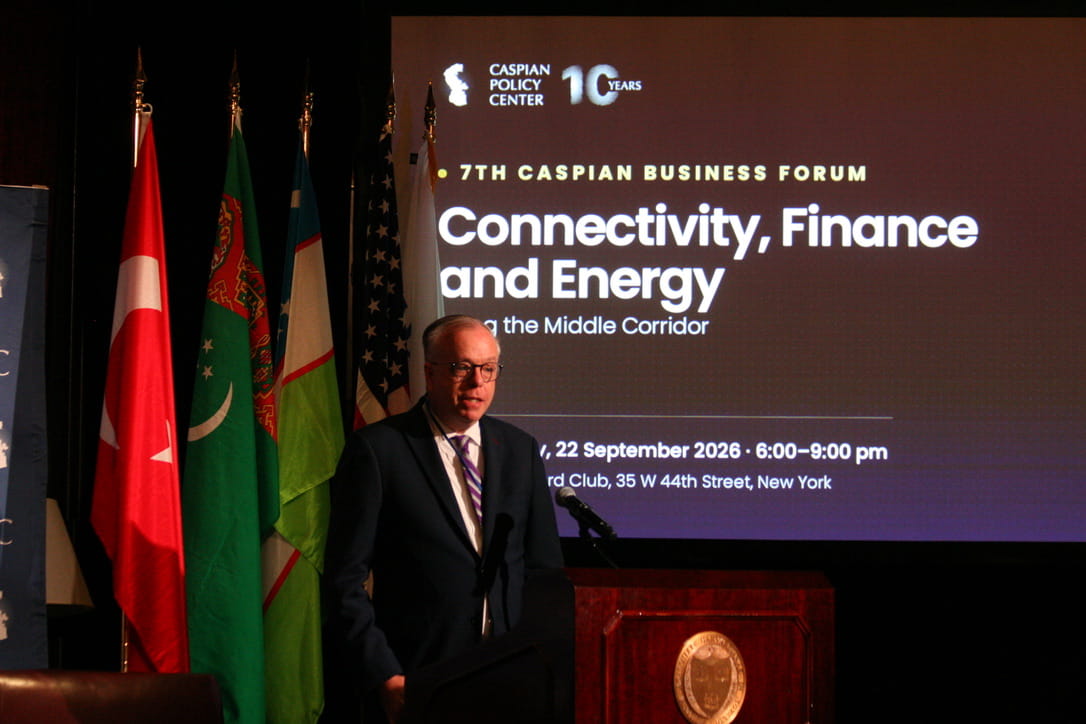 Mark Cameron, Deputy Assistant Secretary, Bureau of South and Central Asian Affairs, U.S. Department of State
The Forum’s second policy address was delivered by Mark Cameron, Deputy Assistant Secretary in the U.S. Department of State’s Bureau of South and Central Asian Affairs. Cameron highlighted growing U.S. engagement with Central Asia and the South Caucasus and the opportunities created by the continued development of the Trans-Caspian trade route.
“I’ve spent much of my career fostering U.S. relations with the countries of Central Asia and the South Caucasus, so I appreciate the tremendous importance of the Trans-Caspian trade route and the new opportunities for its development,” Cameron said. “U.S. attention to the region has never been higher, and it’s not hard to see why. The common theme is the optimism about what is possible.”
Cameron pointed to the C5+1 platform and growing U.S. commercial engagement as important elements of this relationship. He also highlighted the newly operational Trans-Caspian Enterprise Fund as a mechanism for mobilizing greater private investment in the region. “The Trans-Caspian Enterprise Fund is a private nonprofit entity that will strategically employ U.S. government grant resources, but this is designed to prove the commercial viability of high-potential projects and serve as a catalyst for additional private-sector investment,” Cameron said.
Cameron also welcomed the completion of the Trans-Caspian fiber-optic cable connecting Kazakhstan and Azerbaijan, highlighting the opportunities it creates for greater digital connectivity and technology investment. More broadly, he noted the growing two-way commercial relationship between the United States and Central Asia. “We are pleased to see the countries of Central Asia attract U.S. investors at an increased tempo, and we are pleased to see some Central Asian countries now investing in the United States,” Cameron said.
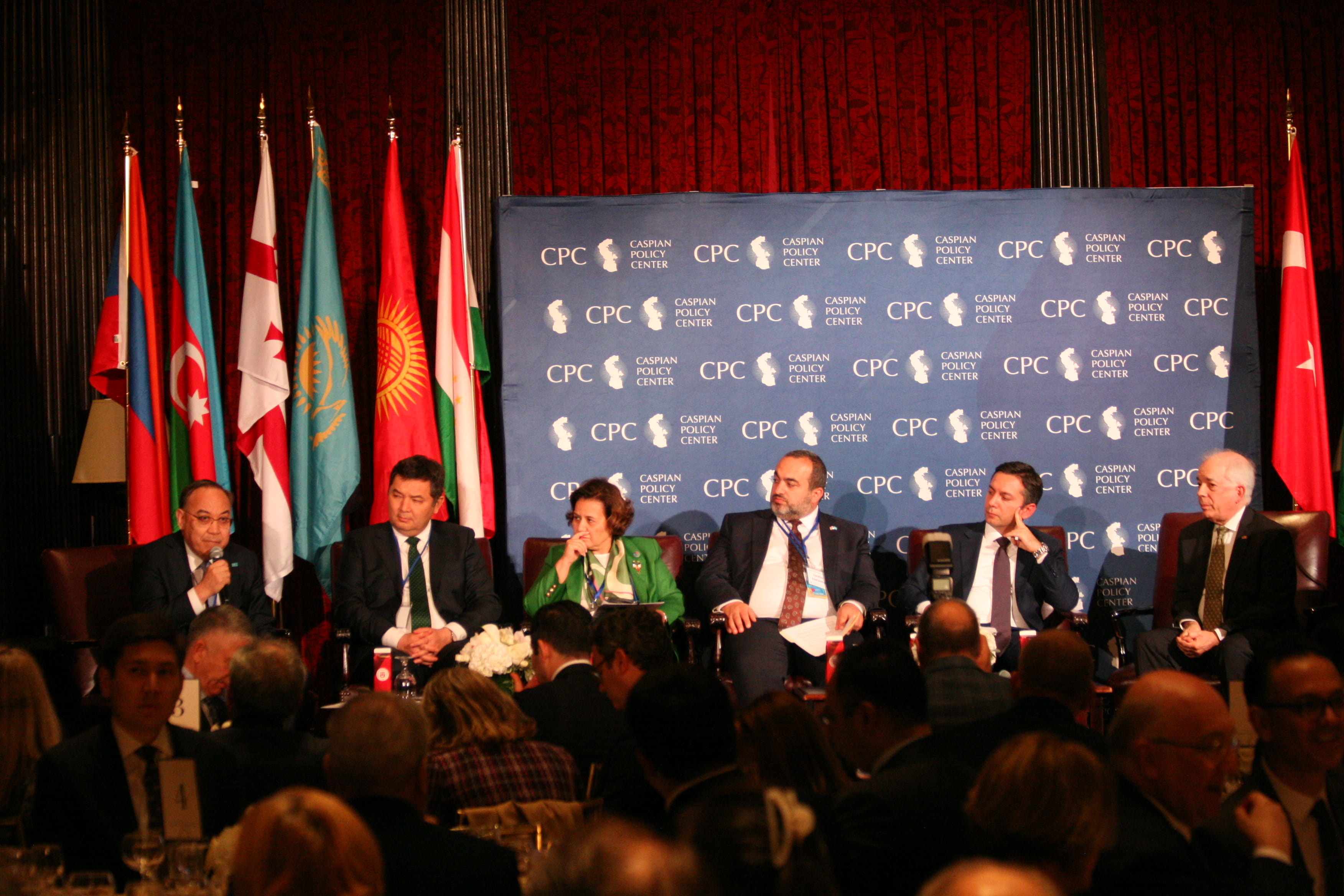
The Forum’s first panel, “Investing in the Middle Corridor: What Does the New TRIPP Corridor Mean for the Region?” was moderated by Eric Rudenshiold, CPC’s Senior Fellow for Caspian Affairs. The discussion examined how TRIPP can complement the broader Middle Corridor and the practical steps needed to translate growing regional connectivity into greater trade and investment. Panelists highlighted the need for coordinated infrastructure development, streamlined and digitalized border procedures, long-term financing, and closer regulatory cooperation across the region.
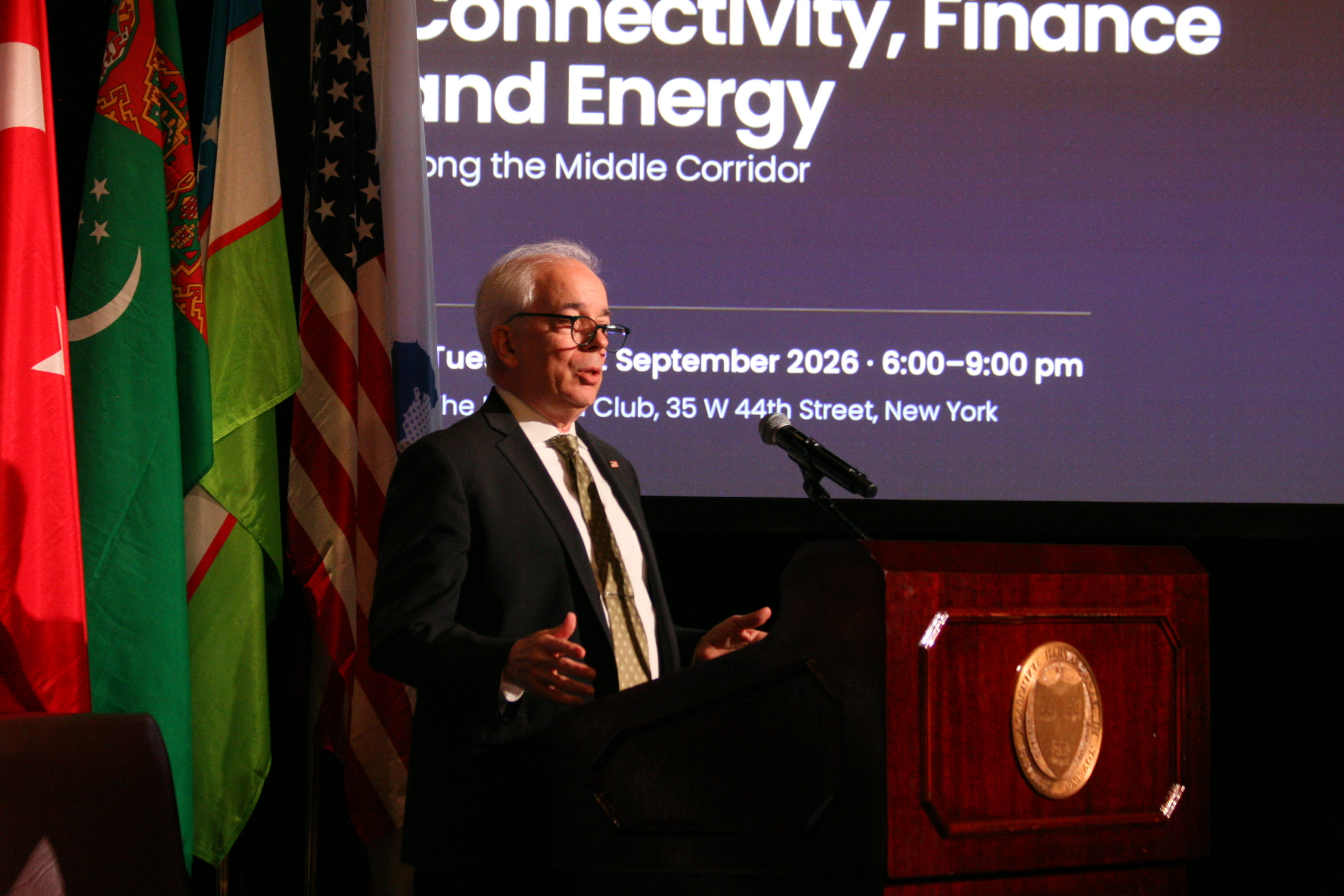
Opening the discussion, Eric Rudenshiold framed the development of the Middle Corridor and TRIPP within the broader geopolitical shift toward greater diversification of trade and connectivity. He argued that recent geopolitical disruptions have demonstrated the risks of relying too heavily on individual powers, markets, and routes.
“The war in Ukraine did not simply redraw Europe’s security map. It exposed something much larger. It exposed the vulnerability of depending upon a single power, a single route, a single market,” Rudenshiold said. “That realization overshadows this entire region, creating something that we’ve talked about for years: the advent of choice.”
Rudenshiold argued that greater connectivity can provide countries across Central Asia and the South Caucasus with more options over their economic and strategic relationships. “The goal is not to replace one dependency with another; the goal is to make dependency itself less necessary and to build true sovereignty, and that is what connectivity can do,” he said.
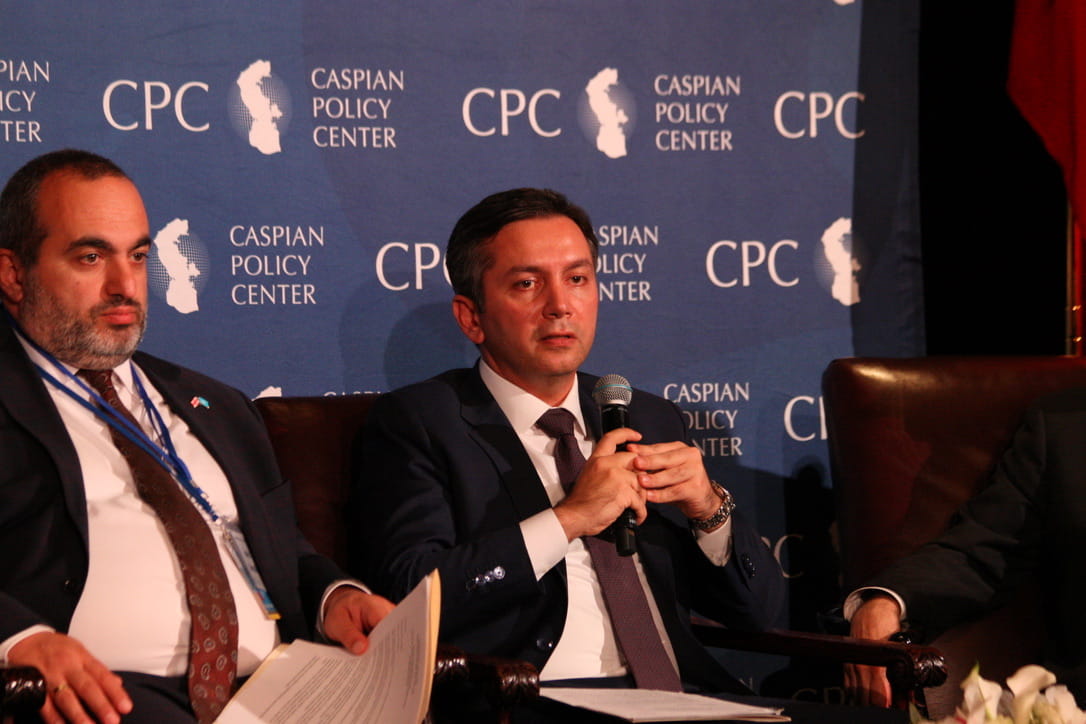 Yalchin Rafiyev, Deputy Minister of Foreign Affairs of Azerbaijan
Yalchin Rafiyev, Deputy Minister of Foreign Affairs of Azerbaijan, highlighted the growing importance of reliable regional connectivity at a time of increasing disruption to global trade routes. “For Azerbaijan, efficient regional links mean shorter and predictable routes, more resilient supply chains, improved access to markets, and, of course, new opportunities for trade and investment,” Rafiyev said.
Rafiyev pointed to Azerbaijan’s investment in infrastructure, including the Port of Baku, the Alat Free Economic Zone, and the modernized Baku–Tbilisi–Kars railway, while stressing that physical infrastructure must be accompanied by more efficient border procedures and digitalized customs systems.
He also highlighted TRIPP’s potential to reinforce both economic cooperation and regional peace. “TRIPP is an important project that will not only support the countries in the region economically and provide commercial value, but it will also be another example of an initiative that brings peace to the region, with shared interests for all the countries,” Rafiyev said.
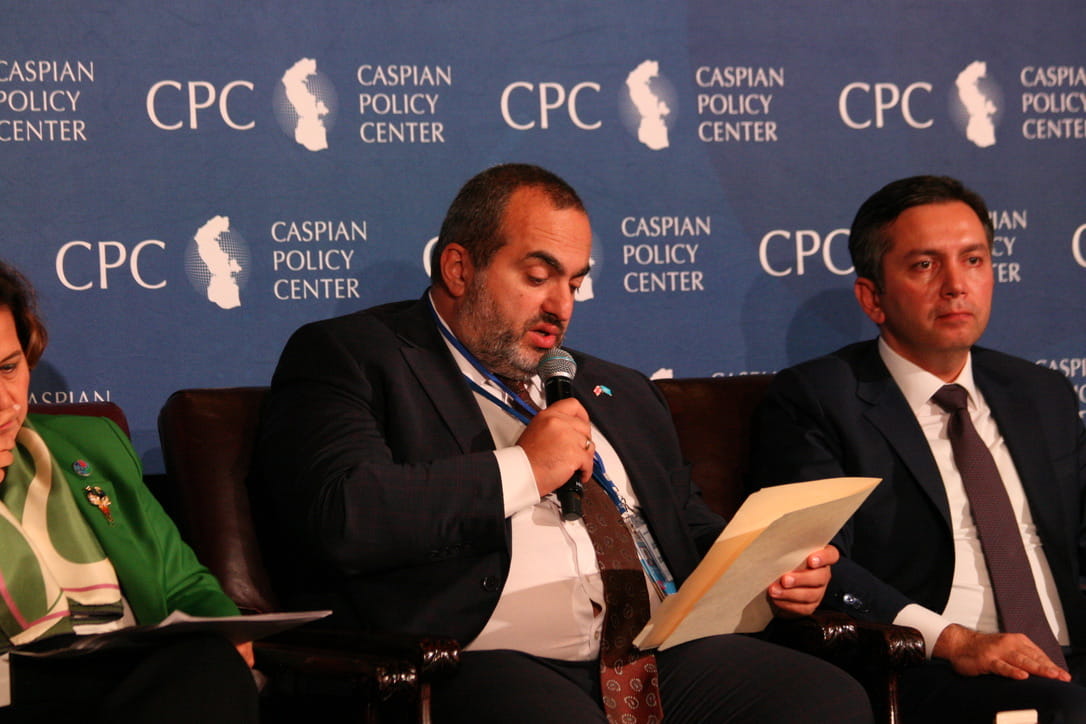 Lasha Darsalia, Deputy Minister of Foreign Affairs of Georgia
Lasha Darsalia, Deputy Minister of Foreign Affairs of Georgia, described the Middle Corridor as “not simply an alternative trade route, but an essential component of Eurasian connectivity architecture.”
Darsalia highlighted Georgia’s efforts to strengthen its role as a regional connectivity hub through economic and infrastructure reforms and closer cooperation with neighboring countries, international partners, financial institutions, and the private sector. He also pointed to Georgia’s longstanding vision of transforming the Black Sea into a space for greater connectivity with the European Union.
“The Middle Corridor is not simply a trade route,” Darsalia said. “The vision of interconnected prosperity is a statement that we, the countries of the region, are ready to explore, not just as transit points, but as partners and creators of the future.”
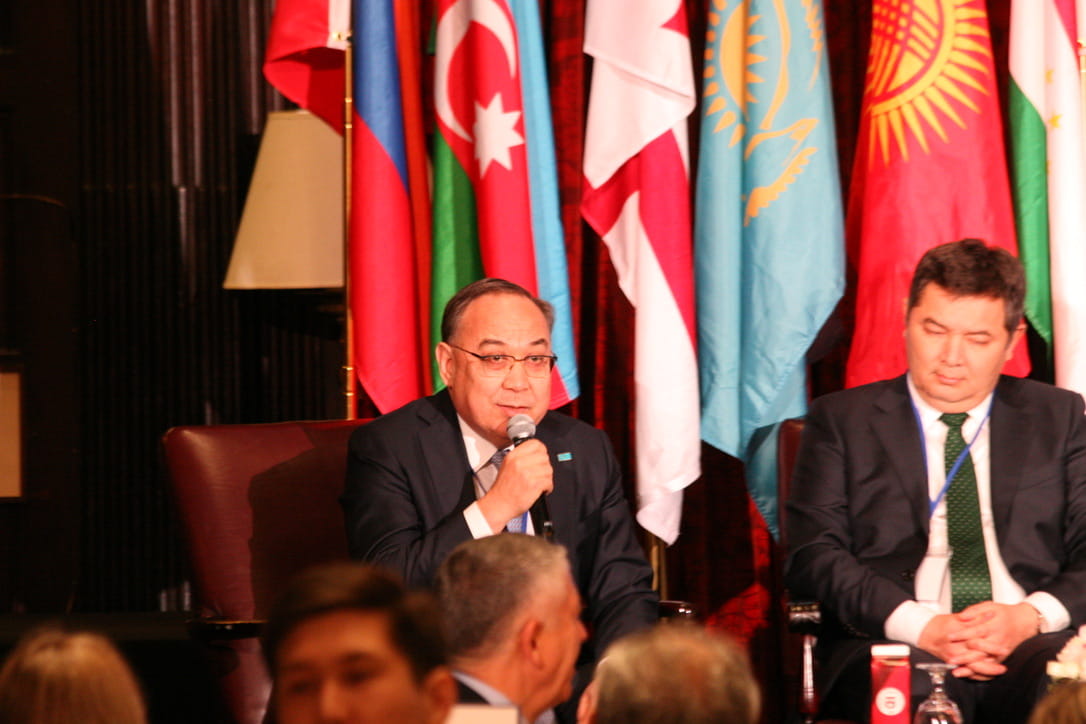 Erzhan Kazykhan, Representative of the President of Kazakhstan for Negotiations with the United States
Erzhan Kazykhan, Representative of the President of Kazakhstan for Negotiations with the United States, emphasized the strategic importance Kazakhstan attaches to the Middle Corridor and the additional opportunities TRIPP could create for connecting Central Asia with European markets.
“For Kazakhstan, it’s not simply a transport route; it’s a strategic investment into our future. It is a platform for connectivity with the South Caucasus, Türkiye, and Europe,” Kazykhan said.
“Kazakhstan sees TRIPP as a logical extension of the Middle Corridor,” he added. “For us, TRIPP shortens our access to European markets by 1,000 kilometers...and it helps bridge connectivity gaps in the South Caucasus and creates additional opportunities for trade.”
Kazykhan said the next phase of development should focus on three priorities: connecting infrastructure across the entire route, improving cross-border transportation, and mobilizing long-term investment. He also stressed the importance of greater coordination between countries to ensure that infrastructure projects operate as part of a seamless regional network.
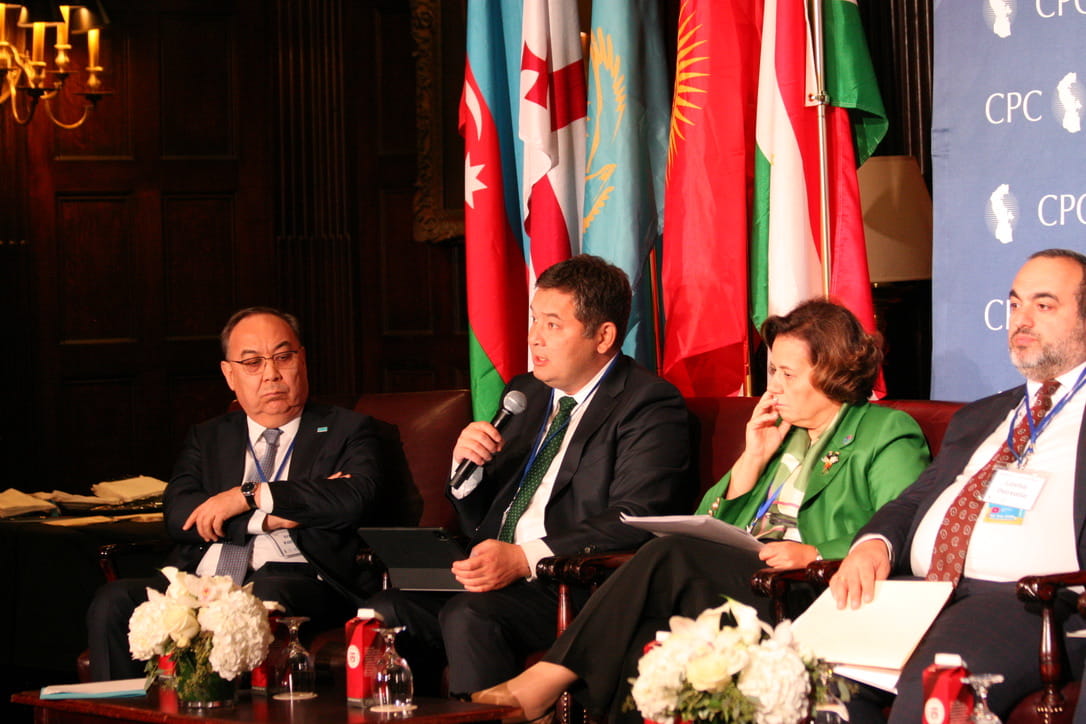 Bakyt Sydykov, Minister of Economy and Commerce of the Kyrgyz Republic
Bakyt Sydykov, Minister of Economy and Commerce of the Kyrgyz Republic, emphasized that connectivity has direct economic consequences for landlocked Central Asian countries. “Connectivity directly affects the competitiveness of our economy, the cost of doing business, our ability to attract investment, and access for Kyrgyz companies to global markets,” Sydykov said.
Sydykov argued that regional projects should be developed as complementary parts of an integrated network. “Our objective should not simply be to build separate national infrastructure projects. Our objective should be to build an integrated regional logistics system. TRIPP, the Trans-Caspian route, the China-Kyrgyzstan-Uzbekistan Railway, and other regional corridors should complement each other.”
He also stressed the importance of mobilizing private capital and creating economic value around new transport links. “Financing may be the most important practical question. The infrastructure required for the middle corridor requires significant capital. Governments alone cannot finance everything. We therefore need to create projects that are attractive to international financial institutions, export credit agencies, sovereign funds, and private investors,” Sydykov said.
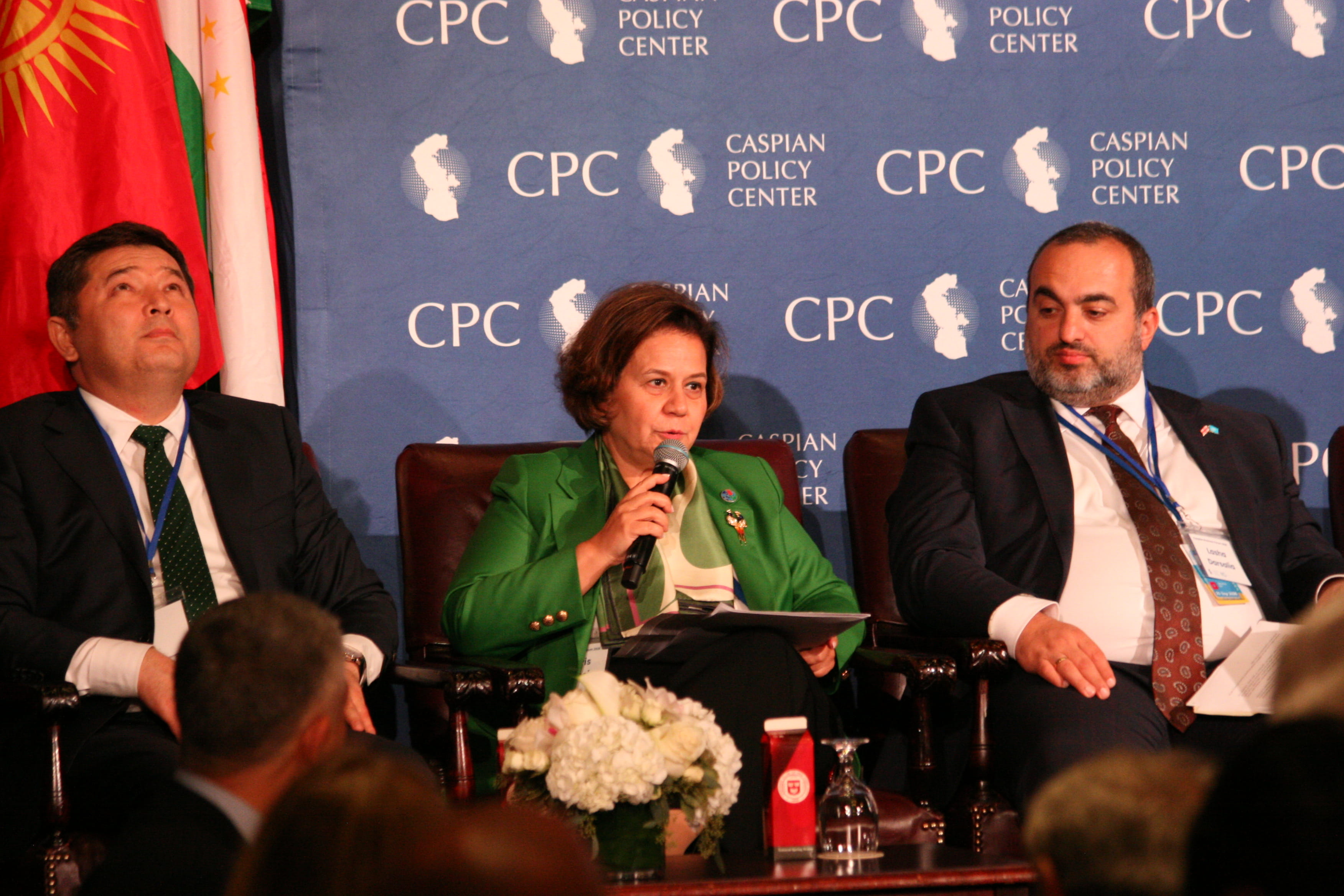 Berris Ekinci, Deputy Minister of Foreign Affairs of Türkiye
Berris Ekinci, Deputy Minister of Foreign Affairs of Türkiye, highlighted the need to view connectivity as extending beyond physical transport infrastructure. “Connectivity should no longer be simply understood as a network of railways and ports. It’s evolving into a broader architecture, bringing together transport, energy, digital infrastructure, logistics, finance, customs, and regulatory coordination,” Ekinci said.
Ekinci stressed that TRIPP should complement rather than compete with existing regional routes. “TRIPP shouldn’t be viewed as a separate or competing corridor. Its value lies in how it connects with and complements the existing regional transport network, especially Türkiye’s existing railway, road, and port infrastructure,” she said.
“For Türkiye, the objective is not simply to establish another road, but to build a genuinely interconnected regional system in which different initiatives strengthen one another,” Ekinci added.
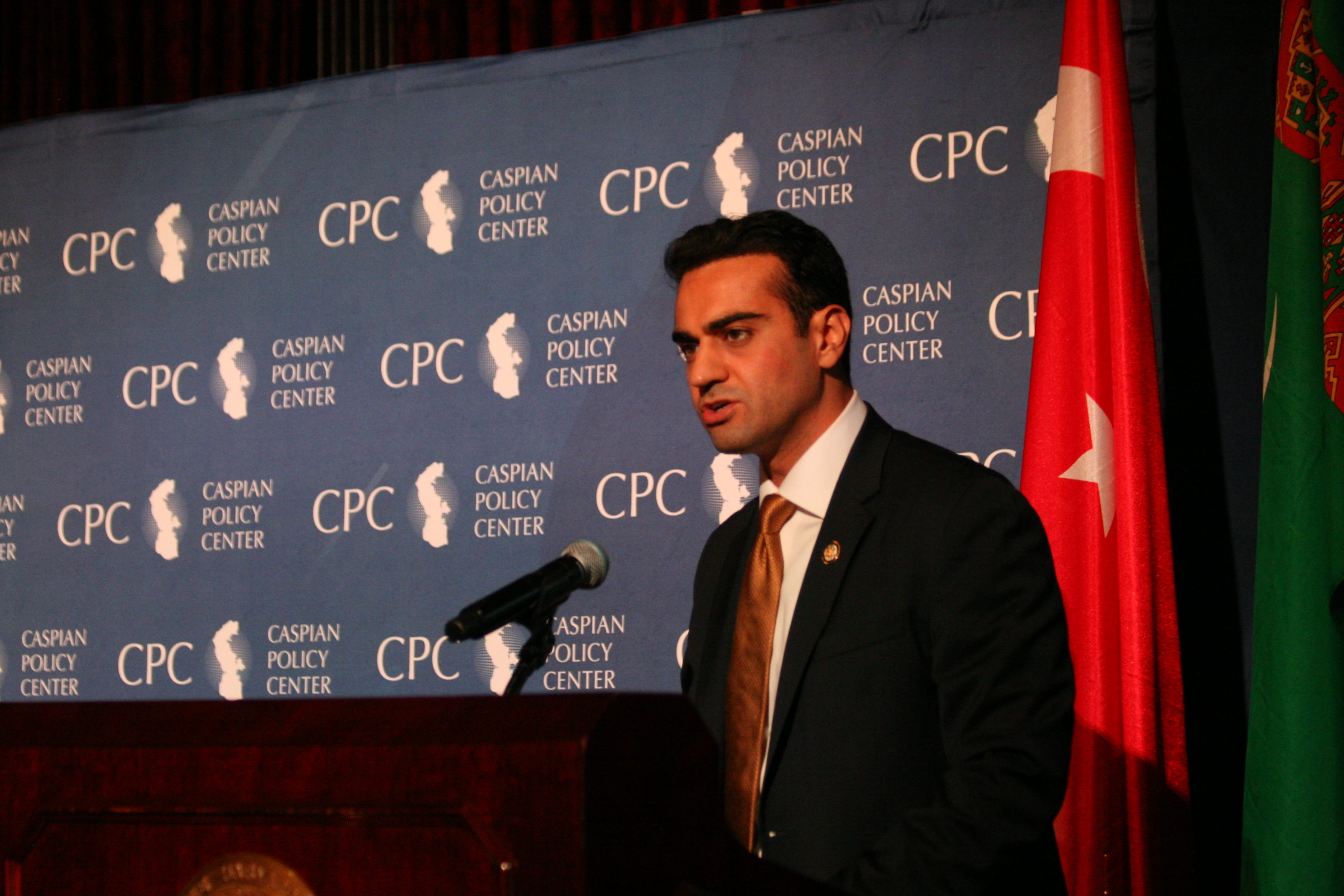 Congressman Abraham Hamadeh addresses CPC’s Caspian Business Forum praising US engagement and presence in a “region that actually matters… This corridor can strengthen American supply chains and help secure energy and critical minerals. This is diplomacy tied to American jobs, American businesses, and American national security.”
U.S. Representative Abraham J. Hamadeh of Arizona’s 8th District delivered the Forum’s Congressional Address, focusing on the role of the United States in supporting peace, connectivity, and economic development across the South Caucasus and the wider Caspian region.
Hamadeh highlighted the economic opportunities that could emerge from a lasting peace between Armenia and Azerbaijan and the development of the Trump Route for International Peace and Prosperity (TRIPP). “A lasting peace can open up borders, reconnect communities, expand trade, create opportunity, and allow a new generation to grow up knowing their neighbors through commerce and cooperation rather than conflict and war,” Hamadeh said.
He also argued that greater U.S. economic engagement in the region serves American commercial and strategic interests. “U.S. participation is not a favor to the region. It is a long-term American presence in a region that actually matters,” Hamadeh said. “This corridor can strengthen American supply chains and help secure energy and critical minerals. This is diplomacy tied to American jobs, American businesses, and American national security.”
Hamadeh also called for further steps to deepen regional integration, including opening the Türkiye-Armenia border and repealing Section 907 of the FREEDOM Support Act. Concluding his remarks, he said: “The people of Armenia and Azerbaijan deserve a South Caucasus defined not by the wars of yesterday, but by the possibilities of tomorrow.”
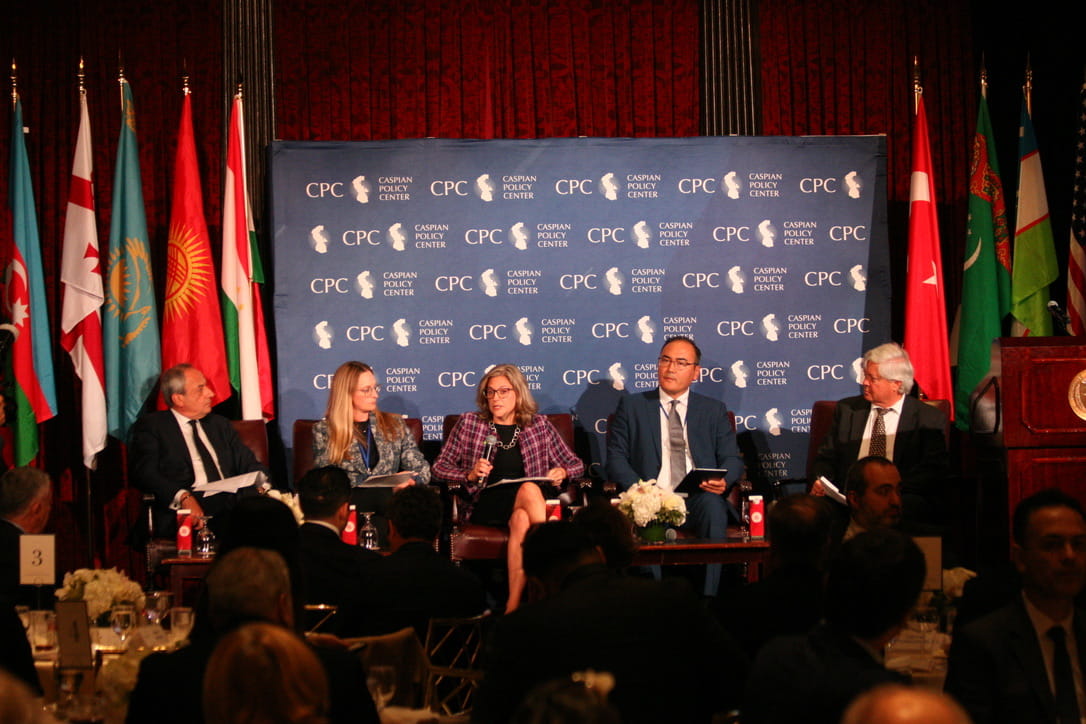
The Forum’s second panel, “Next Generation Business Along the Middle Corridor: Energy, Connectivity, and Critical Minerals,” was moderated by Roger Kangas, a member of the CPC Advisory Board. The discussion examined how the Caspian region can build on three decades of energy and infrastructure development to attract the next generation of international investment. Panelists discussed opportunities across energy, critical minerals, transport and logistics, while focusing on the practical steps needed to improve bankability, mitigate risk, and mobilize long-term private capital.
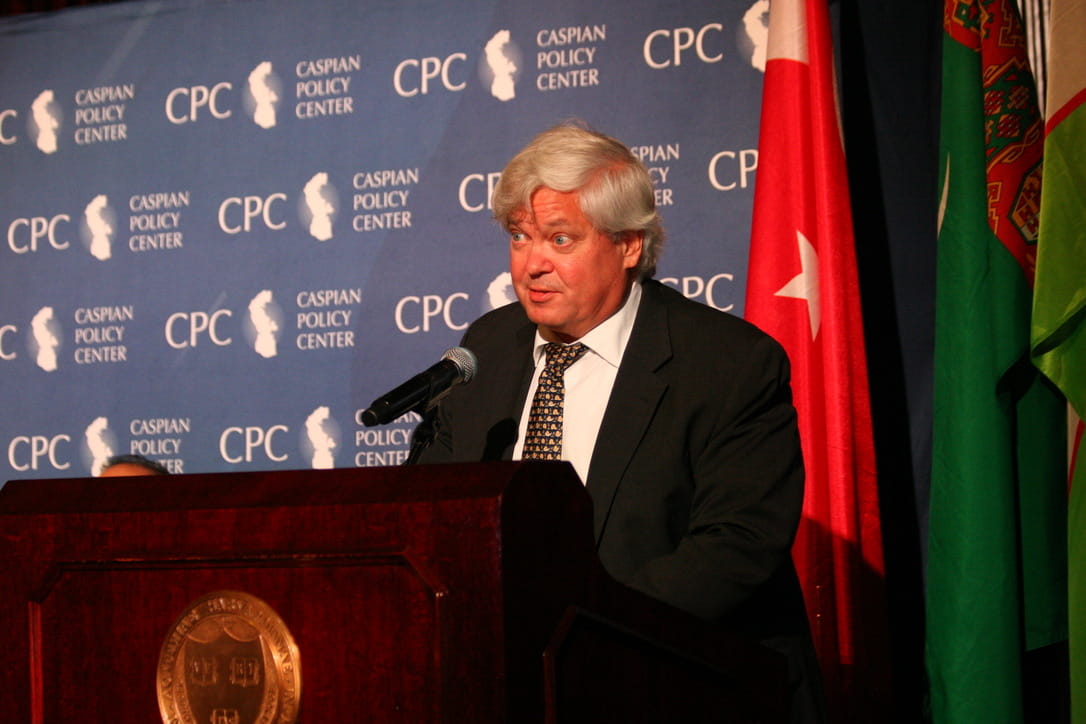 Roger Kangas, CPC Advisory Board Member
Opening the discussion, Roger Kangas reflected on how international engagement with the Caspian region has evolved over the past three decades. While earlier debates often framed the region through competition over resources and individual export routes, Kangas noted that multiple routes and opportunities ultimately emerged, benefiting both international partners and the countries of the region.
“Multiple routes developed, multiple opportunities developed for external actors, and, more importantly, for the countries in the region to take advantage of the wealth of natural resources of the Caspian region,” Kangas said.
Kangas argued that the region is now entering a new phase of engagement increasingly centered on commercial opportunities. “What I would love to hear now is this third generation, which is really about business. It’s about engagement,” he said. “Yes, geopolitics matter, and the question now is how do you work while conflict is going on?”
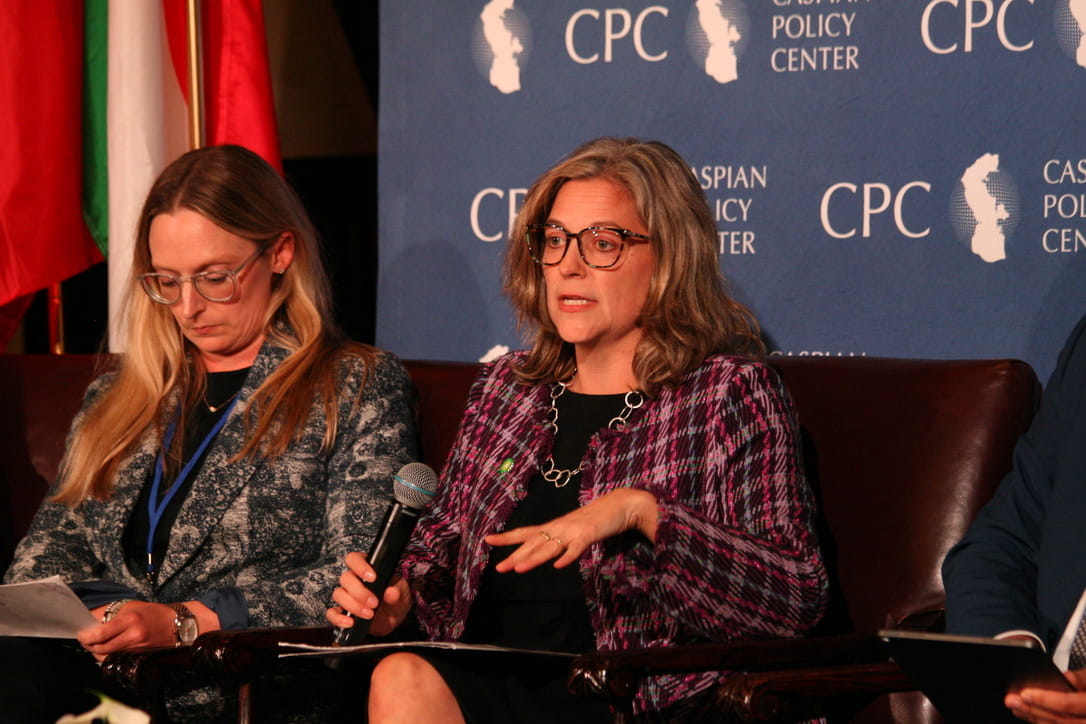 Kimberly Harrington, Head of U.S. International Affairs, bp America
Kimberly Harrington, Head of U.S. International Affairs at bp America, described the development of the Caspian’s energy sector as a model of long-term cooperation among governments, businesses, and various communities.
“From a bp perspective, when we look at the Caspian, we really see one of the most incredible energy success stories of our time,” Harrington said. “That is a really extraordinary success story that came together because of the compelling work of the private sector, governments, and communities to achieve a long-term shared vision together.”
Harrington said bp is now looking to build on its experience in Azerbaijan through new opportunities across the wider region, including projects in Uzbekistan and Kazakhstan. “What makes these developments exciting is that they really build on all of the expertise, all of the experience that Azerbaijan has, all the capabilities that it has developed over the past 30 years,” she said, adding that they demonstrate how “expertise, partnership, and infrastructure-led thinking” can unlock opportunities across the wider region.
Turning to investment decisions, Harrington stressed that the Caspian region competes with opportunities around the world for finite private capital. “Before committing any long-term capital, we look for several factors, including resilient infrastructure,” she said. “In an age where capital can move anywhere in the world, we’re always going to look for projects that can be valuable to our shareholders and bring back reliable returns.”
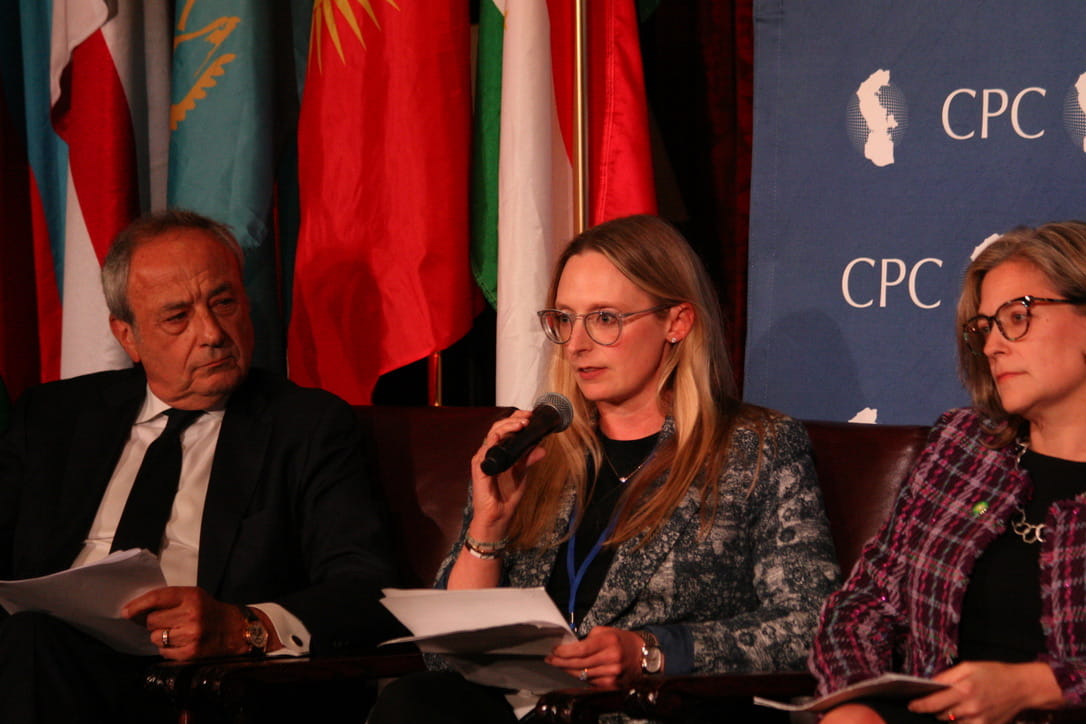 Claire Kaiser, Head of Strategy and Senior Managing Director, Eurasia, at McLarty Associates
Claire Kaiser, Head of Strategy and Senior Managing Director, Eurasia, at McLarty Associates, discussed how recent geopolitical shocks have simultaneously increased investor caution and underscored the importance of the Caspian region for diversified supply chains and connectivity.
“The war in Ukraine, the war in Iran, external shocks of these magnitudes push foreign investors towards caution, necessarily so,” Kaiser said. “However, they also work to underscore the urgency and importance that this region’s role could really play in terms of supply chain and transit diversification, digital connectivity, and many other sectoral needs.”
Kaiser stressed that the challenge now is translating growing political and commercial attention into viable investments. “The real question is whether the region and its partners can convert this enthusiasm and optimism into concrete and bankable positions before the very unique geopolitical inflection point we find ourselves in,” she said.
Drawing on the development of the Baku-Tbilisi-Ceyhan pipeline, Kaiser noted that major regional projects have historically required political vision before investment followed. “The vision came first; the capital followed,” she said, arguing that the region can draw on those lessons today. Kaiser also highlighted harmonization and digitalization along the expanding Middle Corridor as increasingly important factors in facilitating investment decisions.
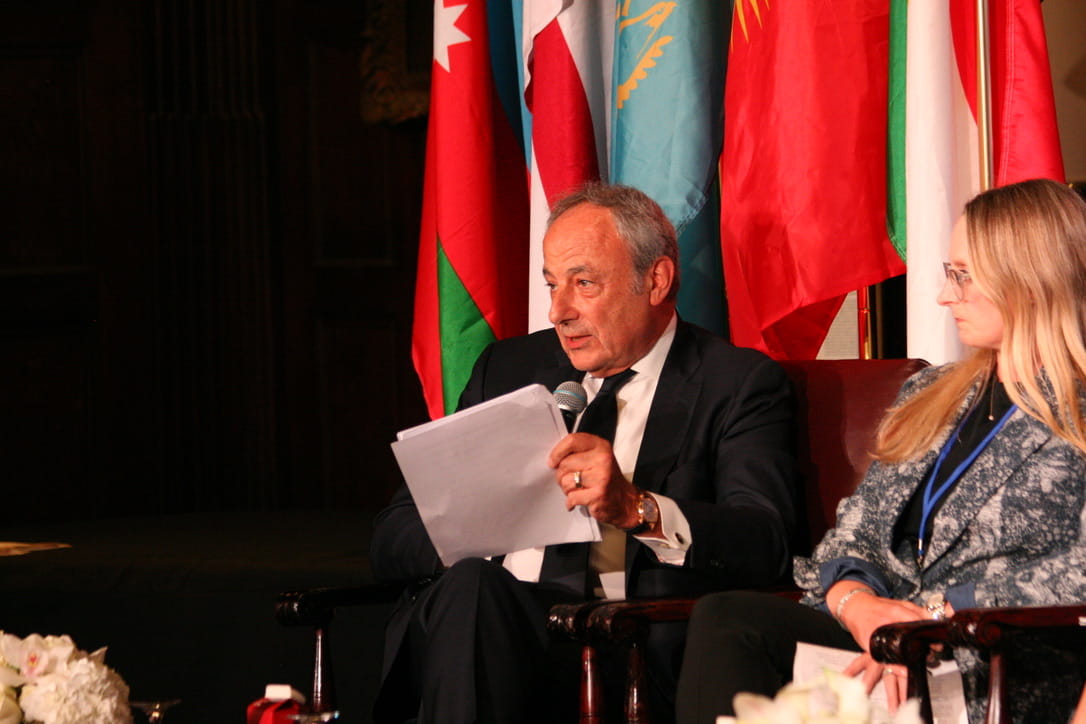 Jamshid Ehsani, Head of Global Principal Structured Finance, Apollo Global Management
Jamshid Ehsani, Head of Global Principal Structured Finance at Apollo Global Management, focused on opportunities in critical minerals and energy infrastructure, as well as the financing structures needed to bring major projects to fruition.
“Central Asia’s vast critical mineral deposits are precisely what the Western supply chain needs for digital infrastructure, green electrification, and defense applications,” Ehsani said.
Ehsani also highlighted Apollo’s developing strategic partnership with the State Oil Company of Azerbaijan (SOCAR), noting that discussions are underway to finance large-scale energy projects in Azerbaijan and internationally. More broadly, he argued that the challenge is not necessarily a shortage of capital, but ensuring projects are structured in a way that can attract appropriate forms of long-term financing.
“The main barrier is not the availability of capital. It is the right type of capital [and] the right investment structure,” Ehsani said. “Apollo can play a major role mobilizing long-term insurance capital with the right structure for the region.”
Ehsani also emphasized the importance of reducing risks that can prevent capital from reaching projects. “You need to eliminate the binary aspect of risk. That is super important to make capital flow,” he said, pointing to transaction structuring and risk-mitigation mechanisms as tools that can improve the viability of investments.
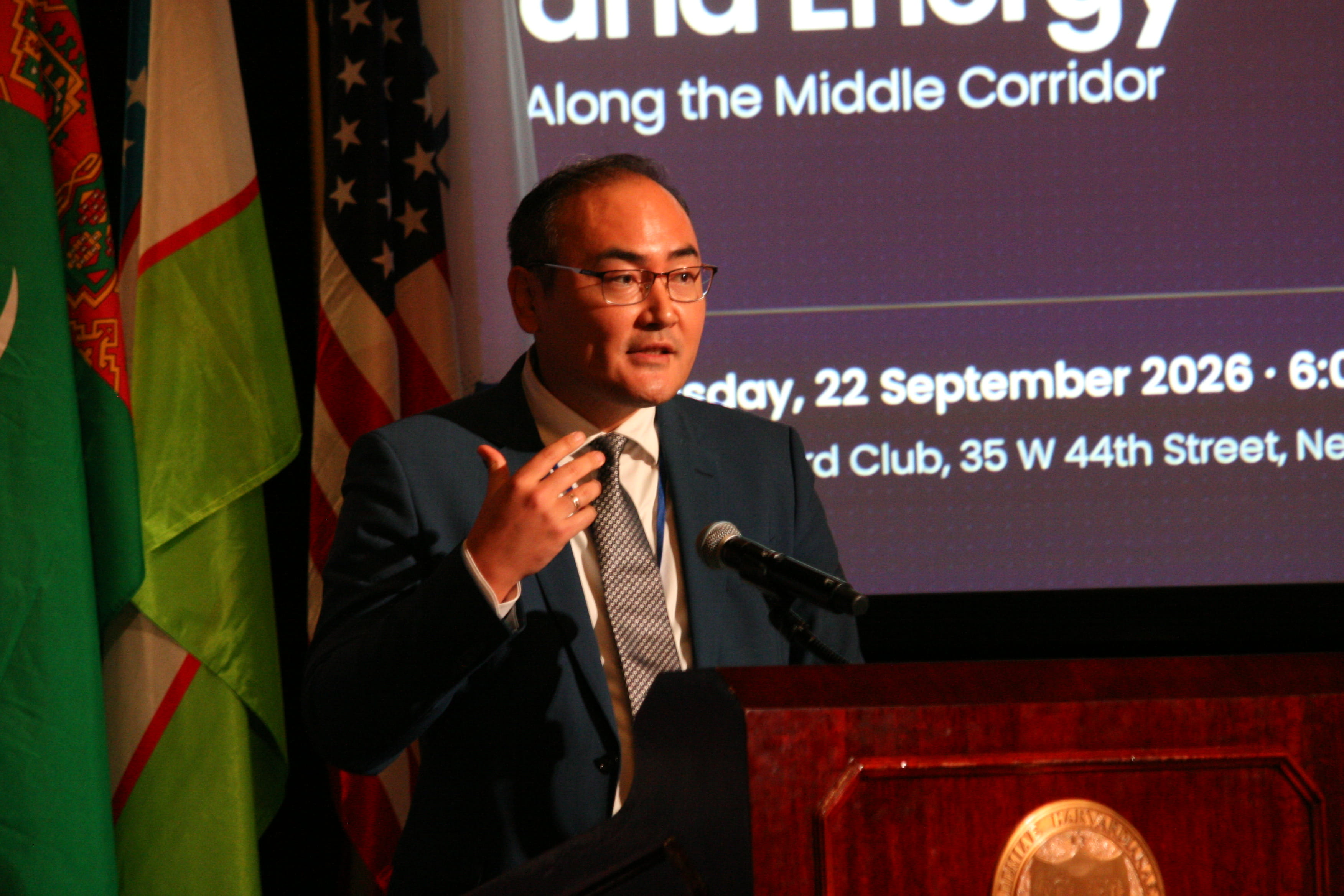 Marat Birimzhan, Head of the Representative Office in the United States, Kazakh Invest
Marat Birimzhan, Head of the Representative Office in the United States at Kazakh Invest, highlighted Kazakhstan’s growing role in the Middle Corridor and the investment opportunities emerging across critical minerals, manufacturing, transport, and other sectors.
“For the last seven years, the traffic, or container shipments, of the Middle Corridor has increased by five times, and it is set to increase even further,” Birimzhan said.
Birimzhan also pointed to expanding commercial ties between Kazakhstan and the United States, noting that American and Kazakh companies signed $17 billion in deals at the end of last year across sectors including manufacturing, agribusiness, petrochemicals, critical minerals, transport, and logistics.
Attracting further investment, he argued, will require making projects easier for international investors to finance. “At Kazakh Invest, we are working with American companies day-by-day, project to project, hopefully to help them improve risk and increase the bankability of projects, but most of all, to bring clarity on what kinds of specific investment opportunities are available for investors and ways to implement them,” Birimzhan said.
“If we increase bankability and de-risk those projects, I’m sure we will see even more projects that are signed and deals being made between our countries and region,” he added.
AWARDS:
Following the second panel, CPC President Efgan Nifti presented awards recognizing companies and business leaders for their recent investments and engagements across the Caspian region.
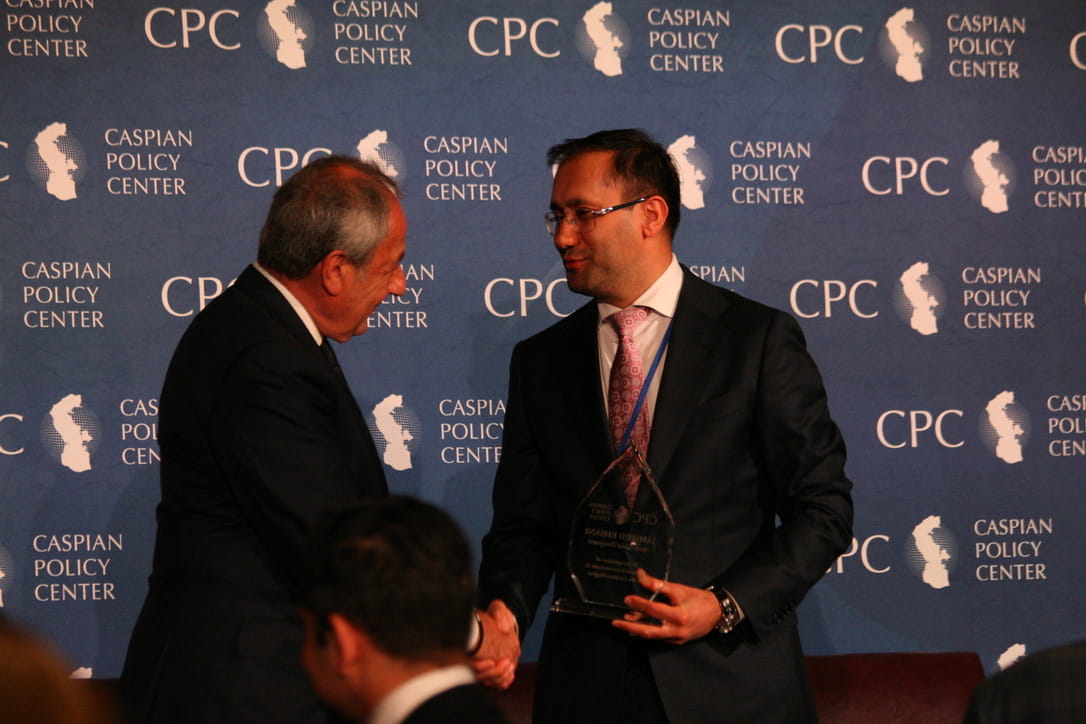
The first award was presented to Jamshid Ehsani of Apollo Global Management in recognition of the firm’s investment in the region’s energy sector. Nifti noted that the investment “represents both a significant opportunity for the development of the region’s energy sector, as well as a major step towards regional energy security.”
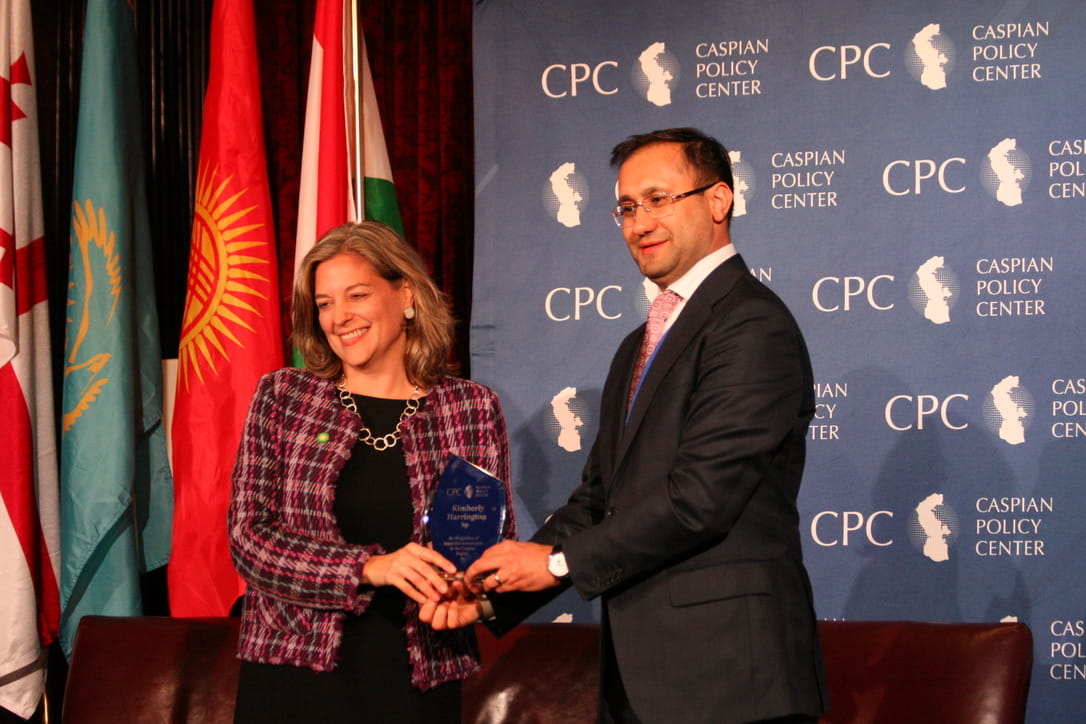
Nifti then presented an award to Kimberly Harrington for bp, recognizing the company’s renewed engagement in Central Asia and its partnerships with KazMunayGas, SOCAR, and Uzbekneftegaz.
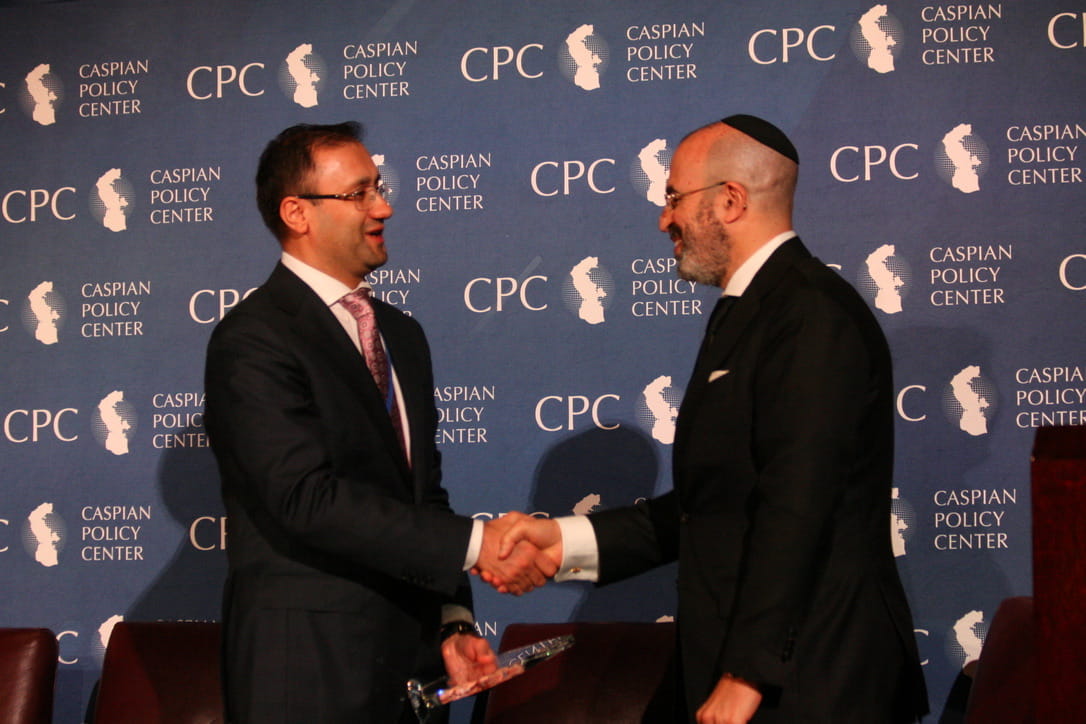
The final award was presented to Pini Althaus, CEO of Cove Capital, recognizing the company’s new tungsten project in Kazakhstan. Nifti highlighted the project’s significance for both Kazakhstan and U.S. critical-mineral supply chains, noting that it “is unlocking a new sector and contributing to the resilience of U.S. mineral supply chains.”
Roger Kangas, Member of CPC’s Advisory Board, delivered closing remarks, in which he reflected on the optimism expressed throughout the Forum and the growing momentum behind regional cooperation and connectivity.
“The optimism we heard tonight underscores that we are at an interesting time, not just where the five Central Asian states relish this C5 role. They can actually talk about a C6 and the Caucasus,” Kangas said.
He also emphasized that the push for greater connectivity is increasingly being driven by the countries of the region themselves. “We look at connectivity because the countries themselves want it. It’s not just the Americans or other outsiders. It’s the Caspian region,” he added.
The 7th Caspian Business Forum underscored the region’s strategic importance, with a focus on the Middle Corridor, highlighting the need for alignment of interests among government, society, and businesses to maximize stability and growth.