Clearing the Ground for Lasting Peace
Recent Articles
Author: Elchin Amirbayov
09/12/2026
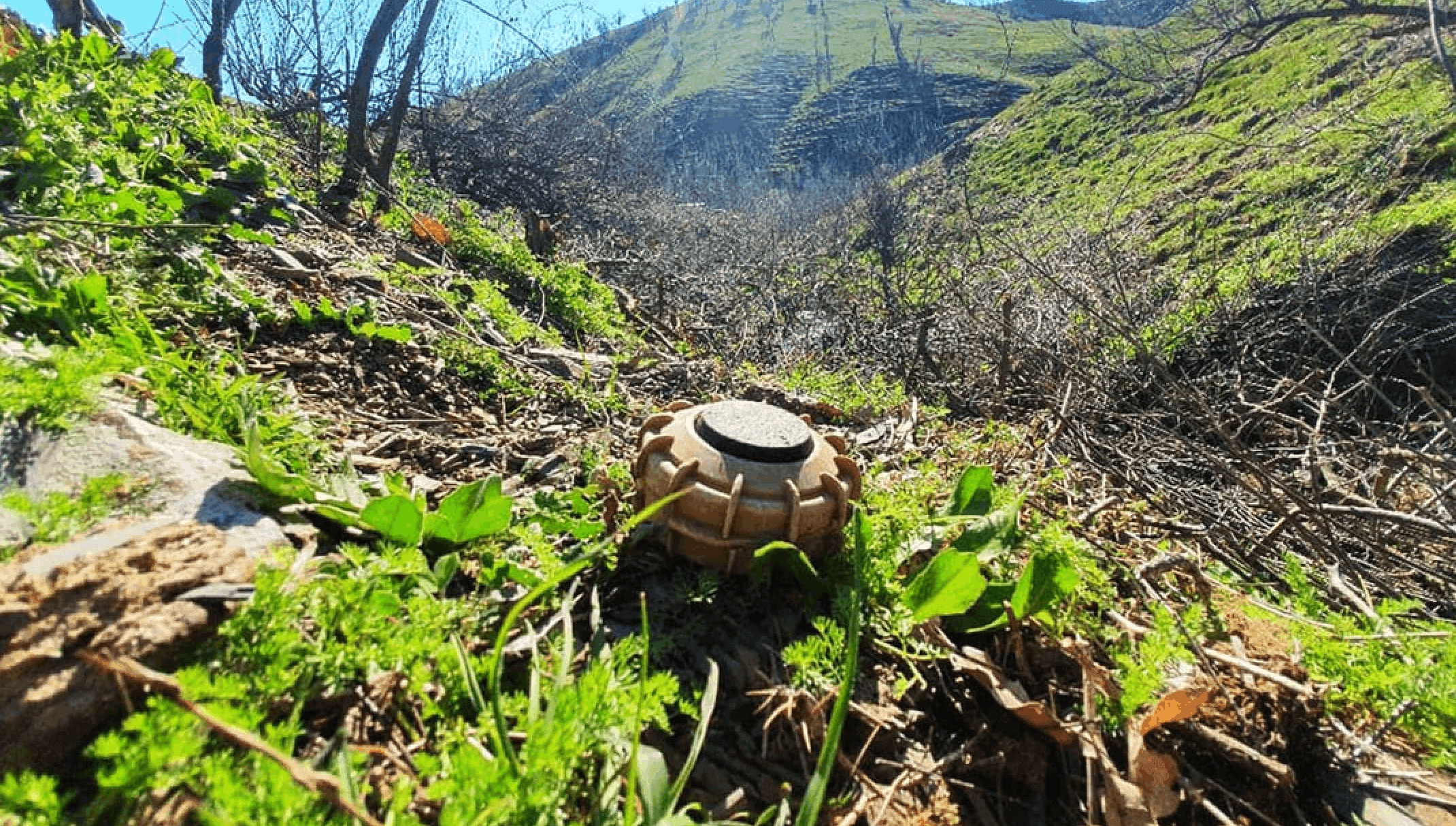
The shooting has stopped. But the mines continue to kill. That is the unpleasant reality Azerbaijan faces while seeking to turn the former conflict with neighboring Armenia into a durable peace.
Political agreements can stop armies from fighting. They cannot make roads safe, nor can they return a farmer to his field or allow a child to walk to school without fear. They cannot, on their own, create and sustain peace. This distinction matters now.
On 8 August 2025, Azerbaijan and Armenia took a historic step in Washington, D.C., when the leaders of the two countries signed a Joint Declaration outlining a vision of a future free from conflict and the foreign ministers initialed the Agreement on Establishment of Peace and Inter-State Relations. Since then, de facto peace has taken hold. Government-level contacts and civil-society dialogue have continued, economic interaction has commenced, and connectivity projects are progressing.
However, as long as the physical remnants of the conflict continue to threaten lives, restrict mobility, impede economic activity, and hinder normalization of relations between the two countries, peace will remain incomplete and fragile. Peace must be more than the absence of gunfire. It must be visible on the ground. In Azerbaijan, one of the greatest obstacles to making peace tangible lies beneath the ground.
Since the end of the Second Karabagh War in 2020, 440 people in Azerbaijan have become victims of landmine explosions. Tragically, that number is likely to rise as long as landmines remain planted on our land. More than 13% of our territory is contaminated by landmines and unexploded ordnance, and roughly three-quarters of the polluted areas still need to be cleared.
Behind every number stands a person. Behind every number stands a family. Every new explosion represents a new human tragedy. But its consequences go further: it tells families that the war is not entirely over. It harms people’s confidence in the existence of peace.
A mine is designed to stop movement. It prevents people from returning home, keeps land unproductive, separates communities and preserves fear long after the fighting has ended. Demining does the opposite. It opens roads, restores livelihoods, reconnects communities and gives people confidence that peace has a future; that their children have a peaceful future.
Humanitarian demining should no longer be seen as simply a technical concern. Mine action has become a peacebuilding task. It has evolved into peace infrastructure. As the UN Peacebuilding Commission has stated clearly during its discussions this July, mine action has become an enabler of peacebuilding, reconciliation and recovery.
The challenge is particularly urgent because Azerbaijan is undertaking an unprecedented programme of post-conflict reconstruction and rehabilitation. Former internally displaced persons are returning to their places of origin. Since the 2020 war, more than 39,000 people have returned. The faster contaminated land is cleared, the sooner displaced families can return, economic activity can resume and ordinary people can experience the tangible benefits of peace.
Some may argue that mine clearance is primarily the responsibility of the affected state. Azerbaijan accepts that responsibility and has acted accordingly. Since 2020, it has cleared 300,000 hectares of contaminated areas and funded approximately 95 percent of its demining expenses. But this financing figure reveals another troubling reality. That international assistance is limited to just 5 percent.
When Azerbaijan’s sole-handed mine-action efforts promptly benefit regional connectivity, international trade and development, and when contamination of this scale impedes return, reconstruction and rehabilitation, and the peace process, mine action becomes a legitimate concern of the wider international community.
What should change? First, mine action should become part of the international peace agenda. When the peace prospects in the South Caucasus are discussed, whether in official meetings or academic circles, the conversation tends to focus on borders, trade, connectivity, and confidence-building. We should add clearing physical legacies of war to that list. Mine action should be seen as an investment toward sustainable peace.
Second, international assistance should not be limited to fragmented emergency contributions and individual projects. What Azerbaijan needs is predictable, multi-year partnerships with sustainable financing mechanisms to support long-term planning, training, and equipment to accelerate the land release. We should finance the solution, not simply manage the problem. As President Ilham Aliyev of Azerbaijan emphasized at the 4th International Mine Action Conference in Baku this September, predictable funding is crucial for speeding up mine clearance and reducing the suffering caused by landmines.
Third, we need a stronger technology partnership. Artificial intelligence, drones, satellite imagery, advanced surveying, mechanical demining, and data technologies can help us clear the land faster and more safely. Azerbaijan aims to become an international center of excellence in mine action and is ready to cooperate with foreign states, international organizations, researchers, and technology companies.
Lastly, we need to exploit mine action’s potential to contribute to confidence-building. Humanitarian issues can sometimes pave the way for practical cooperation when political issues are sensitive. Removing the remnants of war is fundamentally about saving lives and making a different future possible. It is also about reviving people’s belief in a peaceful future.
Now is the unique chance for Azerbaijan and Armenia to turn the page of conflict. Once the remaining obstacle is removed and the two countries sign the peace agreement, the South Caucasus will have the necessary preconditions for peace to become reality, for the region to be connected, and for economic activities and good-neighborly relations to take root. However, for peace to be sustainable, we need to eradicate the legacy of war not only from political discourse and legal frameworks, but also from the land people must rebuild their lives on.
Therefore, the international community should stop seeing demining as what happens after peace. It is part of how peace is made sustainable. Every cleared road, field, and village is a small piece of peace infrastructure. If we want the next generation to inherit a different South Caucasus, let us clear the ground for lasting peace, make it something people can walk on, live on, build on — and pass on to their children.
*Elchin Amirbayov is Representative of the President of the Republic of Azerbaijan on special assignments.