CPC - Caspian Policy Center
Events
Armenia’s elections and the future of the South Caucasus
Armenia’s elections and the future of the South Caucasus
Armenia’s elections and the future of the South Caucasus
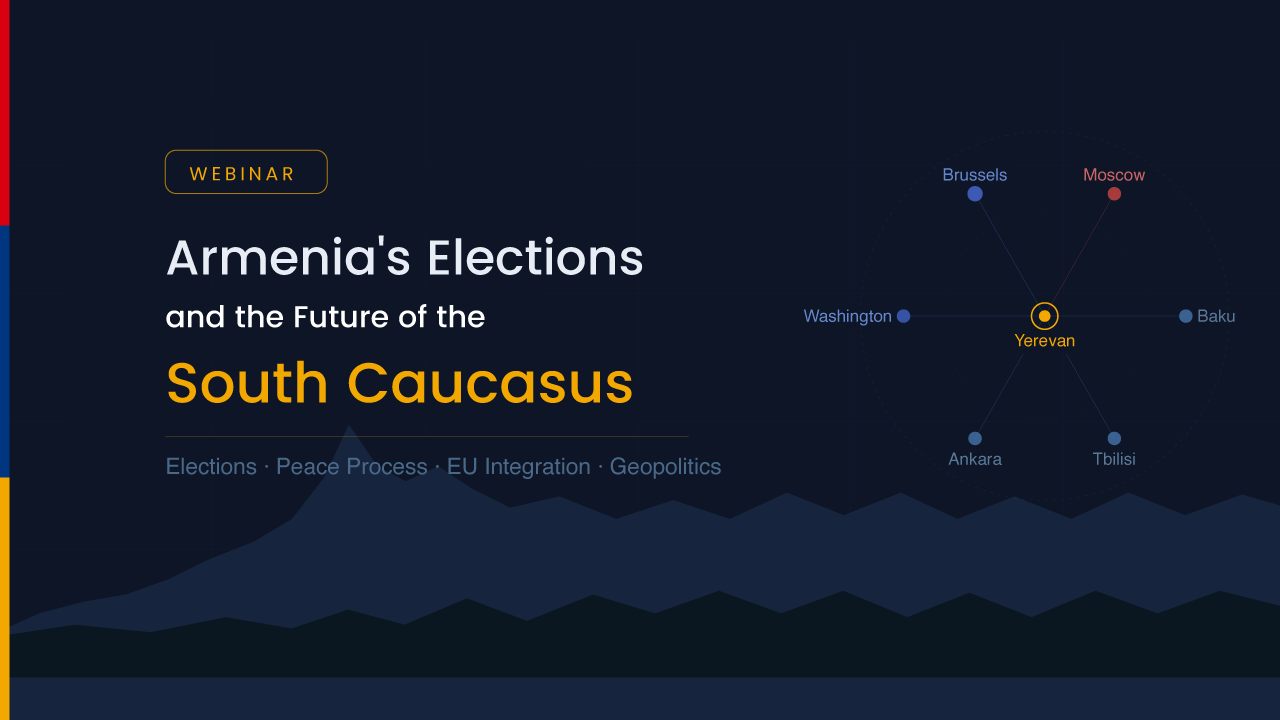
Armenia is approaching a pivotal parliamentary election in June that will shape its domestic political future and broader geopolitical orientation, as well as opportunities for peace and development in the South Caucasus. Following the 2020–2023 Second Nagorno-Karabakh War, the country has embarked on a new phase of foreign policy realignment. Prime Minister Pashinyan has initialled a peace agreement with Azerbaijan and is pushing to normalise ties with Türkiye. More broadly, while Armenia is traditionally dependent on Russia for security guarantees and economic stability, Pashinyan is now pursuing a bold agenda to deepen ties with the European Union (EU) and the United States. However, opposition forces, supported by some more nationalist elements of the Armenian diaspora, the Armenian Apostolic Church, and actors linked to the Kremlin, are mobilising against this vision. Russian disinformation in Armenia has intensified, promoting narratives around Armenia’s need for Russian security and markets. The upcoming election is widely viewed as a referendum on Armenia’s strategic direction.
This webinar will bring together leading experts to assess Pashinyan’s prospects and opposition dynamics, including the role of the Church, Russia’s influence and disinformation efforts, regional connectivity and the role of the United States and the EU.
2 - 3pm UK time (9-10 am ET).
Moderated Discussion and Q&A
Moderated by James Sharp, Advisory Board Member, Caspian Policy Centre
-
Konul de Moor, Programme and Peacebuilding Officer at Conciliation Resources and Consulting Analyst for the South Caucasus at the International Crisis Group
-
Denis Cenusa, Associate Expert with the Geopolitics and Security Studies Centre (GSSC) and Visiting Fellow at the School of Transnational Governance in Florence
- Prof. Rick Fawn, Professor of International Relations at the University of St Andrews
Register
Armenia is approaching a pivotal parliamentary election in June that will shape its domestic political future and broader geopolitical orientation, as well as opportunities for peace and development in the South Caucasus. Following the 2020–2023 Second Nagorno-Karabakh War, the country has embarked on a new phase of foreign policy realignment. Prime Minister Pashinyan has initialled a peace agreement with Azerbaijan and is pushing to normalise ties with Türkiye. More broadly, while Armenia is traditionally dependent on Russia for security guarantees and economic stability, Pashinyan is now pursuing a bold agenda to deepen ties with the European Union (EU) and the United States. However, opposition forces, supported by some more nationalist elements of the Armenian diaspora, the Armenian Apostolic Church, and actors linked to the Kremlin, are mobilising against this vision. Russian disinformation in Armenia has intensified, promoting narratives around Armenia’s need for Russian security and markets. The upcoming election is widely viewed as a referendum on Armenia’s strategic direction.
This webinar will bring together leading experts to assess Pashinyan’s prospects and opposition dynamics, including the role of the Church, Russia’s influence and disinformation efforts, regional connectivity and the role of the United States and the EU.
2 - 3pm UK time (9-10 am ET).
Moderated Discussion and Q&A
Moderated by James Sharp, Advisory Board Member, Caspian Policy Centre
-
Konul de Moor, Programme and Peacebuilding Officer at Conciliation Resources and Consulting Analyst for the South Caucasus at the International Crisis Group
-
Denis Cenusa, Associate Expert with the Geopolitics and Security Studies Centre (GSSC) and Visiting Fellow at the School of Transnational Governance in Florence
- Prof. Rick Fawn, Professor of International Relations at the University of St Andrews
Register
All events
Showing 4 events